
 A SCHOLARLY BOOK REPOSITORY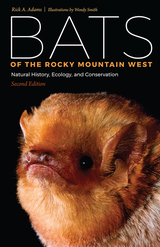
In the twenty years since the original publication of Bats of the Rocky Mountain West, chiropterology (bat science) has exploded, significantly altering our understanding of the ecology, behavior, distribution, and conservation of one of the world's most enigmatic mammals. This notably updated second edition further brings to life the wonderful world of bats with beautiful illustrations and photography that grip the imagination and reveal the magnificent natural history of the only true flying mammal. In addition, thirty-two accounts of regional species with photographs, range maps, and echolocation sonograms report informative and thoroughly revised findings on bats now living in the Rocky Mountain West. Leave any preconceived notions behind and learn the real-life biology of bats, which eclipses the fabled tales of the crypt and macabre.

Bats of the Rocky Mountain West begins with a general discussion of bat biology and evolution as well as regional physiography and zoogeography. In addition, Adams describes - based on the results of extensive research - the behavior and ecology of the 31 species of bats found in Montana, Idaho, Wyoming, Utah, Colorado, New Mexico, and Arizona. Naturalists and biologists alike will benefit from the detailed species descriptions, color photographs and illustrations, distribution maps, and echolocation sonograms. Bats of the Rocky Mountain West is a unique and valuable reference for professional bat biologists, naturalists, and wildlife enthusiasts interested in the conservation and ecology of bats in the region.
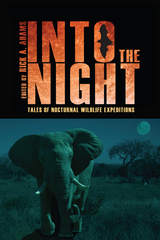
Contributors tell of confronting North American bears, cougars, and rattlesnakes; suffering red ctenid spider bites in the tropical rain forest; swimming through layers of feeding-frenzied hammerhead sharks in the Galapagos; evading the wrath of African bull elephants in South Africa; and delighting in the curious and gentle nature of foxes and unconditional acceptance by a family of owls. They describe “fire in the sky” across a treeless tundra, a sea ablaze with bioluminescent algae, nighttime earthquakes on the Pacific Rim, and hurricanes and erupting volcanoes on a Caribbean island.
Into the Night reveals rare and unexpected insights into nocturnal field research, illuminating experiences, discoveries, and challenges faced by intrepid biologists studying nature’s nightly marvels across the globe. This volume will be of interest to scientists and general readers alike.
READERS
Browse our collection.
PUBLISHERS
See BiblioVault's publisher services.
STUDENT SERVICES
Files for college accessibility offices.
RECENTLY PUBLISHED







UChicago Accessibility Resources
home | accessibility | search | about | contact us
BiblioVault ® 2001 - 2026
The University of Chicago Press