
 A SCHOLARLY BOOK REPOSITORY
In this illuminating book, Margaret Morganroth Gullette reveals that aging doesn't start in our chromosomes, but in midlife downsizing, the erosion of workplace seniority, threats to Social Security, or media portrayals of "aging Xers" and "greedy" Baby Boomers. To combat the forces aging us prematurely, Gullette invites us to change our attitudes, our life storytelling, and our society. Part intimate autobiography, part startling cultural expose, this book does for age what gender and race studies have done for their categories. Aged by Culture is an impassioned manifesto against the pernicious ideologies that steal hope from every stage of our lives.
By the year 2030, the average life expectancy of women in industrialized countries could reach ninety—exceeding that of men by about ten years. At the present time, postmenopausal women represent more than fifteen percent of the world’s population and this figure is likely to grow.
From an evolutionary perspective, these demographic numbers pose some intriguing questions. Darwinian theory holds that a successful life is measured in terms of reproduction. How is it, then, that a woman’s lifespan can greatly exceed her childbearing and childrearing years? Is this phenomenon simply a byproduct of improved standards of living, or do older women—grandmothers in particular—play a measurable role in increasing their family members’ biological success?
Until now, these questions have not been examined in a thorough and comprehensive manner. Bringing togethertheoretical and empirical work byinternationally recognized scholars in anthropology, psychology, ethnography, and the social sciences, Grandmotherhood explores the evolutionary purpose and possibilities of female post-generative life. Students and scholars of human evolution, anthropology, and even gerontology will look to this volume as a major contribution to the current literature in evolutionary studies.
With Growing Each Other Up, Macarthur Prize–winning sociologist and educator Sara Lawrence-Lightfoot offers an intimately detailed, emotionally powerful account of that experience. Building her book on a series of in-depth interviews with parents around the country, she offers a counterpoint to the usual parental development literature that mostly concerns the adjustment of parents to their babies’ rhythms and the ways parents weather the storms of their teenage progeny. The focus here is on the lessons emerging adult children, ages 15 to 35, teach their parents. How are our perspectives as parents shaped by our children? What lessons do we take from them and incorporate into our worldviews? Just how much do we learn—often despite our own emotionally fraught resistance—from what they have seen of life that we, perhaps, never experienced? From these parent portraits emerges the shape of an education composed by young adult children—an education built on witness, growing, intimacy, and acceptance.
Growing Each Other Up is rich in the voices of actual parents telling their own stories of raising children and their children raising them; watching that fundamental connection shift over time. Parents and children of all ages will recognize themselves in these evocative and moving accounts and look at their own growing up in a revelatory new light.
The MacArthur Foundation addressed these questions head-on by funding a landmark study known as "Midlife in the U.S.," or MIDUS. For the first time in a single study, researchers were able to integrate epidemiological, sociological, and psychological assessments, as well as innovative new measures to evaluate how work and family life influence each other.
How Healthy Are We? presents the key findings from the survey in three sections: physical health, quality of life and psychological well-being, and the contexts (family, work) of the midlife. The topics covered by almost forty scholars in a wide variety of fields are vast, including everything from how health and well-being vary with socioeconomic standing, gender, race, or region of the country to how middle-aged people differ from younger or older adults in their emotional experience and quality of life. This health—the study measures not only health-the absence of illness—but also reports on the presence of wellness in middle-aged Americans.
The culmination of a decade and a half of research by leading scholars, How Healthy Are We? will dramatically alter the way we think about health in middle age and the factors that influence it. Researchers, policymakers, and others concerned about the quality of midlife in contemporary America will welcome its insights.
* Having a good life means having good relationships with others to almost 70% of those surveyed. Less than 40% mentioned their careers.
* Reports of disruptive daily stressors vary by age, with young adults and those in midlife experiencing more than those in later adulthood.
* Men have higher assessments of their physical and mental health than woman until the age of 60.
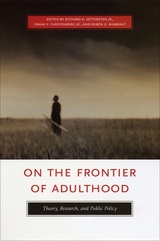
This volume considers the nature and consequences of changes in early adulthood by drawing upon a wide variety of historical and contemporary data from the United States, Canada, and Western Europe. Especially dramatic shifts have occurred in the conventional markers of adulthood—leaving home, finishing school, getting a job, getting married, and having children—and in how these experiences are configured as a set. These accounts reveal how the process of becoming an adult has changed over the past century, the challenges faced by young people today, and what societies can do to smooth the transition to adulthood.
"This book is the most thorough, wide-reaching, and insightful analysis of the new life stage of early adulthood."—Andrew Cherlin, Johns Hopkins University
"From West to East, young people today enter adulthood in widely diverse ways that affect their life chances. This book provides a rich portrait of this journey-an essential font of knowledge for all who care about the younger generation."—Glen H. Elder Jr., University of North Carolina at Chapel Hill
"On the Frontier of Adulthood adds considerably to our knowledge about the transition from adolescence to adulthood. . . . It will indeed be the definitive resource for researchers for years to come. Anyone working in the area—whether in demography, sociology, economics, or developmental psychology—will wish to make use of what is gathered here."—John Modell, Brown University
"This is a must-read for scholars and policymakers who are concerned with the future of today's youth and will become a touchpoint for an emerging field of inquiry focused on adult transitions."—Jeanne Brooks-Gunn, Columbia University
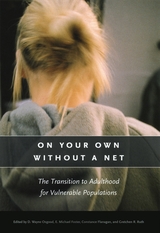
On Your Own Without a Net documents the special challenges facing seven vulnerable populations during the transition to adulthood: former foster care youth, youth formerly involved in the juvenile justice system, youth in the criminal justice system, runaway and homeless youth, former special education students, young people in the mental health system, and youth with physical disabilities. During adolescence, government programs have been a major part of their lives, yet eligibility for most programs typically ends between the ages of eighteen and twenty-one. This critical volume shows the unfortunate repercussions of this termination of support and points out the issues that must be addressed to improve these young people's chances of becoming successful adults.
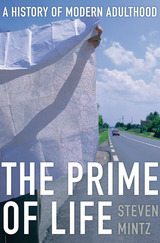
Adulthood today is undergoing profound transformations. Men and women wait until their thirties to marry, have children, and establish full-time careers, occupying a prolonged period in which they are no longer adolescents but still lack the traditional emblems of adult identity. People at midlife struggle to sustain relationships with friends and partners, to find employment and fulfilling careers, to raise their children successfully, and to resist the aging process.
The Prime of Life puts today’s challenges into new perspective by exploring how past generations navigated the passage to maturity, achieved intimacy and connection, raised children, sought meaning in work, and responded to loss. Coming of age has never been easy or predictable, Steven Mintz shows, and the process has always been shaped by gender and class. But whereas adulthood once meant culturally-prescribed roles and relationships, the social and economic convulsions of the last sixty years have transformed it fundamentally, tearing up these shared scripts and leaving adults to fashion meaning and coherence in an increasingly individualistic culture.
Mintz reconstructs the emotional interior of a life stage too often relegated to self-help books and domestic melodramas. Emphasizing adulthood’s joys and fulfillments as well as its frustrations and regrets, he shows how cultural and historical circumstances have consistently reshaped what it means to be a grown up in contemporary society. The Prime of Life urges us to confront adulthood’s realities with candor and determination and to value and embrace the responsibility, sensible judgment, wisdom, and compassionate understanding it can bring.
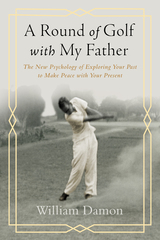
Viewing our past through the eyes of maturity can reveal insights that our younger selves could not see. Lessons that eluded us become apparent. Encounters that once felt like misfortunes now become understood as valued parts of who we are. We realize what we’ve learned and what we have to teach. And we’re encouraged to chart a future that is rich with purpose.
In A Round of Golf with My Father, William Damon introduces us to the “life review.” This is a process of looking with clarity and curiosity at the paths we’ve traveled, examining our pasts in a frank yet positive manner, and using what we’ve learned to write purposeful next chapters for our lives.
For Damon, that process began by uncovering the mysterious life of his father, whom he never met and never gave much thought to. What he discovered surprised him so greatly that he was moved to reassess the events of his own life, including the choices he made, the relationships he forged, and the career he pursued.
Early in his life, Damon was led to believe that his father had been killed in World War II. But the man survived and went on to live a second life abroad. He married a French ballerina, started a new family, and forged a significant Foreign Service career. He also was an excellent golfer, a bittersweet revelation for Damon, who wishes that his father had been around to teach him the game.
We follow Damon as he struggles to make sense of his father’s contradictions and how his father, even though living a world apart, influenced Damon’s own development in crucial ways. In his life review, Damon uses what he learned about his father to enhance his own newly emerging self-knowledge.
Readers of this book may come away inspired to conduct informal life reviews for themselves. By uncovering and assembling the often overlooked puzzle pieces of their pasts, readers can seek present-day contentment and look with growing optimism to the years ahead.
READERS
Browse our collection.
PUBLISHERS
See BiblioVault's publisher services.
STUDENT SERVICES
Files for college accessibility offices.
RECENTLY PUBLISHED




UChicago Accessibility Resources
home | accessibility | search | about | contact us
BiblioVault ® 2001 - 2025
The University of Chicago Press