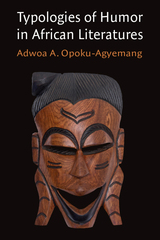
Typologies of Humor in African Literatures
Adwoa A. Opoku-Agyemang
University of Michigan Press, 2024
Typologies of Humor in African Literatures is a study on the use of humor and comedy in African literary texts across the twentieth century. Despite humor being omnipresent in African societies and their literatures, discussions of contemporary African literature have largely dismissed it as being too lighthearted compared to the more serious issues of post-colonial history, class inequality, and politics. Adwoa A. Opoku-Agyemang, while acknowledging the seriousness of the subject matter, establishes humor as an essential component of African fiction.
The book analyzes four comedic archetypes: the Trickster, who is unapologetically amoral and entertaining; the Mimic, whose everyday dealings exude ambiguity; the Interpreter, who demonstrates the comic potential of language differences while showing how a single message can mean contrasting things; and the Deviant, who throws norms into question all the while reinforcing them. These character types and the humor they produce present a constant pursuit of balance between contrasting worldviews and frames of reference within the imbrication of different languages, classes, political factions, genders, and (un)officialdoms. The product of these rowdy relations are people who take the weirdness and run with it to generate diegetic and intradiegetic laughs. By analyzing Francophone and Anglophone African writing and how it overlays local languages, Opoku-Agyemang contributes a uniquely African voice to the primarily Western-dominated field of humor studies.
[more]