
 A SCHOLARLY BOOK REPOSITORY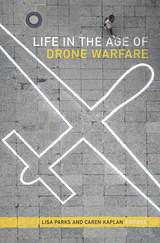
Contributors. Peter Asaro, Brandon Wayne Bryant, Katherine Chandler, Jordan Crandall, Ricardo Dominguez, Derek Gregory, Inderpal Grewal, Lisa Hajjar, Caren Kaplan, Andrea Miller, Anjali Nath, Jeremy Packer, Lisa Parks, Joshua Reeves, Thomas Stubblefield, Madiha Tahir

Military Strategy, Joint Operations, and Airpower will introduce readers to contemporary strategy and the operational level of war, particularly as it relates to airpower.
This intermediate textbook was developed as required reading for all US Air Force Academy cadets, and is designed to close the gap between military theory and military practice. It asks readers to reconceive of the military as a “profession of effects” rather than as a profession of arms because much of the military's work and impact no longer involves kinetic warfare.
The book covers strategic foundations; operational design and joint-service operations; the air, space, and cyber capabilities that make up modern airpower; and contemporary challenges in the application of strategy. The contributing authors include both military practitioners and scholars of security studies, political science, and history.
In addition to being required reading for Air Force Academy cadets, the book will provide an essential overview of strategy and practice for anyone interested in modern airpower and the joint operating environment.
An essential introduction to contemporary strategy at the operational level of war, now in its second edition
Military Strategy, Joint Operations, and Airpower introduces contemporary strategy at the operational level of war, particularly as it relates to airpower. Developed as foundational reading for all US Air Force Academy cadets, Air Force ROTC students, and Officer Training School candidates, this intermediate textbook is designed to close the gap between military theory and practice. It covers strategic foundations; operational design and joint-service operations; the air, space, and cyber capabilities that comprise modern airpower; and contemporary challenges in the application of strategy.
In this second edition, each chapter has been updated and revised, and several sections have been expanded. Part 2, “Military Forces and the Joint Fight,” now features separate chapters about each service. Similarly, operational design is expanded from one to four chapters to provide a more thorough step-by-step guide through the process. New chapters in this second edition include “Integrating the Instruments of Power,” “The Spectrum of Conflict and Range of Military Operations,” and “The Nuclear Weapons Triad and Missile Defense.”
Military Strategy, Joint Operations, and Airpower’s contributing authors and editors include both military practitioners and scholars of security studies, political science, and history. In addition to being required reading for US Air Force cadets, the book provides an essential overview of strategy and practice for anyone interested in modern airpower.
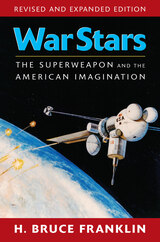
In this new and expanded edition of an already classic work, H. Bruce Franklin brings the epic story of the superweapon and the American imagination into the ominous twenty-first century, demonstrating its continuing importance both to comprehending our current predicament and to finding ways to escape from it.
Sweeping through two centuries of American culture and military history, Franklin traces the evolution of superweapons from Robert Fulton's eighteenth-century submarine through the strategic bomber, atomic bomb, and Star Wars to a twenty-first century dominated by “weapons of mass destruction,” real and imagined. Interweaving culture, science, technology, and history, he shows how and why the American pursuit of the ultimate defensive weapon—guaranteed to end all war and bring universal triumph to American ideals—has led our nation and the world into an epoch of terror and endless war.
READERS
Browse our collection.
PUBLISHERS
See BiblioVault's publisher services.
STUDENT SERVICES
Files for college accessibility offices.
RECENTLY PUBLISHED






UChicago Accessibility Resources
home | accessibility | search | about | contact us
BiblioVault ® 2001 - 2026
The University of Chicago Press