
 A SCHOLARLY BOOK REPOSITORY
By bringing listeners’ experiences into the analysis, DiPiero shows how indie rock feminisms have shifted since the 1990s, rejecting overt political messages in favor of sonic catharsis, and reflecting the complex, ambivalent feeling of being young while the world burns. In reprising the sounds of an alt-rock associated in public consciousness with white male pain, Big Feelings doubles down on the stereotypical association between femininity and emotionality to perform whole spectrums of feeling in varied states of overwhelm. In doing so, these artists draw attention to overlooked histories of women and queer musicians who have been forging indie rock all along, while also remaking how the music matters in the present.
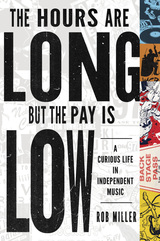
Rob Miller arrived in Chicago wanting to escape the music industry. In short order, he co-founded a trailblazing record label revered for its artist-first approach and punk take on country, roots, and so much else. Miller’s gonzo memoir follows a music fan’s odyssey through a singular account of Bloodshot Records, the Chicago scene, and thirty years as part of a community sustaining independent artists and businesses.
Hilarious and hundred-proof, The Hours Are Long, But the Pay Is Low delivers a warm-hearted yet clear-eyed account of loving and living music on the edge, in the trenches, and without apologies.
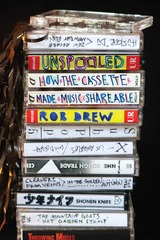

The first critical biography of iconic musician Alanis Morissette, creator of Jagged Little Pill.
The 1990s hardly saw a bigger hit than Jagged Little Pill. Alanis Morissette’s defining album won Grammys, dominated the Billboard charts, and sold more than 30 million copies worldwide. It left a deep mark on the psyches of countless listeners. Three decades later, Megan Volpert checks in with Morissette, probing her rich and varied post-JLP career and bearing feminist witness to the existential anger that ties her recent work to enduring classics like “You Oughta Know,” “One Hand in My Pocket,” and “Ironic.”
Why Alanis Morissette Matters builds a bridge from Jagged Little Pill to the fascinating life and subtle intellect of its creator, exploring how the artist’s philosophical interests and personal journey are reflected in each track. Morissette’s struggles with censorship, mental health challenges, and Catholicism; her queer allyship, spiritual skepticism, zealous fandom, and philanthropic passions—all are carefully observed by a critic whose own life was touched by Jagged Little Pill. In the album’s wake, Morissette has evolved as an artist and global citizen. With sensitivity and a profound love for the music, Volpert guides readers through the case for Morissette’s enduring cultural relevance and creative impact.

2023 ARSC Awards for Excellence in Historical Recorded Sound Research, Association for Recorded Sound Collections
An insider’s look at how Chicago’s underground music industry transformed indie rock in the 1990s.
In the 1990s, Chicago was at the center of indie rock, propelling bands like the Smashing Pumpkins and Liz Phair to the national stage. The musical ecosystem from which these bands emerged, though, was expansive and diverse. Grunge players comingled with the electronic, jazz, psychedelic, and ambient music communities, and an inventive, collaborative group of local labels—kranky, Drag City, and Thrill Jockey, among others—embraced the new, evolving sound of indie “rock.” Bruce Adams, co-founder of kranky records, was there to bear witness.
In You’re with Stupid, Adams offers an insider’s look at the role Chicago’s underground music industry played in the transformation of indie rock. Chicago labels, as Adams explains, used the attention brought by national acts to launch bands that drew on influences outside the Nirvana-inspired sound then dominating pop. The bands themselves—Labradford, Godspeed You! Black Emperor, Low—were not necessarily based in Chicago, but it was Chicago labels like kranky that had the ears and the infrastructure to do something with this new music. In this way, Chicago-shaped sounds reached the wider world, presaging the genre-blending music of the twenty-first century. From an author who helped create the scene and launched some of its best music, You’re with Stupid is a fascinating and entertaining read.
READERS
Browse our collection.
PUBLISHERS
See BiblioVault's publisher services.
STUDENT SERVICES
Files for college accessibility offices.
RECENTLY PUBLISHED




UChicago Accessibility Resources
home | accessibility | search | about | contact us
BiblioVault ® 2001 - 2025
The University of Chicago Press