
 A SCHOLARLY BOOK REPOSITORY
A meticulous examination of the history and roots of economic inequality within the United States.
This volume refines and extends the economic history literature on economic inequality in the United States. Economic inequality manifests itself on various dimensions, including access to resources and economic security, as well as access to education and opportunities for migration, marriage, and other important life decisions. Measuring inequality and studying its variation over time and in response to economic shocks such as recessions and wars deepen our understanding of how the economy operates and can inform the design of public policies. The studies in this compendium present comprehensive evidence on income distribution during the nineteenth and early twentieth centuries, drawing on new data on wages and prices. They also consider disparities in economic well-being that are reflected in outcomes other than wage and salary income, such as homeownership and marriage. The volume also presents new evidence on the effects of income inequality on social outcomes. It concludes with an intellectual history of “human capital,” a core concept in the economic analysis of the underpinnings of labor market inequality.
Public toilets determine who gets everyday dignity, freedom of movement, and civic belonging—and who doesn’t.
Americans have nowhere to go. Nationwide, countless public spaces lack one crucial thing: bathrooms, never mind ones that are safe and functional. Yet in the past, political leaders celebrated the opening of public bathrooms with boisterous press conferences and showy ribbon-cutting ceremonies.
For Customers Only is the first book to tell the larger history of public bathrooms in the United States, a fascinating story characterized by persistent discrimination, squeamishness about unknown bodies, and disinvestment in public amenities. Acclaimed writer and historian Bryant Simon argues that restrooms aren’t only an architectural feature, but an emblem of control and inequality. In the late nineteenth century, cities vied for the newest and biggest comfort stations to meet the demands of their bustling economies and accommodate a broad and growing public. They built restrooms with gold-domed entrances and ornamented stall doors to inspire cleanliness and order.
But officials soon grew anxious about who might take advantage of this privacy: gay men, the unhoused, and eventually drug users. And as the civil rights movement challenged segregation, officials in the north and south closed public toilets rather than integrate them. By the end of the twentieth century, only people with means could use private bathrooms while out and about—provided they made a purchase at a business. Today, as the fights over trans rights reveal, bathroom access remains a flash point across the country. Meanwhile, some municipalities are again calling for widely available public toilets, but as a tool for economic revitalization, not a public necessity.
The political and cultural history of a squirm-inducing subject, For Customers Only reveals the real and symbolic power of the most ordinary of things. Bathrooms, Simon shows, have always reflected our fragmented national values. Whether these spaces will ever become more accessible and inclusive is ultimately up to us.
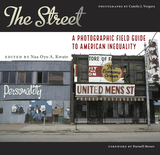
Using MacArthur fellow Camilo José Vergara’s intimate street photographs of Camden, New Jersey as reference points, the essays in this collection analyze these images within the context of troubled histories and misguided policies that have exacerbated racial and economic inequalities. Rather than blaming Camden’s residents for the blighted urban landscape, the multidisciplinary array of scholars contributing to this guide reveal the oppressive structures and institutional failures that have led the city to this condition. Tackling topics such as race and law enforcement, gentrification, food deserts, urban aesthetics, credit markets, health care, childcare, and schooling, the contributors challenge conventional thinking about what we should observe when looking at neighborhoods.
READERS
Browse our collection.
PUBLISHERS
See BiblioVault's publisher services.
STUDENT SERVICES
Files for college accessibility offices.
RECENTLY PUBLISHED






UChicago Accessibility Resources
home | accessibility | search | about | contact us
BiblioVault ® 2001 - 2026
The University of Chicago Press