
 A SCHOLARLY BOOK REPOSITORY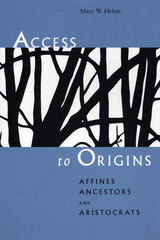
In many non-industrial, non-Western societies, power and prestige are closely linked to the extent of an individual's or group's perceived connection to the supernatural realm, which also explains and validates tangible activities such as economic success, victories in war, or control over lucrative trade. Affines (in-laws), ancestors, and aristocrats, in particular, are connected to the realm of creative cosmological origins (i.e., to Genesis), which accords them distinctive, supernatural powers and gives them a natural and legitimate right to worldly authority.
This is the hypothesis that Mary W. Helms pursues in this broadly cross-cultural study of aristocracy in chiefly societies. She begins with basic ideas about the dead, ancestors, affines, and concepts of cosmological origins. This leads her to a discussion of cosmologically defined hierarchies, the qualities that characterize aristocracy, and the political and ideological roles of aristocrats as wife-givers and wife-takers (that is, as in-laws). She concludes by considering various models that explain how societies may develop or define aristocracies.
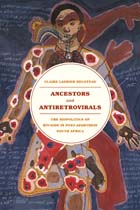
In Ancestors and Antiretrovirals, Claire Laurier Decoteau backs up Tutu’s assertion with powerful arguments about how this came to pass. Decoteau traces the historical shifts in health policy after apartheid and describes their effects, detailing, in particular, the changing relationship between biomedical and indigenous health care, both at the national and the local level. Decoteau tells this story from the perspective of those living with and dying from AIDS in Johannesburg’s squatter camps. At the same time, she exposes the complex and often contradictory ways that the South African government has failed to balance the demands of neoliberal capital with the considerable health needs of its population.

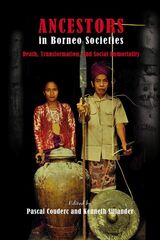
This volume addresses two facets common to our human experience. We are all descendants; we all have ancestors who make powerful claims on our lives. And we live in the aftermath of contact between European-based cultures and other civilizations. It is now clear that native religions are alive and adapting in the contemporary world, just as all religions have done in all eras.
The phenomenon of ancestors is common to all humans, but while prominent in most indigenous traditions, it has been suppressed in western cultures. This volume articulates crucial issues in the study of post-contact religion through the themes of the ancestral ordering of the world, intense personal attachments to forebears, and the catastrophes of colonization.
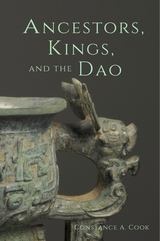
Ancestors, Kings, and the Dao outlines the evolution of musical performance in early China, first within and then ultimately away from the socio-religious context of ancestor worship. Examining newly discovered bamboo texts from the Warring States period, Constance A. Cook compares the rhetoric of Western Zhou (1046–771 BCE) and Spring and Autumn (770–481 BCE) bronze inscriptions with later occurrences of similar terms in which ritual music began to be used as a form of self-cultivation and education. Cook’s analysis links the creation of such classics as the Book of Odes with the ascendance of the individual practitioner, further connecting the social actors in three types of ritual: boys coming of age, heirs promoted into ancestral government positions, and the philosophical stages of transcendence experienced in self-cultivation.
The focus of this study is on excavated texts; it is the first to use both bronze and bamboo narratives to show the evolution of a single ritual practice. By viewing the ancient inscribed materials and the transmitted classics from this new perspective, Cook uncovers new linkages in terms of how the materials were shaped and reshaped over time and illuminates the development of eulogy and song in changing ritual contexts.
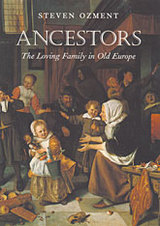
Rescuing the premodern family from the grim picture many historians have given us of life in early Europe, Ancestors offers a major reassessment of a crucial aspect of European history—and tells a story of age-old domesticity inextricably linked, and surprisingly similar, to our own.
An elegant summa on family life in Europe past, this compact and powerful book extends and completes a project begun with Steven Ozment’s When Fathers Ruled: Family Life in Reformation Europe. Here Ozment, the leading historian of the family in the middle centuries, replaces the often miserable depiction of premodern family relations with a delicately nuanced portrait of a vibrant and loving social group. Mining the records of families’ private lives—from diaries and letters to fiction and woodcuts—Ozment shows us a preindustrial family not very different from the later family of high industry that is generally viewed as the precursor to the sentimental nuclear family of today.
In Ancestors, we see the familiar pattern of a domestic wife and working father in a home in which spousal and parental love were amply present: parents cherished their children, wives were helpmeets in providing for the family, and the genders were nearly equal. Contrary to the abstractions of history, parents then—as now—were sensitive to the emotional and psychological needs of their children, treated them with affection, and gave them a secure early life and caring preparation for adulthood.
As it recasts familial history, Ancestors resonates beyond its time, revealing how much the story of the premodern family has to say to a modern society that finds itself in the throes of a family crisis.

Christianity is often praised as an agent of Chinese modernization or damned as a form of cultural and religious imperialism. In both cases, Christianity’s foreignness and the social isolation of converts have dominated this debate. Eugenio Menegon uncovers another story. In the sixteenth century, European missionaries brought a foreign and global religion to China. Converts then transformed this new religion into a local one over the course of the next three centuries.
Focusing on the still-active Catholic communities of Fuan county in northeast Fujian, this project addresses three main questions. Why did people convert? How did converts and missionaries transform a global and foreign religion into a local religion? What does Christianity’s localization in Fuan tell us about the relationship between late imperial Chinese society and religion?
Based on an impressive array of sources from Asia and Europe, this pathbreaking book reframes our understanding of Christian missions in Chinese-Western relations. The study’s implications extend beyond the issue of Christianity in China to the wider fields of religious and social history and the early modern history of global intercultural relations. The book suggests that Christianity became part of a preexisting pluralistic, local religious space, and argues that we have so far underestimated late imperial society’s tolerance for “heterodoxy.” The view from Fuan offers an original account of how a locality created its own religious culture in Ming-Qing China within a context both global and local, and illuminates the historical dynamics contributing to the remarkable growth of Christian communities in present-day China.
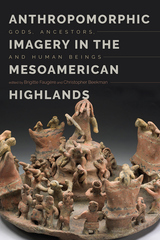
Using case studies covering a broad span of highlands prehistory—Classic Teotihuacan divine iconography, ceramic figures in Late Formative West Mexico, Epiclassic Puebla-Tlaxcala costumed figurines, earth sculptures in Prehispanic Oaxaca, Early Postclassic Tula symbolic burials, Late Postclassic representations of Aztec Kings, and more—contributors examine both Mesoamerican representations of the body in changing social, political, and economic conditions and the multivalent emic meanings of these representations. They explore the technology of artifact production, the body’s place in social structures and rituals, the language of the body as expressed in postures and gestures, hybrid and transformative combinations of human and animal bodies, bodily representations of social categories, body modification, and the significance of portable and fixed representations.
Anthropomorphic Imagery in the Mesoamerican Highlands provides a wide range of insights into Mesoamerican concepts of personhood and identity, the constitution of the human body, and human relationships with gods and ancestors. It will be of great value to students and scholars of the archaeology and art history of Mexico.
Contributors: Claire Billard, Danièle Dehouve, Cynthia Kristan-Graham, Melissa Logan, Sylvie Peperstraete, Patricia Plunket, Mari Carmen Serra Puche, Juliette Testard, Andrew Turner, Gabriela Uruñuela, Marcus Winter
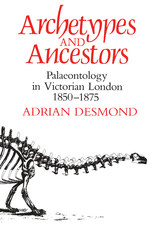
"A sophisticated study of the colonization of scientific territory—specifically of rival attempts to design the dinosaur—and of the constructive (not just obstructive) role of social pressures in the making of 'lasting contributions' to science. Not least it is a joy to read, perkily irreverent at times and full of nice vignettes and memorable turns of phrase."—Roy Porter, Times Higher Education Supplement
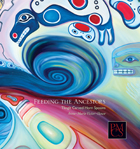
Feeding the Ancestors presents an exquisite group of carved spoons from the Pacific Northwest that resides in the collections of Harvard's Peabody Museum of Archaeology and Ethnology. Carved from the horns of mountain goats and Dall sheep, and incorporating elements of abalone shell and metal, most of the spoons were collected in Alaska in the late nineteenth century and were made and used by members of the Tlingit tribe. Hillel Burger's beautiful color photographs reveal every nuance of the carvers' extraordinary artistry.
Anne-Marie Victor-Howe introduces the collectors and describes the means by which these and other ethnographic objects were acquired. In the process, she paints a vivid picture of the "Last Frontier" just before and shortly after the United States purchased Alaska. A specialist in the ethnography of the Native peoples of the Northwest Coast, Victor-Howe provides a fascinating glimpse into these aboriginal subsistence cultures as she explains the manufacture and function of traditional spoons. Her accounts of the clan stories associated with specific carvings and of the traditional shamanic uses of spoons are the result of extensive consultation with Tlingit elders, scholars, and carvers.
Feeding the Ancestors is the first scholarly study of traditional feast spoons and a valuable contribution to our knowledge of Pacific Northwest Coast peoples and their art.
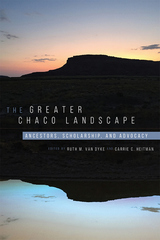
Contributors analyze many different dimensions of the Chacoan landscape and present the most effective, innovative, and respectful means of studying them, focusing on the significance of thousand-year-old farming practices; connections between early great houses outside the canyon and the rise of power inside it; changes to Chaco’s roads over time as observed in aerial imagery; rock art throughout the greater Chaco area; respectful methods of examining shrines, crescents, herraduras, stone circles, cairns, and other landscape features in collaboration with Indigenous colleagues; sensory experiences of ancient Chacoans via study of the sightlines and soundscapes of several outlier communities; and current legal, technical, and administrative challenges and options concerning preservation of the landscape.
An unusually innovative and timely volume that will be available both in print and online, with the online edition incorporating video chapters presented by Acoma, Diné, Zuni, and Hopi cultural experts filmed on location in Chaco Canyon, The Greater Chaco Landscape is a creative collaboration with Native voices that will be a case study for archaeologists and others working on heritage management issues across the globe. It will be of interest to archaeologists specializing in Chaco and the Southwest, interested in remote sensing and geophysical landscape-level investigations, and working on landscape preservation and phenomenological investigations such as viewscapes and soundscapes.
Contributors: R. Kyle Bocinsky, G. B. Cornucopia, Timothy de Smet, Sean Field, Richard A. Friedman, Dennis Gilpin, Presley Haskie, Tristan Joe, Stephen H. Lekson, Thomas Lincoln, Michael P. Marshall, Terrance Outah, Georgiana Pongyesva, Curtis Quam, Paul F. Reed, Octavius Seowtewa, Anna Sofaer, Julian Thomas, William B. Tsosie Jr., Phillip Tuwaletstiwa, Ernest M. Vallo Jr., Carla R. Van West, Ronald Wadsworth, Robert S. Weiner, Thomas C. Windes, Denise Yazzie, Eurick Yazzie
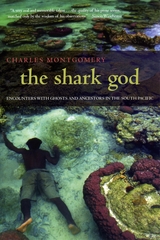
In the South Pacific, he discovers a world of sorcery and shark worship, where Christian and pagan rituals coexist and an ordinary day is marked by confrontations with America-worshiping cult leaders and militants alike. A defiantly original blend of history and memoir, anthropology and travel writing, The Shark God is ultimately a tale of personal and political transformation.
“The Shark God, a travel story as dark and twisted as one might ever wish to hear . . . reaches a superb climax with some apocalyptically page-turning scenes.”—Guardian
“A fascinating account of the drama of Melanesian life.”—Times Literary Supplement
“With exquisite writing, Montgomery lovingly captures the beauty and the horrors, the mysteries and the shams of the people and places he visits.”—Publishers Weekly
“A very real and memorable talent. . . . The endurance [Montgomery] displayed on his travels was admirable, the adventures he survived were tremendous, and the quality of his prose seems matched only by the wisdom of his observations.”—Simon Winchester, Globe and Mail (Toronto)
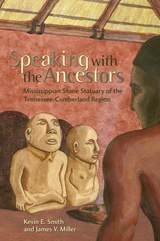
When European explorers began their initial forays into southeastern North America in the 16th and 17th centuries they encountered what they called temples and shrines of native peoples, often decorated with idols in human form made of wood, pottery, or stone. The idols were fascinating to write about, but having no value to explorers searching for gold or land, there are no records of these idols being transported to the Old World, and mention of them seems to cease about the 1700s. However, with the settling of the fledgling United States in the 1800s, farming colonists began to unearth stone images in human form from land formerly inhabited by the native peoples. With little access to the records of the 16th and 17th centuries, debate and speculation abounded by the public and scholars alike concerning their origin and meaning.
During the last twenty years the authors have researched over 88 possible examples of southeastern Mississippian stone statuary, dating as far back as 1,000 years ago, and discovered along the river valleys of the interior Southeast. Independently and in conjunction, they have measured, analyzed, photographed, and traced the known history of the 42 that appear in this volume. Compiling the data from both early documents and public and private collections, the authors remind us that the statuary should not be viewed in isolation, but rather as regional expressions of a much broader body of art, ritual, and belief.
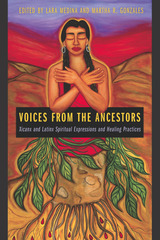
This wisdom is based on the authors’ oral traditions, research, intuitions, and lived experiences—wisdom inspired by, and created from, personal trajectories on the path to spiritual conocimiento, or inner spiritual inquiry. This conocimiento has reemerged over the last fifty years as efforts to decolonize lives, minds, spirits, and bodies have advanced. Yet this knowledge goes back many generations to the time when the ancestors understood their interconnectedness with each other, with nature, and with the sacred cosmic forces—a time when the human body was a microcosm of the universe.
Reclaiming and reconstructing spirituality based on non-Western epistemologies is central to the process of decolonization, particularly in these fraught times. The wisdom offered here appears in a variety of forms—in reflective essays, poetry, prayers, specific guidelines for healing practices, communal rituals, and visual art, all meant to address life transitions and how to live holistically and with a spiritual consciousness for the challenges of the twenty-first century.

This classic study of Black
Carib culture and its preservation through ancestral rituals organized
by older women now includes a foreword by Constance R. Sutton and an afterword
by the author.
"One of the outstanding
studies of this genre. . . . Refreshingly, the book has good photographs,
as well as strong endnotes and bibliography, and very useful tables, figures,
maps, and index." -- Choice
"An outstanding contribution
to the literature on female-centered bilateral kinship and residence."
-- Grant D. Jones, American Ethnologist
"A richly detailed account
of a contemporary culture in which older women are important, valued,
and self-respecting."
-- Anthropology and Humanism Quarterly
"A combination of competent
research, interwoven themes, and an easily readable, sometimes beautifully
evocative, prose style." -- Heather Strange, The Gerontologist
READERS
Browse our collection.
PUBLISHERS
See BiblioVault's publisher services.
STUDENT SERVICES
Files for college accessibility offices.
RECENTLY PUBLISHED





UChicago Accessibility Resources
home | accessibility | search | about | contact us
BiblioVault ® 2001 - 2025
The University of Chicago Press