
 A SCHOLARLY BOOK REPOSITORY
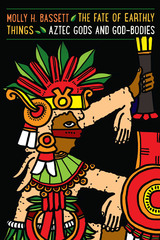
Following their first contact in 1519, accounts of Aztecs identifying Spaniards as gods proliferated. But what exactly did the Aztecs mean by a “god” (teotl), and how could human beings become gods or take on godlike properties? This sophisticated, interdisciplinary study analyzes three concepts that are foundational to Aztec religion—teotl (god), teixiptla (localized embodiment of a god), and tlaquimilolli (sacred bundles containing precious objects)—to shed new light on the Aztec understanding of how spiritual beings take on form and agency in the material world.
In The Fate of Earthly Things, Molly Bassett draws on ethnographic fieldwork, linguistic analyses, visual culture, and ritual studies to explore what ritual practices such as human sacrifice and the manufacture of deity embodiments (including humans who became gods), material effigies, and sacred bundles meant to the Aztecs. She analyzes the Aztec belief that wearing the flayed skin of a sacrificial victim during a sacred rite could transform a priest into an embodiment of a god or goddess, as well as how figurines and sacred bundles could become localized embodiments of gods. Without arguing for unbroken continuity between the Aztecs and modern speakers of Nahuatl, Bassett also describes contemporary rituals in which indigenous Mexicans who preserve costumbres (traditions) incorporate totiotzin (gods) made from paper into their daily lives. This research allows us to understand a religious imagination that found life in death and believed that deity embodiments became animate through the ritual binding of blood, skin, and bone.
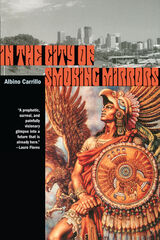
In the City of Smoking Mirrors relates H.'s adventures as he hovers between life and death, revisiting his homeland and ancestors. He issues letters and edicts—to the faithful, to his dead amigos—and chronicles his circumnavigation of the Land of the Dead and "what he saw there that made him write this book." In tantalizing verse that walks the edge of dream, Albino Carrillo takes readers on a lyrical exploration of a dark netherworld, a quest for hope in a universe overshadowed by impending doom—a place where "The demons you'll have to defeat on your inward journey / Are like so many little yellow hornets buzzing about / Window screens in summer, angry but looking / For anything sweet, any way out . . . ." Through the unforgettable persona of Huitzilopochtli, Carrillo shows us the transitory nature of our passions and wounds as he chisels a new headstone for our times.
READERS
Browse our collection.
PUBLISHERS
See BiblioVault's publisher services.
STUDENT SERVICES
Files for college accessibility offices.
RECENTLY PUBLISHED





UChicago Accessibility Resources
home | accessibility | search | about | contact us
BiblioVault ® 2001 - 2026
The University of Chicago Press