
 A SCHOLARLY BOOK REPOSITORY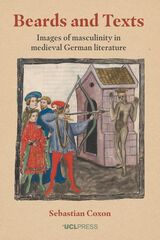
Beards make frequent appearances in medieval German poetry—as esteemed markers of majestic wisdom or as hilarious props for undignified manhandling. In Beards and Texts, Sebastian Coxon traces this preeminent symbol of masculinity through four major poetic traditions across the twelfth and sixteenth centuries—Pfaffe Konrad’s Rolandslied, Wolfram von Eschenbach’s Willehalm, ‘Sangspruchdichtung’, and Heinrich Wittenwiler’s Ring. By attending to this hairy trope, Beards and Texts sheds new light on the construction of both poetic form and masculinity in the Middle Ages.
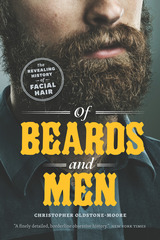
Of Beards and Men makes the case that today’s bearded renaissance is part of a centuries-long cycle in which facial hairstyles have varied in response to changing ideals of masculinity. Christopher Oldstone-Moore explains that the clean-shaven face has been the default style throughout Western history—see Alexander the Great’s beardless face, for example, as the Greek heroic ideal. But the primacy of razors has been challenged over the years by four great bearded movements, beginning with Hadrian in the second century and stretching to today’s bristled resurgence. The clean-shaven face today, Oldstone-Moore says, has come to signify a virtuous and sociable man, whereas the beard marks someone as self-reliant and unconventional. History, then, has established specific meanings for facial hair, which both inspire and constrain a man’s choices in how he presents himself to the world.
This fascinating and erudite history of facial hair cracks the masculine hair code, shedding light on the choices men make as they shape the hair on their faces. Oldstone-Moore adeptly lays to rest common misperceptions about beards and vividly illustrates the connection between grooming, identity, culture, and masculinity. To a surprising degree, we find, the history of men is written on their faces.

A New Yorker Best Book of the Year
A surprising history of human hair in nineteenth-century America, where length, texture, color, and coiffure became powerful indicators of race, gender, and national belonging.
Hair is always and everywhere freighted with meaning. In nineteenth-century America, however, hair took on decisive new significance as the young nation wrestled with its identity. During the colonial period, hair was usually seen as bodily discharge, even “excrement.” But as Sarah Gold McBride shows, hair gradually came to be understood as an integral part of the body, capable of exposing truths about the individuals from whom it grew—even truths they wanted to hide.
As the United States diversified—intensifying divisions over race, class, citizenship status, and region—Americans sought to understand and classify one another through the revelatory power of hair: its color, texture, length, even the shape of a single strand. While hair styling had long offered clues about one’s social status, the biological properties of hair itself gradually came to be seen as a scientific tell: a reliable indicator of whether a person was a man or a woman; Black, white, Indigenous, or Asian; Christian or heathen; healthy or diseased. Hair was even thought to illuminate aspects of personality—whether one was courageous, ambitious, or perhaps criminally inclined. Yet if hair was a teller of truths, it was also readily turned to purposes of deception in ways that alarmed some and empowered others. Indeed, hair helped many Americans to fashion statements about political belonging, to engage in racial or gender passing, and to reinvent themselves in new cities.
A history inscribed in bangs, curls, and chops, Whiskerology illuminates a period in American history when hair indexed belonging in some ways that may seem strange—but in other ways all too familiar—today.
READERS
Browse our collection.
PUBLISHERS
See BiblioVault's publisher services.
STUDENT SERVICES
Files for college accessibility offices.
RECENTLY PUBLISHED






UChicago Accessibility Resources
home | accessibility | search | about | contact us
BiblioVault ® 2001 - 2025
The University of Chicago Press