
 A SCHOLARLY BOOK REPOSITORY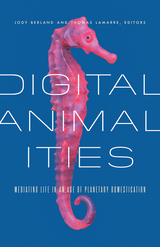
Exploring where animality meets digital media in the shadow of climate crisis
Digital Animalities is a groundbreaking investigation into the entanglements of animal life, media infrastructures, and digital technologies in a time of environmental precarity and digital saturation. Revealing the digital as a dynamic site where animal agency and technological systems collide, the contributors eschew simplistic binaries to emphasize complex mediations between animals and digital media.
From wildlife camera traps and virtual zoos to gaming environments and animation tools, these essays explore how animals are captured, played with, and consumed through digital technologies, elaborating their agency in these mediations of ecological and biopolitical processes. Rethinking animality as a fluid and contested terrain shaped by climate change, extinction pressures, and emerging ecopolitical paradigms, Digital Animalities shifts how we consider the impact of the digital on sentient lives and their futures.
Contributors: Giovanni Aloi, Art Institute of Chicago; Etienne S. Benson, Max Planck Institute for the History of Science, Berlin; Sarah Bezan, U College Cork; Michael Fisch, U of Chicago; Kate Galloway, Rensselaer Polytechnic Institute; Christine L. Marran, U of Minnesota; Brian McCormack; Jonathan Osborn; Hannah Tollefson, U of Toronto Scarborough; Tom Tyler, U of Leeds; Paul Wells, Loughborough U; Hang Wu.
Retail e-book files for this title are screen-reader friendly with images accompanied by short alt text and/or extended descriptions.
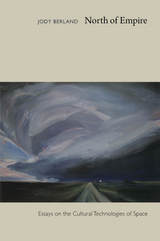
Berland explores how understandings of space and time, empire and margin, embodiment and technology, and nature and culture are shaped by broadly conceived communications technologies including pianos, radio, television, the Web, and satellite imaging. Along the way, she provides a useful overview of the assumptions driving communications research on both sides of the U.S.-Canadian border, and she highlights the distinctive contributions of the Canadian communication theorists Harold Innis and Marshall McLuhan. Berland argues that electronic mediation is central to the construction of social space and therefore to anti-imperialist critique. She illuminates crucial links between how space is traversed, how it is narrated, and how it is used. Making an important contribution to scholarship on globalization, Berland calls for more sophisticated accounts of media and cultural technologies and their complex “geographies of influence.”
READERS
Browse our collection.
PUBLISHERS
See BiblioVault's publisher services.
STUDENT SERVICES
Files for college accessibility offices.
RECENTLY PUBLISHED




UChicago Accessibility Resources
home | accessibility | search | about | contact us
BiblioVault ® 2001 - 2026
The University of Chicago Press