
 A SCHOLARLY BOOK REPOSITORY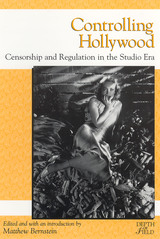
Controlling Hollywood features ten innovative and accessible essays that examine some of the major turning points, crises, and contradictions affecting the making and showing of Hollywood movies from the 1910s through the early 1970s. The articles included here examine landmark legal cases; various self-regulating agencies and systems in the film industry (from the National Board of Review to the ratings system); and, external to Hollywood, the religious and social interest groups and government bodies that took a strong interest in film entertainment over the decades.
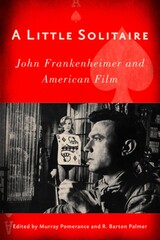
Think about some commercially successful film masterpieces--The Manchurian Candidate. Seven Days in May. Seconds. Then consider some lesser known, yet equally compelling cinematic achievements--The Fixer. The Gypsy Moths. Path to War. These triumphs are the work of the best known and most highly regarded Hollywood director to emerge from live TV drama in the 1950s--five-time Emmy-award-winner John Frankenheimer.
Although Frankenheimer was a pioneer in the genre of political thrillers who embraced the antimodernist critique of contemporary society, some of his later films did not receive the attention they deserved. Many claimed that at a midpoint in his career he had lost his touch. World-renowned film scholars put this myth to rest in A Little Solitaire, which offers the only multidisciplinary critical account of Frankenheimer's oeuvre. Especially emphasized is his deep and passionate engagement with national politics and the irrepressible need of human beings to assert their rights and individuality in the face of organizations that would reduce them to silence and anonymity.
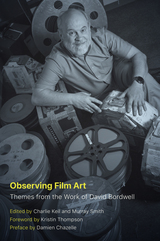
When David Bordwell died in 2024, he left behind a legacy of film scholarship and criticism whose influence is unmatched. Co-author of a pair of textbooks adopted across the globe and the main force behind a blog read by thousands, Bordwell has influenced generations of film students, filmmakers, and film critics. Observing Film Art examines the breadth of Bordwell’s work through the perspectives of those who knew him best, collaborators, former students, and critics among them. This is the first collection devoted to the work of Bordwell, and it gives equal attention to each facet of his prodigious scholarship, structured to highlight his interest in theory, history, and analysis and criticism. The cornerstones of his approach to film study, including formalism, cognitivism, and historical poetics, are all examined in detail, as are key works, including The Classical Hollywood Cinema (coauthored with Kristin Thompson and Janet Staiger) and Narration in the Fiction Film.
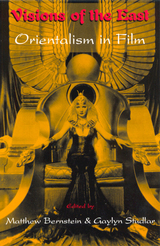
The Sheik. Pépé le Moko. Casablanca. Aladdin. Some of the most popular and frequently discussed titles in movie history are imbued with orientalism, the politically-charged way in which western artists have represented gender, race, and ethnicity in the cultures of North Africa and Asia. This is the first anthology to address and highlight orientalism in film from pre-cinema fascinations with Egyptian culture through the "Whole New World" of Aladdin. Eleven illuminating and well-illustrated essays utilize the insights of interdisciplinary cultural studies, psychoanalysis, feminism, and genre criticism. Other films discussed includeThe Letter, Caesar and Cleopatra, Lawrence of Arabia, Indochine, and several films of France's cinéma colonial.
READERS
Browse our collection.
PUBLISHERS
See BiblioVault's publisher services.
STUDENT SERVICES
Files for college accessibility offices.
RECENTLY PUBLISHED



UChicago Accessibility Resources
home | accessibility | search | about | contact us
BiblioVault ® 2001 - 2026
The University of Chicago Press