
 A SCHOLARLY BOOK REPOSITORY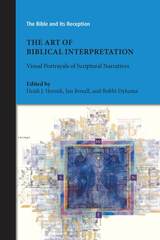
A richly illustrated collection of essays on visual biblical interpretation
For centuries Christians have engaged their sacred texts as much through the visual as through the written word. Yet until recent decades, the academic disciplines of biblical studies and art history largely worked independently. This volume bridges that gap with the interdisciplinary work of biblical scholars and art historians. Focusing on the visualization of biblical characters from both the Old and New Testaments, essays illustrate the potential of such collaboration for a deeper understanding of the Bible and its visual reception. Contributions from Ian Boxall, James Clifton, David B. Gowler, Jonathan Homrighausen, Heidi J. Hornik, Jeff Jay, Christine E. Joynes, Yohana A. Junker, Meredith Munson, and Ela Nuțu foreground diverse cultural contexts and chronological periods for scholars and students of the Bible and art.

Now in Paperback!
The Encyclopedia of Midrash provides readers with a deep, broad treatment of midrash unavailable in any other single source. Through the writings of top scholars in each of their fields, it sets out the current state of the question for the many topics discussed throughout the two-volume set. The encyclopedia treats interpretations of Scripture that came to closure prior to, or outside of, the framework of rabbinic midrash: Hellenistic Jewish midrash, Josephus, Pseudo-Philo, Jubilees, as well as to the New Testament, Karaite and Samaritan writings, and the Dead Sea Scrolls.
Features:
- Paperback format of an essential Brill hardcover reference set
- A general introduction to rabbinic midrash and its traits
- Discussion of rabbinic midrashic documents focused on specific books of Scripture, the theology expressed by rabbinic midrashic compilations, and the historical context in which rabbinic Midrash took shape
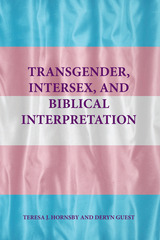
A call for “trans literacy” within biblical scholarship
In this volume Hornsby and Guest introduce readers to terms for the various identities of trans people and how the Bible can be an affirmation of those deemed sexually other by communities. This book offers readings of well known (e.g., Gen 1; Revelation) and not so well known (2 Sam 6; Jer 38) narratives to illustrate that the Bible has been translated and interpreted with a bias that makes heterosexuality and a two sex, two gender system natural, and thus divinely ordained. The authors present examples that show gender was never a binary, and in the Bible gender and sex are always dynamic categories that do, and must, transition.
Features:
READERS
Browse our collection.
PUBLISHERS
See BiblioVault's publisher services.
STUDENT SERVICES
Files for college accessibility offices.
RECENTLY PUBLISHED


UChicago Accessibility Resources
home | accessibility | search | about | contact us
BiblioVault ® 2001 - 2024
The University of Chicago Press