
 A SCHOLARLY BOOK REPOSITORY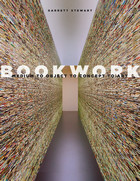
“There they rest, inert, impertinent, in gallery space—those book forms either imitated or mutilated, replicas of reading matter or its vestiges. Strange, after its long and robust career, for the book to take early retirement in a museum, not as rare manuscript but as functionless sculpture. Readymade or constructed, such book shapes are canceled as text when deposited as gallery objects, shut off from their normal reading when not, in some yet more drastic way, dismembered or reassembled.” So begins Bookwork, which follows our passion for books to its logical extreme in artists who employ found or simulated books as a sculptural medium. Investigating the conceptual labor behind this proliferating international art practice, Garrett Stewart looks at hundreds of book-like objects, alone or as part of gallery installations, in this original account of works that force attention upon a book’s material identity and cultural resonance.
Less an inquiry into the artist’s book than an exploration of the book form’s contemporary objecthood, Stewart’s interdisciplinary approach traces the lineage of these aggressive artifacts from the 1919 Unhappy Readymade of Marcel Duchamp down to the current crisis of paper-based media in the digital era. Bookwork surveys and illustrates a stunning variety of appropriated and fabricated books alike, ranging from hacksawed discards to the giant lead folios of Anselm Kiefer. The unreadable books Stewart engages with in this timely study are found, again and again, to generate graphic metaphors for the textual experience they preclude, becoming in this sense legible after all.
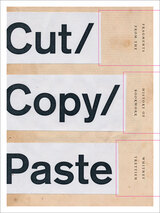
How do early modern media underlie today’s digital creativity?
In Cut/Copy/Paste, Whitney Trettien journeys to the fringes of the London print trade to uncover makerspaces and collaboratories where paper media were cut up and reassembled into radical, bespoke publications. Bringing these long-forgotten objects back to life through hand-curated digital resources, Trettien shows how early experimental book hacks speak to the contemporary conditions of digital scholarship and publishing. As a mixed-media artifact itself, Cut/Copy/Paste enacts for readers what Trettien argues: that digital forms have the potential to decenter patriarchal histories of print.
From the religious household of Little Gidding—whose biblical concordances and manuscripts exemplify protofeminist media innovation—to the queer poetic assemblages of Edward Benlowes and the fragment albums of former shoemaker John Bagford, Cut/Copy/Paste demonstrates history’s relevance to our understanding of current media. Tracing the lives and afterlives of amateur “bookwork,” Trettien creates a method for identifying and comprehending hybrid objects that resist familiar bibliographic and literary categories. In the process, she bears witness to the deep history of radical publishing with fragments and found materials.
With many of Cut/Copy/Paste’s digital resources left thrillingly open for additions and revisions, this book reimagines our ideas of publication while fostering a spirit of generosity and inclusivity. An open invitation to cut, copy, and paste different histories, it is an inspiration for students of publishing or the digital humanities, as well as anyone interested in the past, present, and future of creativity.
READERS
Browse our collection.
PUBLISHERS
See BiblioVault's publisher services.
STUDENT SERVICES
Files for college accessibility offices.
RECENTLY PUBLISHED


UChicago Accessibility Resources
home | accessibility | search | about | contact us
BiblioVault ® 2001 - 2026
The University of Chicago Press