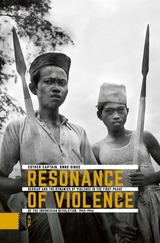
front cover of Resonance of Violence
Resonance of Violence
Bersiap and the Dynamics of Violence in the First Phase of the Indonesian Revolution, 1945-1946
Esther Captain
Amsterdam University Press, 2026
The battle cry ‘Bersiap!’ resounded in numerous cities and towns across Indonesia during the first months following the declaration of independence on August 17, 1945. Heard from all sides, this call to ‘stand by’ for the young nation’s fight for freedom marked the start of the Indonesian national revolution, heralding a period of extreme violence. These acts of violence were aimed primarily against civilians and served no military purpose. Resonance of Violence outlines the dynamics of this extreme violence in which Indonesian groups took up arms against Indo-Europeans, Moluccans, Dutch and Chinese, but also against Japanese civilians and both Japanese and British (or British Indian) soldiers.

The authors expressly situate this terrifying period within the wider context of mutual Indonesian violence and the use of violence by the Japanese, British and Dutch against Indonesian citizens. Java, Sumatra, and other islands are discussed in the book, as well as the complex issue of the number of victims. Finally, they discuss the development of the term "bersiap" over the past 75 years, which grew into a key concept in the Netherlands to describe the earliest phase of the Indonesian War of Independence.
[more]

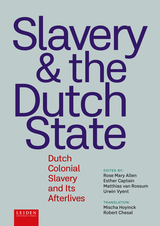
front cover of Slavery and The Dutch State
Slavery and The Dutch State
Dutch Colonial Slavery and Its Afterlives
Rose Mary Allen
Leiden University Press, 2025
It is the paradox at the heart of the Dutch Republic: how could a state emerge from resistance to political slavery and subjugation by a foreign power, only to become a colonial empire that promoted slavery all over the world? Slavery and the Dutch State shows how the modern Dutch state and its predecessors were complicit in colonial slavery. It describes the roles of various actors, such as enslaved people, administrators and merchants in the Netherlands and the colonized societies. More than thirty authors discuss the afterlives of slavery, the systematic nature of slavery in the nineteenth and twentieth centuries, the worldwide scope of slavery, and the various individuals, groups and organizations that had interests in slavery and colonialism starting in the sixteenth century. With chapters covering topics such as the Dutch Reformed Church's role in slavery, how the history of slavery is taught in schools, and the involvement of the Dutch parliament and royal family in colonial slavery, Slavery and the Dutch State is one of the main publications to appear between July 1, 2023 and July 1, 2024, the year when the Netherlands collectively commemorated the legacy of slavery.
[more]


Send via email Share on Facebook Share on Twitter