front cover of How Is It Between Us?
How Is It Between Us?
Relational Ethics and Care for the World
Jarrett Zigon
HAU, 2024
A new theory of relational ethics that tackles contemporary issues.

In How Is It Between Us?, Jarrett Zigon puts anthropology and phenomenological hermeneutics in conversation to develop a new theory of relational ethics. This relational ethics takes place in the between, the interaction not just between people, but all existents. Importantly, this theory is utilized as a framework for considering some of today’s most pressing ethical concerns—for example, living in a condition of post-truth and worlds increasingly driven by algorithms and data extraction, various and competing calls for justice, and the ethical demands of the climate crisis. Written by one of the preeminent contributors to the anthropology of ethics, this is a ground-breaking book within that literature, developing a robust and systematic ethical theory to think through contemporary ethical problems.
[more]

front cover of To Care for the Sick and Bury the Dead
To Care for the Sick and Bury the Dead
African American Lodges and Cemeteries in Tennessee
Leigh Ann Gardner
Vanderbilt University Press, 2022
Benevolent Orders, the Sons of Ham, Prince Hall Freemasons—these and other African American lodges created a social safety net for members across Tennessee. During their heyday between 1865 and 1930, these groups provided members with numerous resources, such as sick benefits and assurance of a proper burial, opportunities for socialization and leadership, and the chance to work with local churches and schools to create better communities. Many of these groups gradually faded from existence, but their legacy endures in the form of the cemeteries the lodges left behind.

These Black cemeteries dot the Tennessee landscape, but few know their history or the societies of care they represent. To Care for the Sick and Bury the Dead is the first book-length look at these cemeteries and the lodges that fostered them.

This book is a must-have for genealogists, historians, and family members of the people buried in these cemeteries.
[more]

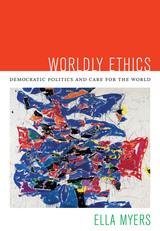
front cover of Worldly Ethics
Worldly Ethics
Democratic Politics and Care for the World
Ella Myers
Duke University Press, 2013
What is the spirit that animates collective action? What is the ethos of democracy? Worldly Ethics offers a powerful and original response to these questions, arguing that associative democratic politics, in which citizens join together and struggle to shape shared conditions, requires a world-centered ethos. This distinctive ethos, Ella Myers shows, involves care for "worldly things," which are the common and contentious objects of concern around which democratic actors mobilize. In articulating the meaning of worldly ethics, she reveals the limits of previous modes of ethics, including Michel Foucault's therapeutic model, based on a "care of the self," and Emmanuel Levinas's charitable model, based on care for the Other. Myers contends that these approaches occlude the worldly character of political life and are therefore unlikely to inspire and support collective democratic activity. The alternative ethics she proposes is informed by Hannah Arendt's notion of amor mundi, or love of the world, and it focuses on the ways democratic actors align around issues, goals, or things in the world, practicing collaborative care for them. Myers sees worldly ethics as a resource that can inspire and motivate ordinary citizens to participate in democratic politics, and the book highlights civic organizations that already embody its principles.

[more]


Send via email Share on Facebook Share on Twitter