
 A SCHOLARLY BOOK REPOSITORY
Results by Title
3 books about Carlisle, Liz
3 books about Carlisle, Liz
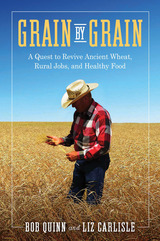
Grain by Grain
A Quest to Revive Ancient Wheat, Rural Jobs, and Healthy Food
Bob Quinn and Liz Carlisle
Island Press, 2019
"A compelling agricultural story skillfully told; environmentalists will eat it up." - Kirkus Reviews
When Bob Quinn was a kid, a stranger at a county fair gave him a few kernels of an unusual grain. Little did he know, that grain would change his life. Years later, after finishing a PhD in plant biochemistry and returning to his family’s farm in Montana, Bob started experimenting with organic wheat. In the beginning, his concern wasn’t health or the environment; he just wanted to make a decent living and some chance encounters led him to organics.
But as demand for organics grew, so too did Bob’s experiments. He discovered that through time-tested practices like cover cropping and crop rotation, he could produce successful yields—without pesticides. Regenerative organic farming allowed him to grow fruits and vegetables in cold, dry Montana, providing a source of local produce to families in his hometown. He even started producing his own renewable energy. And he learned that the grain he first tasted at the fair was actually a type of ancient wheat, one that was proven to lower inflammation rather than worsening it, as modern wheat does.
Ultimately, Bob’s forays with organics turned into a multimillion dollar heirloom grain company, Kamut International. In Grain by Grain, Quinn and cowriter Liz Carlisle, author of Lentil Underground, show how his story can become the story of American agriculture. We don’t have to accept stagnating rural communities, degraded soil, or poor health. By following Bob’s example, we can grow a healthy future, grain by grain.
When Bob Quinn was a kid, a stranger at a county fair gave him a few kernels of an unusual grain. Little did he know, that grain would change his life. Years later, after finishing a PhD in plant biochemistry and returning to his family’s farm in Montana, Bob started experimenting with organic wheat. In the beginning, his concern wasn’t health or the environment; he just wanted to make a decent living and some chance encounters led him to organics.
But as demand for organics grew, so too did Bob’s experiments. He discovered that through time-tested practices like cover cropping and crop rotation, he could produce successful yields—without pesticides. Regenerative organic farming allowed him to grow fruits and vegetables in cold, dry Montana, providing a source of local produce to families in his hometown. He even started producing his own renewable energy. And he learned that the grain he first tasted at the fair was actually a type of ancient wheat, one that was proven to lower inflammation rather than worsening it, as modern wheat does.
Ultimately, Bob’s forays with organics turned into a multimillion dollar heirloom grain company, Kamut International. In Grain by Grain, Quinn and cowriter Liz Carlisle, author of Lentil Underground, show how his story can become the story of American agriculture. We don’t have to accept stagnating rural communities, degraded soil, or poor health. By following Bob’s example, we can grow a healthy future, grain by grain.
[more]
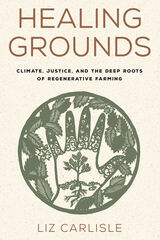
Healing Grounds
Climate, Justice, and the Deep Roots of Regenerative Farming
Liz Carlisle
Island Press, 2022
A powerful movement is happening in farming today—farmers are reconnecting with their roots to fight climate change. For one woman, that’s meant learning her tribe’s history to help bring back the buffalo. For another, it’s meant preserving forest purchased by her great-great-uncle, among the first wave of African Americans to buy land. Others are rejecting monoculture to grow corn, beans, and squash the way farmers in Mexico have done for centuries. Still others are rotating crops for the native cuisines of those who fled the “American wars” in Southeast Asia.
In Healing Grounds, Liz Carlisle tells the stories of Indigenous, Black, Latinx, and Asian American farmers who are reviving their ancestors’ methods of growing food—techniques long suppressed by the industrial food system. These farmers are restoring native prairies, nurturing beneficial fungi, and enriching soil health. While feeding their communities and revitalizing cultural ties to land, they are steadily stitching ecosystems back together and repairing the natural carbon cycle. This, Carlisle shows, is the true regenerative agriculture – not merely a set of technical tricks for storing CO2 in the ground, but a holistic approach that values diversity in both plants and people.
Cultivating this kind of regenerative farming will require reckoning with our nation’s agricultural history—a history marked by discrimination and displacement. And it will ultimately require dismantling power structures that have blocked many farmers of color from owning land or building wealth.
The task is great, but so is its promise. By coming together to restore these farmlands, we can not only heal our planet, we can heal our communities and ourselves.
In Healing Grounds, Liz Carlisle tells the stories of Indigenous, Black, Latinx, and Asian American farmers who are reviving their ancestors’ methods of growing food—techniques long suppressed by the industrial food system. These farmers are restoring native prairies, nurturing beneficial fungi, and enriching soil health. While feeding their communities and revitalizing cultural ties to land, they are steadily stitching ecosystems back together and repairing the natural carbon cycle. This, Carlisle shows, is the true regenerative agriculture – not merely a set of technical tricks for storing CO2 in the ground, but a holistic approach that values diversity in both plants and people.
Cultivating this kind of regenerative farming will require reckoning with our nation’s agricultural history—a history marked by discrimination and displacement. And it will ultimately require dismantling power structures that have blocked many farmers of color from owning land or building wealth.
The task is great, but so is its promise. By coming together to restore these farmlands, we can not only heal our planet, we can heal our communities and ourselves.
[more]
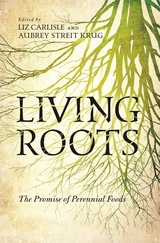
Living Roots
The Promise of Perennial Foods
Edited by Liz Carlisle and Aubrey Streit Krug
Island Press, 2025
Just four annual crops (corn, wheat, rice, and soybeans) account for 75% of the calories consumed by people. We are missing out on a tremendous bounty of perennial foods—foods that can not only enrich our diets but help heal the land and combat climate change. By investing energy in robust root systems rather than just annual growth, perennial food plants endure year after year, pointing the way to a more resilient future.
In Living Roots, a passionate group of experts from wide-ranging backgrounds and lived experience come together to explore the promise of perennial foods. In this book, you’ll hear from Indigenous scientists and community leaders who are working to restore buffalo prairies and traditions of berry gathering. You’ll also hear from urban visionaries planting food forests. Farmers planting fruit and nut trees between their crops and hedgerows at the edges of their fields. Ranchers learning to graze their livestock in patterns that mimic the behavior of native herbivores, to steward healthier grasslands. And you’ll hear from scientists and farmers who are developing perennial grains, from sorghum to silphium.
These efforts are wildly diverse, much like a healthy forest or prairie. We will need each of them, and the power of perennials, to protect the planet we all share. Living Roots is a vital introduction to this burgeoning movement and an invaluable resource for sustainable farming advocates, including anyone who cares about the future of food.
In Living Roots, a passionate group of experts from wide-ranging backgrounds and lived experience come together to explore the promise of perennial foods. In this book, you’ll hear from Indigenous scientists and community leaders who are working to restore buffalo prairies and traditions of berry gathering. You’ll also hear from urban visionaries planting food forests. Farmers planting fruit and nut trees between their crops and hedgerows at the edges of their fields. Ranchers learning to graze their livestock in patterns that mimic the behavior of native herbivores, to steward healthier grasslands. And you’ll hear from scientists and farmers who are developing perennial grains, from sorghum to silphium.
These efforts are wildly diverse, much like a healthy forest or prairie. We will need each of them, and the power of perennials, to protect the planet we all share. Living Roots is a vital introduction to this burgeoning movement and an invaluable resource for sustainable farming advocates, including anyone who cares about the future of food.
[more]
READERS
Browse our collection.
PUBLISHERS
See BiblioVault's publisher services.
STUDENT SERVICES
Files for college accessibility offices.
RECENTLY PUBLISHED





UChicago Accessibility Resources
home | accessibility | search | about | contact us
BiblioVault ® 2001 - 2026
The University of Chicago Press