
 A SCHOLARLY BOOK REPOSITORY
26 start with A start with A
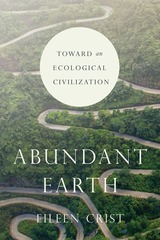
Crist argues that to do so would require a two-pronged approach. Scaling down calls upon us to lower the global human population while working within a human-rights framework, to deindustrialize food production, and to localize economies and contract global trade. Pulling back calls upon us to free, restore, reconnect, and rewild vast terrestrial and marine ecosystems. However, the pervasive worldview of human supremacy—the conviction that humans are superior to all other life-forms and entitled to use these life-forms and their habitats—normalizes and promotes humanity’s ongoing expansion, undermining our ability to enact these linked strategies and preempt the mounting suffering and dislocation of both humans and nonhumans.
Abundant Earth urges us to confront the reality that humanity will not advance by entrenching its domination over the biosphere. On the contrary, we will stagnate in the identity of nature-colonizer and decline into conflict as we vie for natural resources. Instead, we must chart another course, choosing to live in fellowship within the vibrant ecologies of our wild and domestic cohorts, and enfolding human inhabitation within the rich expanse of a biodiverse, living planet.

“Covers a wide range of issues with balance and clarity. . . . I can recommend the book highly as an intermediate-level source of information and insight into the international aspects of the acid rain problem.”—J. F. Hornig, Ambio
“A masterful analysis of the policy problems raised by acid rain in the U.S. and Canada . . . detailed, objective, understandable, and compelling. Weaving substantive and institutional factors into their analysis, the authors skillfully portray the controversy’s multifaceted nature.”—Tracy Dobson, American Journal of International Law
“[A] thorough, well-balanced analysis . . . [that] could serve as a model for analysis of complex policy issues.”—Choice
“Reveals the interface between science, technology, and public policy as being the co-extensive network it really is. . . . Timely and welcomed.”—John de la Mothe, Canadian Public Policy/Analyse de Politiques
Kim Fortun explores these claims by focusing on the dynamics and paradoxes of advocacy in competing power domains. She moves from hospitals in India to meetings with lawyers, corporate executives, and environmental justice activists in the United States to show how the disaster and its effects remain with us. Spiraling outward from the victims' stories, the innovative narrative sheds light on the way advocacy works within a complex global system, calling into question conventional notions of responsibility and ethical conduct. Revealing the hopes and frustrations of advocacy, this moving work also counters the tendency to think of Bhopal as an isolated incident that "can't happen here."

A Choice Significant University Press Titles for Undergraduates, 2005–2006
This history of the African AIDS epidemic is a much-needed, accessibly written historical account of the most serious epidemiological catastrophe of modern times. The African AIDS Epidemic: A History answers President Thabo Mbeki’s provocative question as to why Africa has suffered this terrible epidemic.
While Mbeki attributed the causes to poverty and exploitation, others have looked to distinctive sexual systems practiced in African cultures and communities. John Iliffe stresses historical sequence. He argues that Africa has had the worst epidemic because the disease was established in the general population before anyone knew the disease existed. HIV evolved with extraordinary speed and complexity, and because that evolution took place under the eyes of modern medical research scientists, Iliffe has been able to write a history of the virus itself that is probably unique among accounts of human epidemic diseases. In giving the African experience a historical shape, Iliffe has written one of the most important books of our time.
The African experience of AIDS has taught the world much of what it knows about HIV/AIDS, and this fascinating book brings into focus many aspects of the epidemic in the longer context of massive demographic growth, urbanization, and social change in Africa during the latter half of the twentieth century. The African AIDS Epidemic: A History is a brilliant introduction to the many aspects of the epidemic and the distinctive character of the virus.
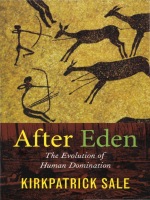
In After Eden, Kirkpatrick Sale answers these questions in a radically new way. Integrating research in paleontology, archaeology, and anthropology, he points to the beginning of big-game hunting as the origin of Homo sapiens’ estrangement from the natural world. Sale contends that a new, recognizably modern human culture based on the hunting of large animals developed in Africa some 70,000 years ago in response to a fierce plunge in worldwide temperature triggered by an enormous volcanic explosion in Asia. Tracing the migration of populations and the development of hunting thousands of years forward in time, he shows that hunting became increasingly adversarial in relation to the environment as people fought over scarce prey during Europe’s glacial period between 35,000 and 10,000 years ago. By the end of that era, humans’ idea that they were the superior species on the planet, free to exploit other species toward their own ends, was well established.
After Eden is a sobering tale, but not one without hope. Sale asserts that Homo erectus, the variation of the hominid species that preceded Homo sapiens and survived for nearly two million years, did not attempt to dominate the environment. He contends that vestiges of this more ecologically sound way of life exist today—in some tribal societies, in the central teachings of Hinduism and Buddhism, and in the core principles of the worldwide environmental movement—offering redemptive possibilities for ourselves and for the planet.

Against Ecological Sovereignty is a passionate defense of radical ecology that speaks directly to current debates concerning the nature, and dangers, of sovereign power. Engaging the work of Bataille, Arendt, Levinas, Nancy, and Agamben, among others, Mick Smith reconnects the political critique of sovereign power with ecological considerations, arguing that ethical and political responsibilities for the consequences of our actions do not end with those defined as human.
Against Ecological Sovereignty is the first book to turn Agamben’s analysis of sovereignty and biopolitics toward an investigation of ecological concerns. In doing so it exposes limits to that thought, maintaining that the increasingly widespread biopolitical management of human populations has an unrecognized ecological analogue—reducing nature to a “resource” for human projects. Smith contends that a radical ecological politics must resist both the depoliticizing exercise of sovereign power and the pervasive spread of biopolitics in order to reveal new possibilities for creating healthy human and nonhuman communities.
Presenting a stinging critique of human claims to sovereignty over the natural world, Smith proposes an alternative way to conceive of posthumanist ecological communities—one that recognizes the utter singularity of the beings in them.
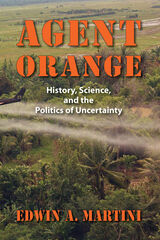
Beginning in the early 1960s, when Agent Orange was first deployed in Vietnam, Martini follows the story across geographical and disciplinary boundaries, looking for answers to a host of still unresolved questions. What did chemical manufacturers and American policymakers know about the effects of dioxin on human beings, and when did they know it? How much do scientists and doctors know even today? Should the use of Agent Orange be considered a form of chemical warfare? What can, and should, be done for U.S. veterans, Vietnamese victims, and others around the world who believe they have medical problems caused by Agent Orange?
Martini draws on military records, government reports, scientific research, visits to contaminated sites, and interviews to disentangle conflicting claims and evaluate often ambiguous evidence. He shows that the impact of Agent Orange has been global in its reach affecting individuals and communities in New Zealand, Australia, Korea, and Canada as well as Vietnam and the United States. Yet for all the answers it provides, this book also reveals how much uncertainty—scientific, medical, legal, and political—continues to surround the legacy of Agent Orange.
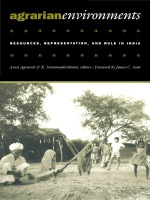
Editors Arun Agrawal and K. Sivaramakrishnan claim that rural social change in India cannot be understood without exploring how environmental changes articulate major aspects of agrarian transformations—technological, cultural, and political—in the last two centuries. In order to examine these issues, they have reached beyond the confines of single disciplinary allegiances or methodological loyalties to bring together anthropologists, historians, political scientists, geographers, and environmental scientists who are significantly informed by interdisciplinary research. Drawing on extensive field and archival research, the contributors demonstrate the powerful political implications of blurring the boundaries between dichotomous cultural representations, combine conceptual analyses with specific case studies, and look at why competing powers chose to emphasize particular representations of land use or social relations. By providing a more textured analysis of how categories emerge and change, this work offers the possibility of creating crucial alliances across populations that have historically been assumed to lack mutual goals.
Agrarian Environments will be valuable to those in political science, Asian studies, and environmental studies.
Contributors. Arun Agrawal, Mark Baker, Molly Chattopadhyaya, Vinay Gidwani, Sumit Guha, Shubhra Gururani, Cecile Jackson, David Ludden, Haripriya Rangan, Paul Robbins, Vasant Saberwal, James C. Scott, K. Sivaramakrishnan, Ajay Skaria, Jennifer Springer, Darren Zook
Nitrogen is an essential element for plant growth and development and a key agricultural input-but in excess it can lead to a host of problems for human and ecological health. Across the globe, distribution of fertilizer nitrogen is very uneven, with some areas subject to nitrogen pollution and others suffering from reduced soil fertility, diminished crop production, and other consequences of inadequate supply.
Agriculture and the Nitrogen Cycle provides a global assessment of the role of nitrogen fertilizer in the nitrogen cycle. The focus of the book is regional, emphasizing the need to maintain food and fiber production while minimizing environmental impacts where fertilizer is abundant, and the need to enhance fertilizer utilization in systems where nitrogen is limited. The book is derived from a workshop held by the Scientific Committee on Problems of the Environment (SCOPE) in Kampala, Uganda, that brought together the world's leading scientists to examine and discuss the nitrogen cycle and related problems. It contains an overview chapter that summarizes the group's findings, four chapters on cross-cutting issues, and thirteen background chapters.
The book offers a unique synthesis and provides an up-to-date, broad perspective on the issues of nitrogen fertilizer in food production and the interaction of nitrogen and the environment.
What actually took place in the private laboratory of a mid-seventeenth century alchemist? How did he direct his quest after the secrets of Nature? What instruments and theoretical principles did he employ?
Using, as their guide, the previously misunderstood interactions between Robert Boyle, widely known as "the father of chemistry," and George Starkey, an alchemist and the most prominent American scientific writer before Benjamin Franklin as their guide, Newman and Principe reveal the hitherto hidden laboratory operations of a famous alchemist and argue that many of the principles and practices characteristic of modern chemistry derive from alchemy. By analyzing Starkey's extraordinary laboratory notebooks, the authors show how this American "chymist" translated the wildly figurative writings of traditional alchemy into quantitative, carefully reasoned laboratory practice—and then encoded his own work in allegorical, secretive treatises under the name of Eirenaeus Philalethes. The intriguing "mystic" Joan Baptista Van Helmont—a favorite of Starkey, Boyle, and even of Lavoisier—emerges from this study as a surprisingly central figure in seventeenth-century "chymistry." A common emphasis on quantification, material production, and analysis/synthesis, the authors argue, illustrates a continuity of goals and practices from late medieval alchemy down to and beyond the Chemical Revolution.
For anyone who wants to understand how alchemy was actually practiced during the Scientific Revolution and what it contributed to the development of modern chemistry, Alchemy Tried in the Fire will be a veritable philosopher's stone.
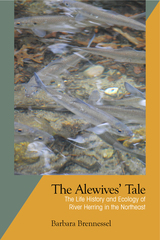
The Alewives' Tale describes the plight of alewives and blueback herring, two fish species that have similar life histories and are difficult to distinguish by sight. Collectively referred to as river herring, they have been economically important since colonial times as food, fertilizer, and bait. In recent years they have attracted much attention from environmentalists, especially as attempts are being made, on and beyond Cape Cod, to restore the rivers, streams, ponds, lakes, and estuaries that are crucial for their reproduction and survival.
Brennessel provides an overview of the biology of the fish—from fertilized eggs to large schools of adults that migrate in the Atlantic Ocean—while describing the habitats at different stages of their life history. She explores the causes of the dramatic decline of river herring since the mid-twentieth century and the various efforts to restore these iconic fish to the historic populations that treated many onlookers to spectacular inland migrations each spring.

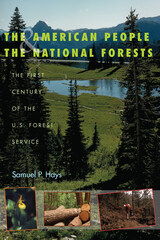
The year 2005 marked the centennial of the founding of the United States Forest Service (USFS). Samuel P. Hays uses this occasion to present a cogent history of the role of American society in shaping the policies and actions of this agency.
From its establishment in 1905 under the auspices of the Department of Agriculture, timber and grazing management dominated the agency's agenda. Due to high consumer demand for wood products and meat from livestock, the USFS built a formidable system of forest managers, training procedures, and tree science programs to specifically address these needs. This strong internal organization bolstered the agency during the tumultuous years in the final one-third of the century—when citizens and scientists were openly critical of USFS policies—yet it restricted the agency's vision and adaptability on environmental issues. A dearth of ecological capabilities tormented the USFS in 1960 when the Multiple-Use and Sustained-Yield Act set new statutes for the preservation of wildlife, recreation, watershed, and aesthetic resources. This was followed by the National Forest Management Act of 1976, which established standards for the oversight of forest ecosystems. The USFS was ill equipped to handle the myriad administrative and technological complexities that these mandates required.
In The American People and the National Forests, Hays chronicles three distinct periods in USFS history, provides a summarizing “legacy” for each, and outlines the public and private interests, administrators, and laws that guided the agency's course and set its priorities. He demonstrates how these legacies affected successive eras, how they continue to influence USFS policy in the twenty-first century, and why USFS policies should matter to all of us.
—James Carroll, author of House of War and An American Requiem, winner of the National Book Award
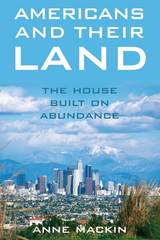
“Anne Mackin has taken a fresh and provocative look at that most fascinating of relationships: the one between the American people and the American land.”
—Michael Pollan, Knight Professor of Journalism and Director of the Knight Program in Science and Environmental Journalism at University of California Berkeley, contributing writer to the New York Times Magazine, and author of The Omnivore's Dilemma and The Botany of Desire
“Anne Mackin has given us a valuable and less-used lens to view the development of our neighborhoods, towns and cities: the land itself. Our relationship to the earth beneath our feet—how we dig it, buy it, sell it, zone it, pave it, spoil it or pamper it—helps explain what is produced on top of the land in our nation, from farms to homes to skyscrapers. All in all, Mackin takes us on a novel and erudite journey, from one coast to the other, and from Colonial times to the present. This valuable book marks a significant and lasting contribution to the way we see and understand our landscape and ourselves.”
—Alex Marshall, author of How Cities Work: Suburbs, Sprawl, and the Roads Not Taken
“To really understand the origins of the range war now raging between smart growth and property rights advocates over the future of the American land, you need to read this exceptional book.”
—Robert D. Yaro, President Regional Plan Association and Professor in Practice, University of Pennsylvania
Thomas Malthus once said, “The happiness of the Americans depended much less upon their peculiar degree of civilization than . . . upon their having a great plenty of fertile uncultivated land.”
Malthus knew. Lord MacCaulay knew. Albert Gallatin knew. America and its people would change as a growing population whittled away the supply of land.
Nothing has shaped the American character like the abundance of land that met the colonist, the pioneer, and the early suburbanite. With today’s political and economic institutions shaped by the largesse of yesteryear, how will Americans fare in the new landscape of water wars, expensive housing, rising fuel prices, environmental and property rights battles, and powerful industrial lobbies?
Why is land the key to American democracy? How can we protect our democracy as more people and industries compete more intensively for our remaining resources? Americans and Their Land begins an important, overdue discussion of these questions. Anne Mackin takes the reader story by story from frontier history to the present and shows how land shaped the American political landscape. She shows how our evolving traditions of apportioning resources have allowed diminished supplies to create our present, increasingly unequal society, and she asks how 300 million Americans living in the new American landscape of growing competition can better share those resources.
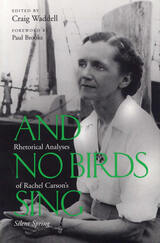
Craig Waddell presents essays investigating Rachel Carson’s influential 1962 book, Silent Spring. In his foreword, Paul Brooks, Carson’s editor at Houghton Mifflin, describes the process that resulted in Silent Spring. In an afterword, Linda Lear, Carson’s recent biographer, recalls the end of Carson’s life and outlines the attention that Carson’s book and Carson herself received from scholars and biographers, attention that focused so minutely on her life that it detracted from a focus on her work. The foreword by Brooks and the afterword by Lear frame this exploration within the context of Carson’s life and work.
Contributors are Edward P. J. Corbett, Carol B, Gartner, Cheryll Glotfelty, Randy Harris, M. Jimmie Killingsworth, Linda Lear, Ralph H. Lutts, Christine Oravec, Jacqueline S. Palmer, Markus J. Peterson, Tarla Rai Peterson, and Craig Waddell. Together, these essays explore Silent Spring’seffectiveness in conveying its disturbing message and the rhetorical strategies that helped create its wide influence.
Panarchy describes the way systems—whether forests, electrical grids, agriculture, coastal surges, public health, or human economies and governance—are part of even larger systems that interact in unpredictable ways. Although humans desire resiliency and stability in our lives to help us understand the world and survive, nothing in nature is permanently stable. How can society anticipate and adjust to the changes we see around us? Where Panarchy proposed a framework to understand how these transformational cycles work and how we might influence them, Applied Panarchy takes the scholarship to the next level, demonstrating how these concepts have been modified and refined. The book shows how panarchy theory intersects with other disciplines, and how it directly influences natural resources management and environmental stewardship.
Intended as a text for graduate courses in environmental sciences and related fields, Applied Panarchy picks up where Panarchy left off, inspiring new generations of scholars, researchers, and professionals to put its ideas to work in practical ways.
Contributors:
Michel Batisse
William A. Dick-Peddie
Carl N. Hodges
Richard F. Logan
Roy E. Cameron
Clifford S. Christian
Klaus W. Flach
Ronald L. Heathcote
Douglas H. K. Lee
Lawrence K. Lustig
William G. McGinnies
Peveril Meigs
James T. Neal
Daniel A. Okun
Harland I. Padfield
Patricia Paylore
Rayden A. Perry
Roald A. Peterson
Robert L. Raikes
Courtland L. Smith
Guy D. Smith
Andrew Warren
John C. York

Tracing the alchemical roots of Robert Boyle’s famous mechanical philosophy, Newman shows that alchemy contributed to the mechanization of nature, a movement that lay at the very heart of scientific discovery. Boyle and his predecessors—figures like the mysterious medieval Geber or the Lutheran professor Daniel Sennert—provided convincing experimental proof that matter is made up of enduring particles at the microlevel. At the same time, Newman argues that alchemists created the operational criterion of an “atomic” element as the last point of analysis, thereby contributing a key feature to the development of later chemistry. Atomsand Alchemy thus provokes a refreshing debate about the origins of modern science and will be welcomed—and deliberated—by all who are interested in the development of scientific theory and practice.
READERS
Browse our collection.
PUBLISHERS
See BiblioVault's publisher services.
STUDENT SERVICES
Files for college accessibility offices.
RECENTLY PUBLISHED




UChicago Accessibility Resources
home | accessibility | search | about | contact us
BiblioVault ® 2001 - 2024
The University of Chicago Press