
 A SCHOLARLY BOOK REPOSITORY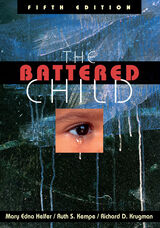
The new edition of this classic text continues the legacy. While updating and significantly adding to previous editions, the fifth edition retains the multidisciplinary and comprehensive approach that initially set the work apart. This new edition contains chapters from professionals in such diverse fields as pediatrics, psychiatry, legal studies, and social work that reflect the past decade's extraordinary advances in research and techniques. Twenty of the book's 30 chapters are entirely new, while the remaining material has been extensively revised.
Part I provides a historical overview of child abuse and neglect as well as background material on the cultural, psychiatric, social, economic, and legal contexts of child maltreatment. Part II discusses the processes of assessing cases of physical, emotional, and sexual abuse and neglect from the unique perspectives of all the professionals involved, including teachers, pediatricians, and social workers. Part III describes intervention and treatment, focusing on legal issues, investigative procedures, and therapeutic processes, while Part IV addresses prevention and policy issues.
Previous editions of The Battered Child have earned the labels of "a classic" and a "Bible." With its up-to-date information, unequaled scope, and contributions from experts on every aspect of child abuse, the fifth edition of this cornerstone text is even more essential to the field than its predecessors.
"Comprehensive and up-to-date."—David Cottrell, British Journal of Psychiatry
"A valuable contribution to the field of abuse and neglect"—Prasanna Nair, Journal of the American Medical Association

A powerful, data-driven investigation into how race, geography, and community shape the reporting and response to child abuse in Alabama.
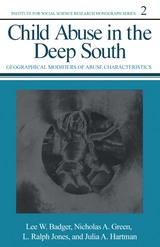
Child Abuse in the Deep South is a groundbreaking examination of how child maltreatment is reported, confirmed, and understood in Alabama—a state shaped by deep historical, racial, and geographic divides. Drawing on over 7,000 case reports, this study reveals how factors such as race, community size, and regional culture influence the identification and handling of abuse cases. With a focus on both rural and urban settings, the book uncovers patterns of systemic bias, underreporting, and institutional response that have long gone unaddressed.
Through rigorous data analysis and a compassionate lens, this work challenges assumptions about child welfare in the American South and offers critical insights for policymakers, social workers, legal professionals, and scholars. Child Abuse in the Deep South is both a call to action and a vital resource for understanding the intersection of social justice, public policy, and child protection in one of the nation’s most complex regions.
Child Abuse in the Deep South provides a quantitative benchmark that investigators and policy-makers will find invaluable on the path to defining at-risk populations, effective interventions, and treatments.
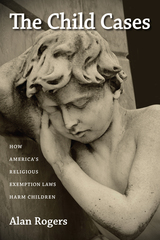
When a four-year-old California girl died on March 9, 1984, the state charged her mother with involuntary manslaughter because she failed to provide her daughter with medical care, choosing instead to rely on spiritual healing. During the next few years, a half dozen other children of Christian Science parents died under similar circumstances. The children's deaths and the parents' trials drew national attention, highlighting a deeply rooted, legal/political struggle to define religious freedom.
Through close analysis of these seven cases, legal historian Alan Rogers explores the conflict between religious principles and secular laws that seek to protect children from abuse and neglect. Christian Scientists argued—often with the support of mainline religious groups—that the First Amendment's “free exercise” clause protected religious belief and behavior. Insisting that their spiritual care was at least as effective as medical treatment, they thus maintained that parents of seriously ill children had a constitutional right to reject medical care.
Congress and state legislatures confirmed this interpretation by inserting religious exemption provisos into child abuse laws. Yet when parental prayer failed and a child died, prosecutors were able to win manslaughter convictions by arguing—as the U.S. Supreme Court had held for more than a century—that religious belief could not trump a neutral, generally applicable law. Children's advocates then carried this message to state legislatures, eventually winning repeal of religious exemption provisions in a handful of states.
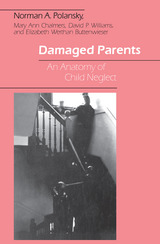
"Norman Polansky and his colleagues have produced a truly remarkable book. . . . One of the consequences of [the] relative invisibility of child neglect is that we also know less about it. But this book will help to correct that for it contains reports of findings from two systematic efforts to define, measure, classify, and understand child neglect."—Thomas M. Young, Social Service Review
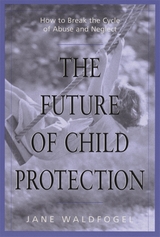
Lisa Steinberg. Elisa Izquierdo. Lance Helms. These are just a few of the names drawn from recent headlines, revealing cases of horrendous child abuse and neglect. Such cases have led to a crisis of confidence in the current child protective services (CPS) system, and to frequent calls for reform.
The public is right to be concerned, shows Jane Waldfogel, but many perceptions of the CPS system and the problems it is designed to alleviate are inaccurate. This book goes beyond the headlines, using historical, comparative, and specific case data to formulate a new approach to protecting children.
Currently, Waldfogel argues, the CPS system is overwhelmed by referrals. As a result, neither high-risk nor low-risk families are adequately served.
Waldfogel examines the underlying assumptions of CPS, compares the U.S. record with those of Britain, Canada, and Australia, and offers a "new paradigm" in which CPS joins with other public and private partners to provide a differential response to the broad range of children in need of protection. She highlights reforms underway in several states and in Britain.
This book's analytical clarity and straightforward policy recommendations will make it mandatory reading for policymakers, practitioners, and others interested in the future of child protection.
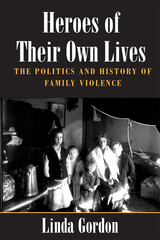
Powerful and moving, Heroes of Their Own Lives offers an honest understanding of a persistent problem and a realistic view of the difficulties in stopping it.
This book is part of a concentrated series of books that examines child maltreatment across minoritized, cultural groups.Specifically, this volume addresses American Indian and Alaska Native populations. However, in an effort to contextualize the experiences of 574 federally recognized tribes and 50+ state recognized tribes, as well as villages, the authors focus on populations within rural and remote regions and discuss the experiences of some tribal communities throughout US history. It should be noted that established research has primarily drawn attention to the pervasive problems impacting Indigenous individuals, families, and communities. Aligned with an attempt to adhere to a decolonizing praxis, the authors share information in a strength-based framework for the Indigenous communities discussed within the text. The authors review federally funded programs (prevention, intervention, and treatment) that have been adapted for tribal communities (e.g., Safecare) and include cultural teachings that address child maltreatment. The intention of this book is to inform researchers, practitioners, policy makers, and advocates about the current state of child maltreatment from an Indigenous perspective.
This book is the first to offer a combined social science and psychoanalytic perspective on reproductive behavior. The author emphasizes the personal histories of his subjects within their cultural environment, and takes into account the setting of the interview and the subjective responses of both interviewee and interviewer. The study reveals how Jamaicans, particularly women, relate to their own parents, learn about sex, experience sexual maturity and first intercourse, and perceive their relations with subsequent partners. Other themes examined are the significance of pregnancy, childbirth, and parenthood and the folk context of Jamaican beliefs about reproduction and contraception.
All of these are aspects of what the author terms a “culture of motherhood.” His unique approach illuminates the many complex factors that influence this population's use or nonuse of contraceptive methods. In his concluding chapter, Eugene Brody offers suggestions for reconciling the private needs of individuals and the public goals of Jamaican population policy. Although his research centers on one Caribbean island, his ideas are applicable to other developing countries. In Sex, Contraception, and Motherhood in Jamaica, family planning professionals, psychologists, psychiatrists, and social scientists will find an intriguing new approach to reproductive policy.
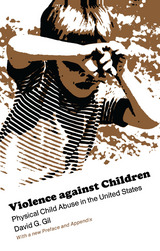
For this volume Gil examines and interprets a series of nationwide studies of child abuse that were initiated in 1965 in an attempt to unravel the context of social and cultural forces with which violent behavior against children is associated. He begins with a definition: "Physical abuse of children is the intentional, nonaccidental use of physical force, or intentional nonaccidental acts of omission, on the part of a parent or other caretaker interacting with a child in his care, aimed at hurting, injuring, or destroying that child."
With an approach that is epidemiologic, social, and cultural, rather than clinical and psychological, he compiles findings from press and public-opinion surveys, from analyses of nearly 13,000 incidents of child abuse reported through legal channels across the country during 1967 and 1968, and from a comprehensive study of more than 1300 incidents reported in a representative sample of cities and counties. He deals with incidence and community response rather than with case histories.
The findings, Gil maintains, suggest that violence against children is rooted in culturally determined theories and practices of child-rearing, with a higher incidence among the lower educational and socioeconomic strata of society, among broken families, and among families with four or more children. He concludes that perhaps the most serious form of child abuse is that inflicted by society rather than by parents and guardians. This societal abuse is manifested by the statistics on infant mortality, hunger and malnutrition, poverty, inadequate medical care, poor education, and officially sanctioned physical abuse in schools, correctional institutions, child care facilities, and juvenile courts. The author further concludes that American culture encourages the use of a certain measure of physical force in rearing children.
Straightforward and clearly presented, Gil's book also suggests a typology of child abuse and recommends a set of structural measures and policies designed to reduce the incidence of abuse through an attack on its apparent roots within the fabric of society.
READERS
Browse our collection.
PUBLISHERS
See BiblioVault's publisher services.
STUDENT SERVICES
Files for college accessibility offices.
RECENTLY PUBLISHED


UChicago Accessibility Resources
home | accessibility | search | about | contact us
BiblioVault ® 2001 - 2025
The University of Chicago Press