
 A SCHOLARLY BOOK REPOSITORY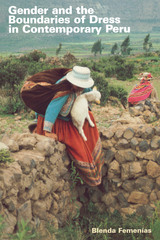
Set in Arequipa during Peru's recent years of crisis, this ethnography reveals how dress creates gendered bodies. It explores why people wear clothes, why people make art, and why those things matter in a war-torn land. Blenda Femenías argues that women's clothes are key symbols of gender identity and resistance to racism.
Moving between metropolitan Arequipa and rural Caylloma Province, the central characters are the Quechua- and Spanish-speaking maize farmers and alpaca herders of the Colca Valley. Their identification as Indians, whites, and mestizos emerges through locally produced garments called bordados. Because the artists who create these beautiful objects are also producers who carve an economic foothold, family workshops are vital in a nation where jobs are as scarce as peace. But ambiguity permeates all practices shaping bordados' significance. Femenías traces contemporary political and ritual applications, not only Caylloma's long-standing and violent ethnic conflicts, to the historical importance of cloth since Inca times.
This is the only book about expressive culture in an Andean nation that centers on gender. In this feminist contribution to ethnography, based on twenty years' experience with Peru, including two years of intensive fieldwork, Femenías reflects on the ways gender shapes relationships among subjects, research, and representation.
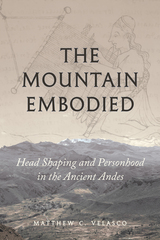
A study of the ancient practice of Andean head shaping and its cultural connotations.
In the late sixteenth century, Spanish conquerors in Peru’s Colca Valley encountered the Collaguas and Cavanas, Indigenous people who undertook a striking form of body modification: Collaguas bound the heads of infants and children so that their skulls grew narrow and elongated, and Cavanas so that their skulls became wide and squat. Head shaping resulted in craniums that resembled two specific mountains associated with the groups. For Europeans, shaped skulls immediately and durably became a marker of territorialized ethnic difference.
The Mountain Embodied offers a more nuanced story. Having studied hundreds of samples of human remains, bioarchaeologist Matthew Velasco argues that reducing head shape to a mere ethnic marker is a colonial invention. Instead, the social significance of head shaping was protean and intersected with other structures of difference, such as gender, kinship, and status, influencing experience within the community. Head shaping, then, was one factor in the construction of a locally embedded kind of subjectivity. An outsider could deduce group identity from head shape, but for practitioners, head shaping reflected something else: nothing less than personhood itself.
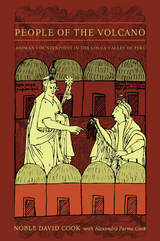
Social structures, the domestic export and economies, and spiritual spheres within native Andean communities are key elements of analysis. Also highlighted is the persistence of duality in the Andean world: perceived dichotomies such as those between the coast and the highlands, Europeans and Indo-Peruvians. Even before the conquest, the Cabana and Collagua communities sharing the Colca Valley were divided according to kinship and location. The Incas, and then the Spanish, capitalized on these divisions, incorporating them into their state structure in order to administer the area more effectively, but Colca Valley peoples resisted total assimilation into either. Colca Valley communities have shown a remarkable tenacity in retaining their social, economic, and cultural practices while accommodating various assimilationist efforts over the centuries. Today’s population maintains similarities with their ancestors of more than five hundred years ago—in language, agricultural practices, daily rituals, familial relationships, and practices of reciprocity. They also retain links to ecological phenomena, including the volcanoes from which they believe they emerged and continue to venerate.
READERS
Browse our collection.
PUBLISHERS
See BiblioVault's publisher services.
STUDENT SERVICES
Files for college accessibility offices.
RECENTLY PUBLISHED




UChicago Accessibility Resources
home | accessibility | search | about | contact us
BiblioVault ® 2001 - 2025
The University of Chicago Press