
 A SCHOLARLY BOOK REPOSITORY
7 start with M start with M

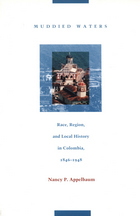
Nineteenth- and twentieth-century Colombian elite intellectuals, Appelbaum contends, mapped race onto their mountainous topography by defining regions in racial terms. They privileged certain places and inhabitants as white and modern and denigrated others as racially inferior and backward. Inhabitants of Riosucio, however, elaborated local narratives about their mestizo and indigenous identities that contested the white mystique of the Coffee Region. Ongoing violent conflicts over land and politics, Appelbaum finds, continue to shape local debates over history and identity. Drawing on archival and published sources complemented by oral history, Muddied Waters vividly illustrates the relationship of mythmaking and racial inequality to regionalism and frontier colonization in postcolonial Latin America.
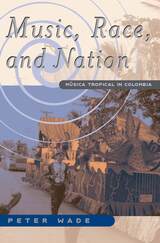
Wade's fresh look at the way music transforms and is transformed by ideologies of race, nation, sexuality, tradition, and modernity is the first book-length study of Colombian popular music.
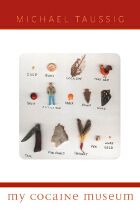
Combining natural history with political history in a filmic, montage style, Taussig deploys the show-and-tell modality of a museum to engage with the inner life of heat, rain, stone, and swamp, no less than with the life of gold and cocaine.
This effort to find a poetry of words becoming things is brought to a head by the explosive qualities of those sublime fetishes of evil beauty, gold and cocaine. At its core, Taussig's museum is about the lure of forbidden things, charged substances that transgress moral codes, the distinctions we use to make sense of the world, and above all the conventional way we write stories.


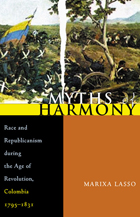
This book centers on a foundational moment for Latin American racial constructs. While most contemporary scholarship has focused the explanation for racial tolerance-or its lack-in the colonial period, Marixa Lasso argues that the key to understanding the origins of modern race relations are to be found later, in the Age of Revolution.
Lasso rejects the common assumption that subalterns were passive and alienated from Creole-led patriot movements, and instead demonstrates that during Colombia's revolution, free blacks and mulattos (pardos) actively joined and occasionally even led the cause to overthrow the Spanish colonial government. As part of their platform, patriots declared legal racial equality for all citizens, and promulgated an ideology of harmony and fraternity for Colombians of all colors. The fact that blacks were mentioned as equals in the discourse of the revolution and later served in republican government posts was a radical political departure. These factors were instrumental in constructing a powerful myth of racial equality-a myth that would fuel revolutionary activity throughout Latin America.
Thus emerged a historical paradox central to Latin American nation-building: the coexistence of the principle of racial equality with actual racism at the very inception of the republic. Ironically, the discourse of equality meant that grievances of racial discrimination were construed as unpatriotic and divisive acts-in its most extreme form, blacks were accused of preparing a race war. Lasso's work brings much-needed attention to the important role of the anticolonial struggles in shaping the nature of contemporary race relations and racial identities in Latin America.
READERS
Browse our collection.
PUBLISHERS
See BiblioVault's publisher services.
STUDENT SERVICES
Files for college accessibility offices.
RECENTLY PUBLISHED


UChicago Accessibility Resources
home | accessibility | search | about | contact us
BiblioVault ® 2001 - 2024
The University of Chicago Press