
 A SCHOLARLY BOOK REPOSITORY
9 start with P start with P
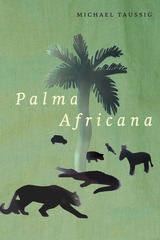
Palm oil. Saturating everything from potato chips to nail polish, palm oil has made its way into half of the packaged goods in our supermarkets. By 2020, world production will be double what it was in 2000. In Colombia, palm oil plantations are covering over one-time cornucopias of animal, bird, and plant life. Over time, they threaten indigenous livelihoods and give rise to abusive labor conditions and major human rights violations. The list of entwined horrors—climatic, biological, social—is long. But Taussig takes no comfort in our usual labels: “habitat loss,” “human rights abuses,” “climate change.” The shock of these words has passed; nowadays it is all a blur. Hence, Taussig’s keen attention to words and writing throughout this work. He takes cues from precursors’ ruminations: Roland Barthes’s suggestion that trees form an alphabet in which the palm tree is the loveliest; William Burroughs’s retort to critics that for him words are alive like animals and don’t like to be kept in pages—cut them and the words are let free.
Steeped in a lifetime of philosophical and ethnographic exploration, Palma Africana undercuts the banality of the destruction taking place all around us and offers a penetrating vision of the global condition. Richly illustrated and written with experimental verve, this book is Taussig’s Tristes Tropiques for the twenty-first century.

The people of Colombia have, for the last fifty years, been subject to a specific form of violence: paramilitarism. An embodiment of the underbelly of global capitalist accumulation, this form of pervasive violence expresses the exacerbation of social inequalities and class formation under capitalism. In Paramilitarism and Neoliberalism, Jasmin Hristov theorises this extreme expression in light of forced displacement, labour repression, subjugation of social movements, decentralisation of violence, drug trafficking and the emergence of a variety of para-institutional armed actors across Latin America.
The activities of paramilitary groups in the postdemobilisation era, their involvement in human rights violations, and their multilevel support networks inside major state institutions are documented, with a particular emphasis on violent dispossession and illegal land appropriation that has benefited agroindustries and mining enterprises. Hristov engages in a Marxist political economy approach, combined with a global sociological perspective, allowing for an expansive and deep-reaching understanding of paramilitarism as a phenomenon with many faces, ultimately illustrating how it is increasingly becoming the coercive counterpart of global capital.
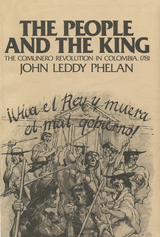
In The People and the King, John Leddy Phelan reexamines a well-known but long misunderstood event in eighteenth-century Colombia. When the Spanish colonial bureaucratic system of conciliation broke down, indigenous groups resorted to armed revolt to achieve their political ends.
As Phelan demonstrates in these pages, the crisis of 1781 represented a constitutional clash between imperial centralization and colonial decentralization. Phelan argues that the Comunero revolution was not, as it has often been portrayed, a precursor of political independence, nor was it a frustrated social upheaval. The Comunero leaders and their followers did not advocate any basic reordering of society, Phelan concludes, but rather made an appeal for revolutionary reform within a traditionalist framework.
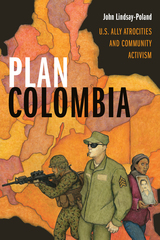

A merger of eyewitness accounts and theory, Postconflict Utopias explores the links between lived knowledge and survival while revealing the power unleashed when women ask the simple question, “Why not?”

The final installment in the definitive series of catalogues of the Robert Woods Bliss Collection, Pre-Columbian Art from Central America and Colombia at Dumbarton Oaks examines a comprehensive and expertly curated collection of jade and gold objects from Costa Rica, Panama, and Colombia. This lavish catalogue provides over two hundred detailed and illustrated descriptions of objects that span approximately two millennia. Illustrated in detail with hundreds of high-quality photographs in full color and with stunning clarity, these breathtaking works of art reveal the ingenuity, skill, and vision of Indigenous artists and artisans.
With a dozen accompanying chapters by thirty contributors from the United States, Europe, and Latin America, this landmark publication describes the objects in the context of a history of the collection, production techniques, technical analyses, iconographic interpretations, and evaluations of material from specific archaeological sites. Pre-Columbian Art from Central America and Colombia at Dumbarton Oaks is a major watershed in the archaeology of the Isthmo-Colombian Area, representing an essential contribution to scholarship on fascinating cultures from an area located between Mesoamerica and the Andes, with ties to the Antilles and Amazonia, in the center of the Americas.
Archaeologists, art historians, ethnohistorians, and ethnographers have long been captivated by the expressive material culture of the prehispanic indigenous peoples in the lands between Mesoamerica and the Andes. Interconnected communities of practice that were active from central Honduras in the north to coastal Ecuador in the south, with networks of interaction that included the Antilles and Amazonia, made this area essential for understanding long-term culture change.
Pre-Columbian Central America, Colombia, and Ecuador: Toward an Integrated Approach presents twenty chapters on current research in this central area of Latin America. Over two dozen specialists have contributed to this lavishly illustrated book, on topics ranging from historical and theoretical perspectives to analytical studies, reports on recent excavations, and evaluations of material such as ceramics, stone sculpture, gold artifacts, and ceremonial seats from various contexts in Honduras, Nicaragua, Costa Rica, Panama, Colombia, and Ecuador. Edited by Colin McEwan and John W. Hoopes, this book is an essential addition to the library of any scholar fascinated by the diverse indigenous peoples of the Americas.
READERS
Browse our collection.
PUBLISHERS
See BiblioVault's publisher services.
STUDENT SERVICES
Files for college accessibility offices.
RECENTLY PUBLISHED


UChicago Accessibility Resources
home | accessibility | search | about | contact us
BiblioVault ® 2001 - 2024
The University of Chicago Press