
 A SCHOLARLY BOOK REPOSITORY
8 start with S start with S

When the paralyzed cripple Domingo Vidal is rescued unsinged from a burning house, the people of Chima believe they have witnessed a miracle. Domingo becomes their patron "saint," and tales of his miracles multiply. Domingo makes the rains come, cures the blind and lame, and swells barren wombs with new life. But is Domingo really a saint, or is he a pagan idol? Padre Berrocal calls the people heretics, but they are afraid not to worship Domingo. To what excesses will superstition and ignorance drive the frightened people of Chima?
This novel, published in 1963 as En Chimá nace un santo, makes important connections between the frustrations of poverty and the excesses of religious fanaticism. Zapata Olivella indicts the dogmatic attitudes of religious and civil institutions as a major cause of the creation of local cults like the one that grows up around "Saint" Domingo. In Zapata Olivella's compelling narrative, the struggle over Domingo points up both the inflexibility of established institutions and the potential power for change that lies within the hands of a determined populace.
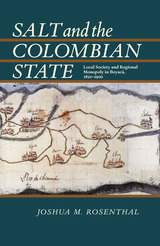
In republican Colombia, salt became an important source of revenue not just to individuals, but to the state, which levied taxes on it and in some cases controlled and profited from its production. The salt trade consistently accounted for roughly ten percent of government income.
In the town of la Salina de Chita, in Boyacá province, thermal springs offered vast amounts of salt, and its procurement and distribution was placed under the jurisdiction of the Ministry of Finance. Focusing his study on la Salina, Joshua M. Rosenthal presents a fascinating glimpse into the workings of the early Colombian state, its institutions, and their interactions with local citizens during this formative period. Although historians have cited the state’s weakness, and in many cases, its absence in local affairs, Rosenthal counters these assumptions by documenting the primary role the state held in administering contracts, inspections, land rights, labor, and trade in la Salina, and contends that this was not an isolated incident. He also uncovers the frequent interaction between the state and local residents, who used the state’s liberal rhetoric to gain personal economic advantage.
Seen through the lens of the administration of la Salina’s salt works, Rosenthal provides a firsthand account of the role of local institutions and fiscal management in the larger process of state building. His study offers new perspectives on the complex network of republican Colombia’s political culture, and its involvement in provincial life across the nation.
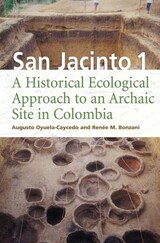
A significant work of neotropical archaeology presenting evidence of early hunter-gatherers who produced fiber-tempered ceramics.
Few topics in the development of humans have prompted as much interest and debate as those of the origins of pottery and agriculture. The first appearance of pottery in any area of the world is heralded as a new stage in the progress of humans toward a more complex arrangement of thought and society. Cultures are defined and separated by the occurrence of pottery types, and the association of pottery with mobility and agriculture continues to drive research in anthropology. For these reasons, the discovery of the earliest fiber-tempered pottery in the New World and carbonized remains identified as maize kernels is exciting.
San Jacinto 1 is the archaeological site located in the savanna region of the north coast of Colombia, South America, where excavations by led by the authors have revealed evidence of mobile hunter-gatherers who made pottery and who collected and processed plants from 6000 to 5000 B.P. The site is believed to show an early human adaptation to the tropics in the context of significant environmental changes that were taking place at the time.
This volume presents the data gathered and the interpretations made during excavation and analysis of the San Jacinto 1 site. By examining the social activities of a human population in a highly seasonal environment, it adds greatly to our contemporary understanding of the historical ecology of the tropics. Study of the artifacts excavated at the site allows a window into the early processes of food production in the New World. Finally, the data reveals that the origins of ceramic technology in the tropics were tied to a reduction in mobility and an increase in territoriality and are widely applicable to similar studies of sedentism and agriculture worldwide.
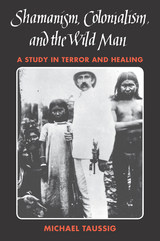
"This extraordinary book . . . will encourage ever more critical and creative explorations."—Fernando Coronil, [I]American Journal of Sociology[/I]
"Taussig has brought a formidable collection of data from arcane literary, journalistic, and biographical sources to bear on . . . questions of evil, torture, and politically institutionalized hatred and terror. His intent is laudable, and much of the book is brilliant, both in its discovery of how particular people perpetrated evil and others interpreted it."—Stehen G. Bunker, Social Science Quarterly

Winner of the John Collier Jr. Award for Still Photography
As a young Fulbright scholar in Bogotá determined to democratize the photographic gaze and bring new visions and voices to public debate about Colombia’s armed conflict, Alexander L. Fattal founded Disparando Cámaras para la Paz (Shooting Cameras for Peace). The project taught photography to young people in El Progreso, a neighborhood on the city’s outskirts that was home to families displaced by violence in the countryside. Cameras in hand, the youth had a chance to record and reimagine their daily existence.
Shooting Cameras for Peace / Disparando Cámaras para la Paz is a penetrating look at one of Latin America’s most dynamic participatory media projects. The haunting and exuberant photographs made under its auspices testify to young people’s will to play, to dream, and to survive. The images bear witness to the resilience and creativity of lives marked by a war that refuses to die.
With text in English and Spanish, Shooting Cameras for Peace / Disparando Cámaras para la Paz makes vital contributions to studies of collaborative media, photographic activism, and peace and conflict in Colombia. Fattal’s insightful text offers critical reflection on the genre of participatory photography and the structural challenges faced by similar media projects.
Kline argues that the first administration of Colombian President Álvaro Uribe Vélez marks a decisive break in a seemingly endless cycle of civil war. Not only were the levels of homicide and kidnapping dramatically reduced, but the state took the offensive against the insurgents, strengthening the armed forces which in turn demonstrated clear support for the president's policy.
The civil war in Colombia has waxed and waned for sixty years, with shifting goals, programs, and tactics among the contending parties. Bursts of appalling violence are punctuated by uneasy truces, cease-fires, and attempts at reconciliation. Varieties of Marxism, the economics of narco-trafficking, peasant land hunger, poverty, and oppression mix together in a toxic stew that has claimed the uncounted lives of peasants, conscript soldiers, and those who simply got in the way.
Kline believes that the changes of the President, although dramatic, are not necessarily permanent. He discusses what challenges must be overcome for the permanent reduction of organized violence in this war-torn nation.
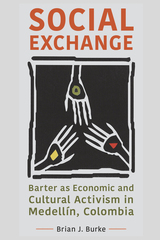
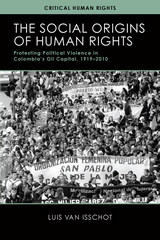
Built by Standard Oil in 1919, and home to the largest petroleum refinery in the country, Barrancabermeja has long been a critical battleground in Colombia’s armed conflict. One of the most militarized urban areas on earth, the city has been a regional base for the Colombian armed forces as well as for leftist guerrillas and a national paramilitary movement. In the midst of a dirty war in which the majority of victims were civilians, urban and rural social movements from Barrancabermeja and the surrounding area came together to establish a human rights movement. These frontline activists called upon the Colombian state to protect basic human rights and denounced the deeper socioeconomic inequalities they saw as sources of conflict. Through close study of the complex dynamics at work in Barrancabermeja, van Isschot shows how the efforts we describe as “human rights” activism derive in large part from these lived experiences of authoritarianism, war, poverty, and social exclusion. Through its social and historical approach, his analysis both complements and challenges the work of scholars who look at rights issues primarily through a legal lens.
READERS
Browse our collection.
PUBLISHERS
See BiblioVault's publisher services.
STUDENT SERVICES
Files for college accessibility offices.
RECENTLY PUBLISHED






UChicago Accessibility Resources
home | accessibility | search | about | contact us
BiblioVault ® 2001 - 2024
The University of Chicago Press