
 A SCHOLARLY BOOK REPOSITORY
16 start with C start with C

In a model study Jacob Price illuminates the dynamic growth of Britain’s foreign trade in the eighteenth century through an investigation of the investment patterns and credit institutions that financed that expansion. Concentrating on the trade between Britain and the Chesapeake tobacco colonies of Virginia and Maryland, for which a unique set of records exists, Price surveys the ways in which commerce developed and working capital was mobilized in Britain to support expanding overseas trade.
Price develops the clearest picture ever of the financial environment within Britain as it affected Southern colonies in the preindustrial age. He does so by determining the kind of capital resources merchants in foreign trade actually commanded and measuring how much of their own wealth merchants brought to trade. In great and absorbing detail he discusses also the development of merchant-oriented banks in London and other ports, reinvestment of profits, long-term borrowing on bond, and the long-term credit provided to export merchants by wholesalers in textiles, ironmongery, and other industries.
The relationship of debt to the coming of the American Revolution is also treated. Tobacco growers suffered more than others from a psychological unease caused by immense debt and were more revolutionary than farmers with less intensive capital needs and, hence, with lighter debt. This history will enlighten Anglo-American historians, economic historians, and historians of the American revolutionary era.
There’s no excuse for getting lost these days—satellite maps on our computers can chart our journey in detail and electronics on our car dashboards instruct us which way to turn. But there was a time when the varied landscape of North America was largely undocumented, and expeditions like that of Lewis and Clark set out to map its expanse. As John Rennie Short argues in Cartographic Encounters, that mapping of the New World was only possible due to a unique relationship between the indigenous inhabitants and the explorers.
In this vital reinterpretation of American history, Short describes how previous accounts of the mapping of the new world have largely ignored the fundamental role played by local, indigenous guides. The exchange of information that resulted from this “cartographic encounter” allowed the native Americans to draw upon their wide knowledge of the land in the hope of gaining a better position among the settlers.
This account offers a radical new understanding of Western expansion and the mapping of the land and will be essential to scholars in cartography and American history.
Nine Historians and Writers Investigate the Role of Cavalry in the War for Independence
From the bitterly contested no-man’s-land between American and British lines in New York and New Jersey to the scorching pine forests of the South, the cavalry of both armies fought valiantly throughout the American Revolution. This volume explores several aspects of cavalry’s role in the war, which has often been overlooked in general histories. The topics covered include the development of the Continental Army’s cavalry arm, European influences on American cavalry training and tactics, accounts of several important cavalry raids and battles, and histories of mounted units such as the Continental Light Dragoons, American rangers in the South Carolina backcountry, and the British army’s Queen’s Rangers and “Black Dragoons,” the latter force composed entirely of former slaves. The essays also examine the roles of important commanders, including Brigadier General Francis “Swamp Fox” Marion, Lieutenant Colonel William Washington, and Colonel Anthony Walton White of the American army, and British cavalry leaders Banastre “Bloody Ban” Tarleton and John Graves Simcoe, as well as the American prisoners of war who switched sides and served in the “British Legion.” The authors of the essays include acclaimed military historians Gregory J. W. Urwin and Lawrence E. Babits. Readers with a general interest in military history, as well as those with more specific interests in the American Revolution or the history of the cavalry arm, and anyone who wishes to undertake further study of these subjects, will find the essays fresh, engaging, and informative.
@font-face { font-family: "Times New Roman";}@font-face { font-family: "HelveticaNeue-LightCond";}p.MsoNormal, li.MsoNormal, div.MsoNormal { margin: 0in 0in 0.0001pt; font-size: 12pt; font-family: "Times New Roman"; }table.MsoNormalTable { font-size: 10pt; font-family: "Times New Roman"; }div.Section1 { page: Section1; }
Contents
Gregory J. W. Urwin: The Continental Light Dragoons, 1776-1783
Lee F. McGee: European Influences on Continental Cavalry
John M. Hutchins: Cavalry Action at Poundridge, New York
Donald J. Gara: Cavalry Battles in New York and New Jersey
Scott A. Miskimon: Anthony Walton White: A Revolutionary Dragoon
Michael C. Scoggins: South Carolina’s Backcountry Rangers
Lawrence E. Babits and Joshua B. Howard: Continentals in Tarleton’s
British Legion
Charles F. Price: Cavalry Operations at Eutaw Springs
Jim Piecuch: The “Black Dragoons”
In this intimate, engaging book, John Demos offers an illuminating portrait of how colonial Americans, from the first settlers to the postrevolutionary generation, viewed their life experiences. He also offers an invaluable inside look into the craft of a master social historian as he unearths--in sometimes unexpected places--fragments of evidence that help us probe the interior lives of people from the faraway past.
The earliest settlers lived in a traditional world of natural cycles that shaped their behavior: day and night; seasonal rhythms; the lunar cycle; the life cycle itself. Indeed, so basic were these elements that "almost no one felt a need to comment on them." Yet he finds cyclical patterns--in the seasonal foods they ate, in the spike in marriages following the autumn harvest. Witchcraft cases reveal the different emotional reactions to day versus night, as accidental mishaps in the light become fearful nighttime mysteries. During the transitional world of the American Revolution, people began to see their society in newer terms but seemed unable or unwilling to come to terms with that novelty. Americans became new, Demos points out, before they fully understood what it meant. Their cyclical frame of reference was coming unmoored, giving way to a linear world view in early nineteenth-century America that is neatly captured by Kentucky doctor Daniel Drake's description of the chronography of his life.
In his meditation on these three worlds, Demos brilliantly demonstrates how large historical forces are reflected in individual lives. With the imaginative insights and personable touch that we have come to expect from this fine chronicler of the human condition, Circles and Lines is vintage John Demos.
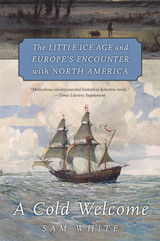
Cundill History Prize Finalist
Longman–History Today Prize Finalist
Winner of the Roland H. Bainton Book Prize
“Meticulous environmental-historical detective work.”
—Times Literary Supplement
When Europeans first arrived in North America, they faced a cold new world. The average global temperature had dropped to lows unseen in millennia. The effects of this climactic upheaval were stark and unpredictable: blizzards and deep freezes, droughts and famines, winters in which everything froze, even the Rio Grande. A Cold Welcome tells the story of this crucial period, taking us from Europe’s earliest expeditions in unfamiliar landscapes to the perilous first winters in Quebec and Jamestown. As we confront our own uncertain future, it offers a powerful reminder of the unexpected risks of an unpredictable climate.
“A remarkable journey through the complex impacts of the Little Ice Age on Colonial North America…This beautifully written, important book leaves us in no doubt that we ignore the chronicle of past climate change at our peril. I found it hard to put down.”
—Brian Fagan, author of The Little Ice Age
“Deeply researched and exciting…His fresh account of the climatic forces shaping the colonization of North America differs significantly from long-standing interpretations of those early calamities.”
—New York Review of Books
European imperialists began to dream of other kinds of wealth besides gold in the New World
Louis Booker Wright was a graduate of Wofford College, and was at various times a John Simon Guggenheim Fellow and a Benjamin Franklin Medalist, and he held honorary degrees from, among others, Princeton, Tulane, and California State University-Fulerton. He was the author of a number of books, including The Atlantic Frontier: Colonial American Civilization 1607-1763, Gold, Glory, and the Gospel: the Adventurous Lives of the Renaissance Explorers, Culture on the Moving Frontier, and The Dream of Prosperity in Colonial America. At the time of the preparation of this work he was Director of the Folger Shakespeare Library.
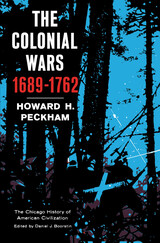
Mr. Peckham chronicles the events of these wars, summarizing the struggle for empire in America among France, England, and Spain. He indicates how the colonists applied the experience they gained from fighting Indians to their engagements with European powers. And what they learned from the colonial wars they translated into a political philosophy that led to independence and self-government.
The ready involvement of the colonies in European ambitions, the success and failure of co-operation between colony and mother country, the efforts of the English colonies together, and the growing differences between them and Britain give the narrative continuity and rising excitement.
Dickinson’s hard work on behalf of his clients brought him success in other areas of his public life. In October 1759, he was elected to his first public position as a representative for Kent County, Del., the following year he was elevated to the position of speaker, and in 1762, he became a representative for Philadelphia County, Pa. As a legislator in two colonies, learning his craft as a global war unfolded, he contributed to bills on military and defense, Indian relations, infrastructure improvements and city management, and served on various committees. The death of George II occasioned debates over laws and judges, in which Dickinson participated. This era concludes with Dickinson playing a central role in managing the unfolding Paxton Riots, in which frontiersmen massacred peaceful Indians and threatened the Quaker leadership of Pennsylvania.
In private, Dickinson lost the two most prominent male figures in his life in 1760, his father, Samuel, and soon thereafter, his mentor, colleague, and friend, John Moland. In honor of Moland, Dickinson published a poem and became a proxy head to Moland’s large family. Though his extant correspondence during this period is small, he exchanged letters with Mary Cadwalader Dickinson, Israel Pemberton, William Allason, George Read, Thomas McKean, and others. Perhaps most significant, he wrote a lengthy, unpublished essay on the flag-of-truce trade and also maintained commonplace books as he considered his place within the British Empire, opening up the next phase in Dickinson’s life as a leader of the resistance against Britain.
Published by the University of Delaware Press. Distributed worldwide by Rutgers University Press.
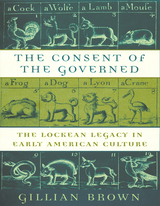
What made the United States what it is began long before a shot was fired at a redcoat in Lexington, Massachusetts in 1775. It began quietly in homes and schoolrooms across the colonies in the reading lessons women gave to children. Just as the Protestant revolt originated in a practice of individual reading of the Bible, so the theories of reading developed by John Locke were the means by which a revolutionary attitude toward authority was disseminated throughout the British colonies in North America that would come to form in the United States. Gillian Brown takes us back to the basics to understand why Americans value the right to individual self-determination above all other values. It all begins with children.
Locke crucially linked consent with childhood, and it is his formulation of the child's natural right to consent that eighteenth-century Americans learned as they learned to read through Lockean-style pedagogies and textbooks. Tracing the Lockean legacy through the New England Primer and popular readers, fables, and fairy tales, Brown demonstrates how Locke's emphasis on the liberty--and difficulty--of individual judgment became a received notion in the American colonies.
After the revolution, American consent discourse features a different prototype of individuality; instead of wronged children, images of seduced or misguided women predominate postrevolutionary culture. The plights of these women display the difficulties of consent that Locke from the start realized. Individuals continually confront standards and prejudices at odds with their own experiences and judgments. Thus, the Lockean legacy to the United States is the reminder of the continual work to be done to endow every individual with consent and to make consent matter.
What emerged in America was a new and different attitude toward authority in which authority does not belong to the elders but to the upcoming generations and groups. To effect this dramatic a change in the values of humankind took a grassroots revolution. That's what this book is about.

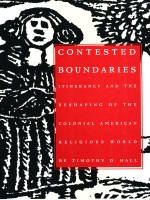
This book expands our understanding of evangelical itinerancy in the 1740s by viewing it within the context of Britain’s expanding commercial empire. As pro- and anti-revivalists tried to shape a burgeoning transatlantic consumer society, the itinerancy of the Great Awakening appears here as a forceful challenge to contemporary assumptions about the place of individuals within their social world and the role of educated leaders as regulators of communication, order, and change. The most celebrated of these itinerants was George Whitefield, an English minister who made unprecedented tours through the colonies. According to Hall, the activities of the itinerants, including Whitefield, encouraged in the colonists an openness beyond local boundaries to an expanding array of choices for belief and behavior in an increasingly mobile and pluralistic society. In the process, it forged a new model of the church and its social world.
As a response to and a source of dynamic social change, itinerancy in Hall’s powerful account provides a prism for viewing anew the worldly and otherworldly transformations of colonial society. Contested Boundaries will be of interest to students and scholars of colonial American history, religious studies, and cultural and social anthropology.
READERS
Browse our collection.
PUBLISHERS
See BiblioVault's publisher services.
STUDENT SERVICES
Files for college accessibility offices.
RECENTLY PUBLISHED


UChicago Accessibility Resources
home | accessibility | search | about | contact us
BiblioVault ® 2001 - 2024
The University of Chicago Press