
 A SCHOLARLY BOOK REPOSITORY
11 start with D start with D
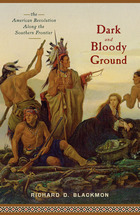
The American Revolution marked a dramatic change in the struggle for land along the southern frontier. In the colonial era, American Indian leaders and British offi cials attempted to accommodate the westward expansion of Anglo-Americans through land cessions designed to have the least impact on Indian societies. The region remained generally peaceful, but with the onset of the Revolution, the British no longer exercised sole authority to curb the settlements appearing within territory claimed by the Creeks, Shawnee, and most importantly, the Cherokee. Whether it was to escape the economic uncertainty of the east, the rigors of the confl ict, or the depredations of troops and militias on both sides, settlers fl ooded west. Under these conditions, the war in the south took on a savage character as Indians, Loyalists, and Whigs all desperately fought to defend their communities and maintain control of their own destinies. Taking advantage of the political turmoil in the east, the Cherokee Nation launched a coordinated offensive in 1776 against illegal frontier settlements. The Whigs responded with a series of expeditions from each of the Southern colonies that razed Cherokee towns and their food supplies. All the while, both British and Whig leaders walked a fi ne line: If the Indians attacked settlers without distinguishing between Loyalists and Whigs, those groups could unite and thwart both British and Indian interests; if the Indians attacked the western frontier with Loyalist and British support, the Whigs would face a two-front war—an event that ended up happening.
In Dark and Bloody Ground: The American Revolution Along the Southern Frontier, Richard Blackmon uses a wealth of primary source material to recount the confl ict between American Indians and Anglo-Americans in the colonial South during one of the most turbulent periods of North American history. He explains the complex points of contact in Georgia, Kentucky, North Carolina, South Carolina, Tennessee, and Virginia between native groups and settlers, while revealing the political gamesmanship between rival British and Whig traders and offi cials to secure Indian loyalty. The author also explains the critical role of the southern frontier to the American victory, a victory achieved long after the decision at Yorktown. Before the war, clashes between Cherokee and Shawnee hunters in Kentucky had become so commonplace that it was known as a “dark and bloody ground.” With the rise in Anglo-American settlements there, led by Daniel Boone and others, the dark and bloody ground became a metaphor for the entire struggle for the Southern frontier.
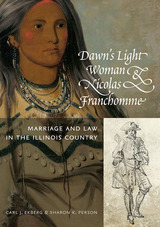
Native women’s marital rights and roles in colonial Illinois society
Kaskaskia, Illinois, once the state’s capital, torn from the state by flood waters, and now largely forgotten, was once the home to a couple who helped transform the region in the 1720s from a frontier village to a civil society. In the heart of France’s North American empire, the village was a community of French-Canadian fur traders and Kaskaskia Indians who not only lived together but often intermarried. These Indigenous and French intermarriages were central to colonial Illinois society, and the coupling of Marguerite 8assecam8c8e (Dawn’s Light Woman) and Nicolas Franchomme, in particular, was critical to expanding the jurisdiction of French law.
While the story of Marguerite and Nicolas is unknown today, it is the story of how French customary law (Coutume de Paris) governed colonial marriage, how mixed Indian-French marriages stood at the very core of early colonial Illinois society, and how Illinois Indian women benefited, socially and legally, from being married to French men. All of this came about due to a lawsuit in which Nicolas successfully argued that his wife had legal claim to her first husband’s estate—a legal decision that created a precedent for society in the Illinois Country.
Within this narrative of a married couple and their legal fight—based on original French manuscripts and supported by the comprehensively annotated 1726 Illinois census—is also the story of the village of Kaskaskia during the 1720s, of the war between Fox Indians and French settlers, with their Indian allies, in Illinois, and of how the spread of plow agriculture dramatically transformed the Illinois Country’s economy from largely fur trade–based to expansively agricultural.
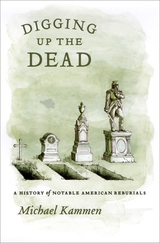
With Digging Up the Dead, Pulitzer Prize–winning historian Michael Kammen reveals a treasure trove of fascinating, surprising, and occasionally gruesome stories of exhumation and reburial throughout American history. Taking us to the contested grave sites of such figures as Sitting Bull, John Paul Jones, Frank Lloyd Wright, Daniel Boone, Jefferson Davis, and even Abraham Lincoln, Kammen explores how complicated interactions of regional pride, shifting reputations, and evolving burial practices led to public and often emotional battles over the final resting places of famous figures. Grave-robbing, skull-fondling, cases of mistaken identity, and the financial lures of cemetery tourism all come into play as Kammen delves deeply into this little-known—yet surprisingly persistent—aspect of American history.
Simultaneously insightful and interesting, masterly and macabre, Digging Up the Dead reminds us that the stories of American history don’t always end when the key players pass on. Rather, the battle—over reputations, interpretations, and, last but far from least, possession of the remains themselves—is often just beginning.
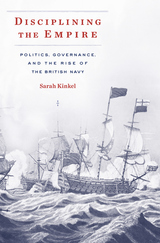
“Rule Britannia! Britannia rule the waves,” goes the popular lyric. The fact that the British built the world’s greatest empire on the basis of sea power has led many to assume that the Royal Navy’s place in British life was unchallenged. Yet, as Sarah Kinkel shows, the Navy was the subject of bitter political debate. The rise of British naval power was neither inevitable nor unquestioned: it was the outcome of fierce battles over the shape of Britain’s empire and the bonds of political authority.
Disciplining the Empire explains why the Navy became divisive within Anglo-imperial society even though it was also successful in war. The eighteenth century witnessed the global expansion of British imperial rule, the emergence of new forms of political radicalism, and the fracturing of the British Atlantic in a civil war. The Navy was at the center of these developments. Advocates of a more strictly governed, centralized empire deliberately reshaped the Navy into a disciplined and hierarchical force which they hoped would win battles but also help control imperial populations. When these newly professionalized sea officers were sent to the front lines of trade policing in North America during the 1760s, opponents saw it as an extension of executive power and military authority over civilians—and thus proof of constitutional corruption at home.
The Navy was one among many battlefields where eighteenth-century British subjects struggled to reconcile their debates over liberty and anarchy, and determine whether the empire would be ruled from Parliament down or the people up.
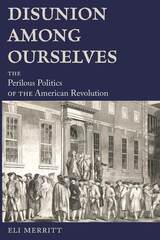
Instead of disbanding into separate regional confederacies, the founders managed to unite for the sake of liberty and self-preservation. In so doing, they succeeded in holding the young nation together. To achieve this, they forged grueling compromises, including Declaration of Independence in 1776, the Mississippi-Fisheries Compromise of 1779, and the ratification of the Articles of Confederation in 1781.
In addition to bringing new insights to the history of the American Revolution, Disunion Among Ourselves has inevitable resonances with our present era of political hyperpolarization and serves as a touchstone for contemporary politics, reminding us that the founders overcame far tougher times than our own through commitment to ethical constitutional democracy and compromise.
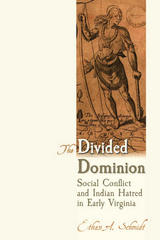
Myriad internal and external factors drove Virginians to interpret their disputes with one another increasingly along class lines. The decades-long tripartite struggle among elite whites, non-elite whites, and Native Americans resulted in the development of mutually beneficial economic and political relationships between elites and Native Americans. When these relationships culminated in the granting of rights—equal to those of non-elite white colonists—to Native Americans, the elites crossed a line and non-elite anger boiled over. A call for the annihilation of all Indians in Virginia united different non-elite white factions and molded them in widespread social rebellion.
The Divided Dominion places Indian policy at the heart of Bacon's Rebellion, revealing the complex mix of social, cultural, and racial forces that collided in Virginia in 1676. This new analysis will interest students and scholars of colonial and Native American history.
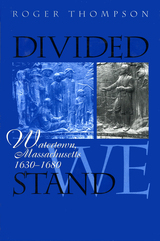
Thompson describes Watertown's early government, its relations with Native Americans and neighboring communities, its religious and economic affairs, and the day-to-day experiences of its people. Conflict occurred over a wide variety of issues: land allocation, administrative accountability, religious orthodoxy and exclusivity, generational and gender differences, livestock and fencing, haves and have-nots.
Thompson brings these disputes to life through a series of vivid case studies drawn from the unpublished Middlesex County Court Records. Among others, we meet John Sawin, who despite his best efforts at subterfuge was convicted of stealing and selling a neighbor's horse; Susanna Woodward, whose pregnancy resulted in a fiercely contested paternity case; and Edward Sanders, whose punishment for child abuse was both a whipping and a ruling that when in public he must "wear a rope round his neck openly to be seen hanging down two feet."
Throughout the book, the same themes reappear: continuity and change, the persistent conflicts of the first two generations, and the countervailing forces of communal cohesion.
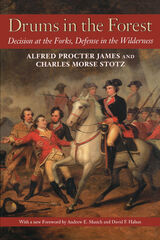
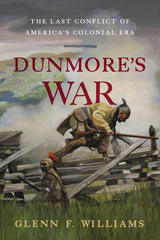
Known to history as “Dunmore’s War,” the 1774 campaign against a Shawnee-led Indian confederacy in the Ohio Country marked the final time an American colonial militia took to the field in His Majesty’s service and under royal command. Led by John Murray, the fourth Earl of Dunmore and royal governor of Virginia, a force of colonials including George Rogers Clark, Daniel Morgan, Michael Cresap, Adam Stephen, and Andrew Lewis successfully enforced the western border established by treaties in parts of present-day West Virginia and Kentucky. The campaign is often neglected in histories, despite its major influence on the conduct of the Revolutionary War that followed. In Dunmore’s War: The Last Conflict of America’s Colonial Era, award-winning historian Glenn F. Williams describes the course and importance of this campaign. Supported by extensive primary source research, the author corrects much of the folklore concerning the war and frontier fighting in general, demonstrating that the Americans did not adopt Indian tactics for wilderness fighting as is often supposed, but rather used British methods developed for fighting irregulars in the woods of Europe, while incorporating certain techniques learned from the Indians and experience gained from earlier colonial wars.
As an immediate result of Dunmore’s War, the frontier remained quiet for two years, giving the colonies the critical time to debate and declare independence before Britain convinced its Indian allies to resume attacks on American settlements. Ironically, at the same time Virginia militiamen were fighting under command of a king’s officer, the colony was becoming one of the leaders in the move toward American independence. Although he was hailed as a hero at the end of the war, Lord Dunmore’s attempt to maintain royal authority put him in direct opposition to many of the subordinates who followed him on the frontier, and in 1776 he was driven from Virginia and returned to England.
READERS
Browse our collection.
PUBLISHERS
See BiblioVault's publisher services.
STUDENT SERVICES
Files for college accessibility offices.
RECENTLY PUBLISHED




UChicago Accessibility Resources
home | accessibility | search | about | contact us
BiblioVault ® 2001 - 2024
The University of Chicago Press