
 A SCHOLARLY BOOK REPOSITORY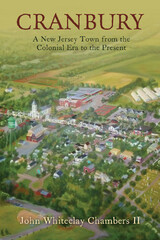
Winner of the 2013 Award of Merit by the American Association for State and Local History Leadership in History awards committee
Winner of the 2013 New Jersey Studies Academic Alliance, Author Awards, Non-fiction Popular Category
One of the oldest towns in New Jersey, Cranbury has a long and noteworthy history that is in part distinctive and in part broadly representative of larger themes in the development of the state and the nation. In this beautifully illustrated book sponsored by Cranbury Landmarks, Inc., historian John Whiteclay Chambers II links the narrative of this remarkable place to contemporary debates about suburbanization and land-use planning.
Founded in 1697 and soon featuring an inn, a gristmill, and a church, the village prospered due to its strategic location on important transportation routes between New York and Philadelphia and its fertile, productive farmland. David Brainerd, a famous and controversial young missionary, came there to preach to the Lenape Indians. In 1778, George Washington and his army stayed there on their way to the Battle of Monmouth. In the nineteenth century, roadways, railroads, and turnpikes spurred the town’s commerce and agriculture. Yet unlike many old agricultural centers transformed by suburbanization in the twentieth century, Cranbury has retained its picturesque, small-town image and much of its charm.
Cranbury has the feel of a well-preserved nineteenth-century village, remarkable for its intact and cohesive domestic and commercial architecture—a status recognized when it was placed on the State and National Registers of Historic Places. In the last several decades, an active citizenry has innovatively linked the historic preservation of the town center with the maintenance of adjoining farmland, stream corridors, and wildlife habitats. How Cranbury preserved much of its character while accommodating economic growth provides a central theme in this book. Preserving the best of the past while astutely meeting the challenges of the present, Cranbury’s history offers an inspiration for active civic participation, a model for enlightened development, and an engaging American story.
A project of Cranbury Landmarks, Inc.

The first history of the involvement of American business in direct foreign investment explores a number of pertinent questions: What was the genesis of U.S. business interests in overseas markets? What perspectives guided the financial and social policies of the pioneering companies? In what way did the activities of American business abroad influence U.S. foreign policy?
Mira Wilkins recounts the histories of early foreign investment by such familiar companies as Singer, United Fruit, Edison, American Smelting and Refining, Anaconda Copper, American Telephone, and International Harvester. Refuting a well-established myth, she demonstrates that early American foreign investment was not confined to the extractive industries and utilities, and shows that, by 1914, while America remained a debtor nation in international accounts, a large number of U.S. multinational manufacturing corporations had already come into existence. Indeed, the percentage of the 1914 gross national product attributed to direct foreign investment equals that percentage of the 1966 GNP.
Though wholly self-contained, this works joins with the author’s subsequent volume, The Maturing of Multinational Enterprise: American Business Abroad from 1914 to 1970, to form the first overall history of American business abroad from our earliest times to the late twentieth century.

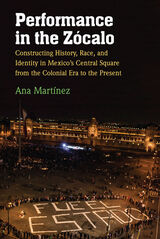
A saying in Mexico City is “quien domina el centro, domina el país” (whoever dominates the center, dominates the country) as the Zócalo continues to act as the performative embodiment of Mexican society. This book highlights how particular performances build upon each other by recycling past architectures and performative practices for new purposes. Ana Martínez discusses the singular role of collective memory in creating meaning through space and landmarks, providing a new perspective and further insight into the problem of Mexico’s relationship with its own past. Rather than merely describe the commemorations, she traces the relationship between space and the invention of a Mexican imaginary. She also explores how indigenous communities, Mexico’s alienated subalterns, performed as exploited objects, exotic characters, and subjects with agency. The book’s dual purposes are to examine the Zócalo as Mexico’s central site of performance and to unmask, without homogenizing, the official discourse regarding Mexico’s natives. This book will be of interest for students and scholars in theater studies, Mexican Studies, Cultural Geography, Latinx and Latin American Studies.
READERS
Browse our collection.
PUBLISHERS
See BiblioVault's publisher services.
STUDENT SERVICES
Files for college accessibility offices.
RECENTLY PUBLISHED





UChicago Accessibility Resources
home | accessibility | search | about | contact us
BiblioVault ® 2001 - 2024
The University of Chicago Press