
 A SCHOLARLY BOOK REPOSITORY
5 start with A start with A

Before the Cultural Revolution, Ai Ssu-ch’i (1910–1966) was one of Communist China’s foremost Marxist philosophers, second only to Chairman Mao himself. Ai was attracted to Marxism-Leninism as a young student in China and Japan, and wrote numerous books and articles seeking to explain the complexities of the philosophy in language everyone could understand. His writings were enormously popular during the 1930s and 1940s, and went through many printings despite continuous harassment from Kuomintang censors.
This volume is the first full-length study of Ai Ssu-ch’i. In spite of his popularity, Ai has largely been ignored in recent histories of the Chinese Communist movement, because his importance lies in his function as a popularizer rather than as an original thinker. However, it can be shown that Mao and other leaders of the movement were influenced by him, and his writings and translations certainly helped to attract many young Chinese intellectuals to the Communist cause.
The recent flood of reminiscence literature in China has reserved a special place of prominence for Ai Ssu-ch’i. This is not only because he was so admired by Mao, but also because he devoted his life so enthusiastically and wholeheartedly to the Party. Joshua Fogel traces the pattern of this devotion via Ai’s crucial role in spreading Marxist-Leninist thought among Chinese intellectuals.
In 1943 the American Communist Party was a large, politically influential, broadly based movement. In 1957 it was a small, weak, and isolated political sect. The Party’s decline in the intervening Cold War years is the subject of this book—an analysis of a major radical movement that touched millions of Americans and pervaded many aspects of American life.
The author, at one time active in the Party and foreign editor of its paper, The Daily Worker, and now a scholar and professor of political science, has combined personal experience with careful scholarship to analyze what happened to a revolutionary organization that found itself unable to make a revolution. His approach is not autobiographical, but rather analytical.
Joseph Starobin places the Party in its historical and political context and describes its unsuccessful efforts to adapt to the demands of the American political situation. Throughout the book are fresh interpretations of important events: the struggle in 1945 between Earl Browder and William Z. Foster for leadership of the Party, the outcome of which had a profound effect on the Party’s future course; the nature of Browder’s policies and Moscow’s eventual rejection of him; the Henry Wallace movement of 1948; the right–left battle within the CIO in the late forties; the “Communist conspiracy” problem of the fifties; the Party’s relationship with the Soviet Communists; the origins of the “Black liberation movement.”
The author’s basic conclusion is that American Communists were on their way to becoming an authentic and powerful radical movement in American life but were defeated by a basic contradiction: they could not continue to be part of a world movement dominated by Leninist concepts and yet consolidate their relative success within the United States, where these concepts were not applicable. To survive, the Party had to change. It had to anticipate by fifteen years and to endure the two tendencies that would develop within world Communism: the Russian quasi-revolutionary strain and the Chinese ultra-revolutionary. It tried, Mr. Starobin shows, and it failed.
American Communism in Crisis, 1943–1957 will interest not only history-minded readers but also anyone concerned today with social change. The book has much to say to the new left—giving historical material necessary for an understanding of its past and its potential.

The Cold War produced in many countries a form of political repression and societal paranoia which often infected governmental and civic institutions. In the West, the driving catalyst for the phenomenon was anti-communism. While much has been written on the post-war American red scare commonly known as McCarthyism, the domestic British response to the “red menace” during the early Cold War has until now received little attention. Anti-communism in Britain During the Early Cold War is the first book to examine how British Cold War anti-communism transpired and manifested as McCarthyism raged across the Atlantic.
Drawing from a wealth of archival material, this book demonstrates that while policymakers and politicians in Britain sought to differentiate their anti-communist initiatives from the “witch hunt hysteria” occurring in the United States, they were often keen to conduct—albeit less publicly—their own hunts as well. Through analyzing how domestic anti-communism exhibited itself in state policies, political rhetoric, party politics, and the trade union movement, Matthew Gerth argues that an overreaction to the communist threat occurred. In striking detail, this book describes a nation at war with a specific political ideology and its willingness to use a variety of measures to either disrupt or eradicate its influence.
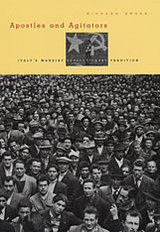
One of the most controversial questions in Italy today concerns the origins of the political terror that ravaged the country from 1969 to 1984, when the Red Brigades, a Marxist revolutionary organization, intimidated, maimed, and murdered on a wide scale.
In this timely study of the ways in which an ideology of terror becomes rooted in society, Richard Drake explains the historical character of the revolutionary tradition to which so many ordinary Italians professed allegiance, examining its origins and internal tensions, the men who shaped it, and its impact and legacy in Italy. He illuminates the defining figures who grounded the revolutionary tradition, including Carlo Cafiero, Antonio Labriola, Benito Mussolini, and Antonio Gramsci, and explores the connections between the social disasters of Italy, particularly in the south, and the country's intellectual politics; the brand of "anarchist communism" that surfaced; and the role of violence in the ideology. Though arising from a legitimate sense of moral outrage at desperate conditions, the ideology failed to find the political institutions and ethical values that would end inequalities created by capitalism.
In a chilling coda, Drake recounts the recent murders of the economists Massimo D'Antona and Marco Biagi by the new Red Brigades, whose Internet justification for the killings is steeped in the Marxist revolutionary tradition.
READERS
Browse our collection.
PUBLISHERS
See BiblioVault's publisher services.
STUDENT SERVICES
Files for college accessibility offices.
RECENTLY PUBLISHED





UChicago Accessibility Resources
home | accessibility | search | about | contact us
BiblioVault ® 2001 - 2024
The University of Chicago Press