
 A SCHOLARLY BOOK REPOSITORY

Reveals the deep, historical roots of public distrust in former mining areas in the US, shedding new light on the corrosive feedback loops that persist today.
In Company Towns, Elizabeth Mitchell Elder examines the long-lasting political legacies of mining-company dominance in the Midwest and Appalachia. While the economic consequences of deindustrialization are well-known, Elder shifts the focus to a more insidious problem: the political dysfunction that took root long before the mines shut down.
Drawing on historical and administrative data, Elder shows that the coal industry hindered the growth of local government capacity in the places where it was dominant. Mining companies also engaged in outright corruption to shape local governments, practices which local elites then carried forward. When mining companies withdrew, they left behind not just economic decline, but local governments ill-equipped to govern.
These patterns have had enduring consequences for public life. Elder shows how these historical experiences have fueled a broader cynicism toward government, in which citizens expect little from public institutions and doubt the usefulness of elections. Company Towns underscores the consequences of corporate dominance for state capacity, public opinion, and democratic accountability today.
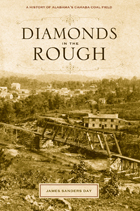
Winner of the 2014 Clinton Jackson Coley Award for Best Work on Alabama Local History from the Alabama Historical Association
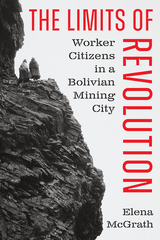
The role of Bolivian mining families in revolution and politics.
In 1952, Bolivia’s Revolutionary Nationalist Movement (MNR) swept into power, promising collective prosperity through class-based nationalism. The heroic symbol of the movement was the worker citizen—the formerly indigenous miner who would fuel economic development in a nationalized mining economy.
The Limits of Revolution explores this history from the worker barrios of the copper mining city of Corocoro. As the state walked back its promises of worker political power at the national level, mining men and women in Corocoro struggled—through protests, court battles, and barfights—to maintain the benefits of worker citizenship locally. After the MNR fell to a military dictatorship in 1964, however, families retreated to defending the nationalized mining company against an increasingly hostile state. In this battle to keep the revolution alive, the expansive potential of worker citizenship disappeared and old racial exclusions resurfaced. Largely forgotten today, Bolivia’s experience of revolution exposes the contradictions of postcolonial nationalism and sheds light on Latin America’s transition from Cold War–era class politics to twenty-first-century Pink Tide politics.

From 1915 to 1971 the large U.S. Steel plant was a major part of Duluth’s landscape and life. Just as important was Morgan Park—an innovatively planned and close-knit community constructed for the plant’s employees and their families. In this new book Arnold R. Alanen brings to life Morgan Park, the formerly company-controlled town that now stands as a city neighborhood, and the U.S. Steel plant for which it was built.
Planned by renowned landscape architects, architects, and engineers, and provided with schools, churches, and recreational and medical services by U.S. Steel, Morgan Park is an iconic example—like Lowell, Massachusetts, and Pullman, Illinois—of a twentieth-century company town, as well as a window into northeastern Minnesota’s industrial roots.
Starting with the intense political debates that preceded U.S. Steel’s decision to build a plant in Duluth, Morgan Park follows the town and its residents through the boom years to the closing of the outmoded facility—an event that foreshadowed industrial shutdowns elsewhere in the United States—and up to today, as current residents work to preserve the community’s historic character.
Through compelling archival and contemporary photographs and vibrant stories of a community built of concrete and strong as steel, Alanen shows the impact both the plant and Morgan Park have had on life in Duluth.
Arnold R. Alanen is professor of landscape architecture at the University of Wisconsin–Madison. His previous books include Main Street Ready-Made: The New Deal Community of Greendale, Wisconsin and Preserving Cultural Landscapes in America.

Originally published by the University of Nebraska Press in 2003, this first book in Louise Wagenknecht’s trilogy about life in the Klamath Mountains is now available through Oregon State University Press, together with Light on the Devils (2011) and Shadows on the Klamath (2021).
READERS
Browse our collection.
PUBLISHERS
See BiblioVault's publisher services.
STUDENT SERVICES
Files for college accessibility offices.
RECENTLY PUBLISHED




UChicago Accessibility Resources
home | accessibility | search | about | contact us
BiblioVault ® 2001 - 2026
The University of Chicago Press