
 A SCHOLARLY BOOK REPOSITORY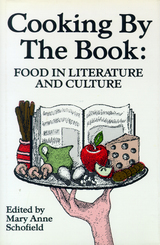
The second part of Cooking by the Book turns to the more diverse food rhetorics of the marketplace. What, for example, is the fast food rhetoric? Why are there so many eating disorders in our society? Is it possible to teach philosophy through cookery? How long has vegetarianism been popular?

The studies span from the Middle Ages to the twenty-first century, and the contributing scholars occupy diverse fields within Latin American and Hispanic Studies. As such, their essays showcase eclectic critical and theoretical approaches to the subject of Latin American and Iberian food.
Food, Texts, and Cultures in Latin America and Spain also introduces the first English-language publication of works from such award-winning scholars as Adolfo Castañón of the Mexican Academy of Language; Sergio Ramírez, winner of the 2017 Miguel de Cervantes Prize in Literature; and Carmen Simón Palmer, winner of the 2015 Julián Marías Prize for Research.
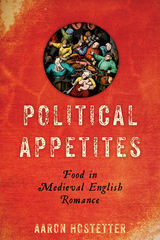
If humanity has attempted through its brief history to render the material world edible, then food and food practice not only influence our aspirations but also shift focus to the limits of human existence on this planet. In studying the foodways of the past as a fundamental economic activity, Political Appetites questions contemporary attitudes towards consumption as their proliferation and abuses create social inequities, menace ecosystems, and threaten to bring about the end of the Anthropocene Era.
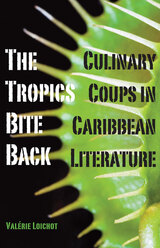
The ubiquitous presence of food and hunger in Caribbean writing—from folktales, fiction, and poetry to political and historical treatises—signals the traumas that have marked the Caribbean from the Middle Passage to the present day. The Tropics Bite Back traces the evolution of the Caribbean response to the colonial gaze (or rather the colonial mouth) from the late nineteenth century to the twenty-first. Unlike previous scholars, Valérie Loichot does not read food simply as a cultural trope. Instead, she is interested in literary cannibalism, which she interprets in parallel with theories of relation and creolization.
For Loichot, “the culinary” is an abstract mode of resistance and cultural production. The Francophone and Anglophone authors whose works she interrogates—including Patrick Chamoiseau, Suzanne Césaire, Aimé Césaire, Maryse Condé, Edwidge Danticat, Édouard Glissant, Lafcadio Hearn, and Dany Laferrière—“bite back” at the controlling images of the cannibal, the starved and starving, the cunning cook, and the sexualized octoroon with the ultimate goal of constructing humanity through structural, literal, or allegorical acts of ingesting, cooking, and eating.
The Tropics Bite Back employs cross-disciplinary methods to rethink notions of race and literary influence by providing a fresh perspective on forms of consumption both metaphorical and material.
READERS
Browse our collection.
PUBLISHERS
See BiblioVault's publisher services.
STUDENT SERVICES
Files for college accessibility offices.
RECENTLY PUBLISHED


UChicago Accessibility Resources
home | accessibility | search | about | contact us
BiblioVault ® 2001 - 2026
The University of Chicago Press