
 A SCHOLARLY BOOK REPOSITORY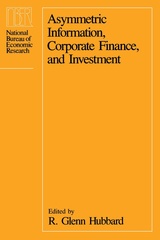
In this volume, specialists from traditionally separate areas in economics and finance investigate issues at the conjunction of their fields. They argue that financial decisions of the firm can affect real economic activity—and this is true for enough firms and consumers to have significant aggregate economic effects. They demonstrate that important differences—asymmetries—in access to information between "borrowers" and "lenders" ("insiders" and "outsiders") in financial transactions affect investment decisions of firms and the organization of financial markets. The original research emphasizes the role of information problems in explaining empirically important links between internal finance and investment, as well as their role in accounting for observed variations in mechanisms for corporate control.
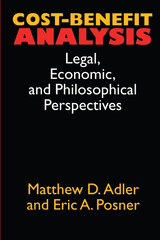
This new scholarly debate includes not only economists, but also contributors from philosophy, cognitive psychology, legal studies, and public policy who can further illuminate the justification and moral implications of this method and specify alternative measures.
These articles originally appeared in the Journal of Legal Studies.
Contributors:
- Matthew D. Adler - Gary S. Becker
- John Broome - Robert H. Frank
- Robert W. Hahn - Lewis A. Kornhauser
- Martha C. Nussbaum - Eric A. Posner
- Richard A. Posner - Henry S. Richardson
- Amartya Sen - Cass R. Sunstein
- W. Kip Viscusi
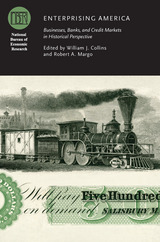
To better understand the historical processes central to American economic development, Enterprising America brings together contributors who address the economic behavior of American firms and financial institutions—and the associated legal institutions that shaped their behavior—throughout the nineteenth and early twentieth centuries. Collectively, the contributions provide an account of the ways in which businesses, banks, and credit markets promoted America’s extraordinary economic growth. Among the topics that emerge are the rise of incorporation and its connection to factory production in manufacturing, the organization and operation of large cotton plantations in comparison with factories, the regulation and governance of banks, the transportation revolution’s influence on bank stability and survival, and the emergence of long-distance credit in the context of an economy that was growing rapidly and becoming increasingly integrated across space.
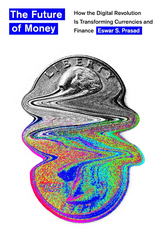
An Economist Best Book of the Year
A Financial Times Best Book of the Year
A Foreign Affairs Best Book of the Year
A ProMarket Best Political Economy Book of the Year
One of The Week’s Ten Best Business Books of the Year
A cutting-edge look at how accelerating financial change, from the end of cash to the rise of cryptocurrencies, will transform economies for better and worse.
We think we’ve seen financial innovation. We bank from laptops and buy coffee with the wave of a phone. But these are minor miracles compared with the dizzying experiments now underway around the globe, as businesses and governments alike embrace the possibilities of new financial technologies. As Eswar Prasad explains, the world of finance is at the threshold of major disruption that will affect corporations, bankers, states, and indeed all of us. The transformation of money will fundamentally rewrite how ordinary people live.
Above all, Prasad foresees the end of physical cash. The driving force won’t be phones or credit cards but rather central banks, spurred by the emergence of cryptocurrencies to develop their own, more stable digital currencies. Meanwhile, cryptocurrencies themselves will evolve unpredictably as global corporations like Meta and Amazon join the game. The changes will be accompanied by snowballing innovations that are reshaping finance and have already begun to revolutionize how we invest, trade, insure, and manage risk.
Prasad shows how these and other changes will redefine the very concept of money, unbundling its traditional functions as a unit of account, medium of exchange, and store of value. The promise lies in greater efficiency and flexibility, increased sensitivity to the needs of diverse consumers, and improved market access for the unbanked. The risk is instability, lack of accountability, and erosion of privacy. A lucid, visionary work, The Future of Money shows how to maximize the best and guard against the worst of what is to come.
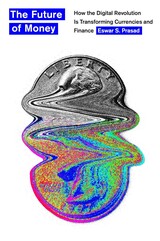
An Economist Book of the Year
A Financial Times Book of the Year
A Foreign Affairs Book of the Year
A ProMarket Book of the Year
One of The Week’s Ten Best Business Books of the Year
“A road map for money managers, market strategists, and others seeking to understand this new world.”—Barron’s
“Money shapes economies, economies shape nations, nations shape history. It follows that the future of money is profoundly important. Here is a definitive report on where we are and where we are going.”—Lawrence H. Summers, former Secretary of the Treasury
“Prasad manages to make the financial system intelligible and interesting without resorting to shortcuts and exaggeration…Previous overhauls mainly improved existing systems, he notes. The end of cash—likely within a decade or two—is revolutionary.”—The Economist
The world of finance is on the cusp of a major disruption that will affect corporations, bankers, states—indeed, all of us. As Eswar Prasad makes clear, the end of physical cash will fundamentally rewrite how we live. Bitcoin, Ethereum, and other cryptocurrencies are just the beginning: spurred by their emergence, central banks will increasingly develop their own, more stable digital currencies. Meanwhile, cryptocurrencies themselves will evolve dramatically as global corporations like Meta, Apple, and Amazon join the game.
Prasad shows how these innovations will redefine the very concept of money, unbundling its traditional functions. This transformation promises greater efficiency and flexibility, but also carries the risk of instability, lack of accountability, and erosion of privacy. A lucid, visionary work, The Future of Money shows how to maximize the best and guard against the worst of what is to come.

Popular anger against the financial system has never been higher, yet the practical workings of the system remain opaque to many people. The Heretic's Guide to Global Finance aims to bridge the gap between protest slogans and practical proposals for reform.
Brett Scott is a campaigner and former derivatives broker who has a unique understanding of life inside and outside the financial sector. He builds up a framework for approaching it based on the three principles of 'Exploring', 'Jamming' and 'Building', offering a practical guide for those who wish to deepen their understanding of, and access to, the inner workings of financial institutions.
Scott covers aspects frequently overlooked, such as the cultural dimensions of the financial system, and considers major issues such as agricultural speculation, carbon markets and tar-sands financing. Crucially, it also showcases the growing alternative finance movement, showing how everyday people can get involved in building a new, democratic, financial system.
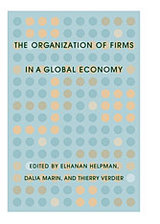
The Organization of Firms in a Global Economy presents a new research program that is transforming the study of international trade. Driven by the availability of new micro data sets and innovative theoretical models, it focuses on the level of firms, products, and stages of production rather than on countries and industries. It addresses such questions as why only a small proportion of firms in a given industry export and why an even smaller proportion invest abroad; why exporters tend to be more productive than nonexporters; why almost one-third of international trade takes place between units of the same firm and why as much as two-thirds involves multinational firms as exporter, importer, or both; and why international trade may have been the most important driver of organizational changes in the corporation that have been taking place in the last decade.
Until a few years ago, models of international trade did not recognize the heterogeneity of firms and exporters, and could not provide good explanations of international production networks. Now such models exist and are explored in this volume.

The private pension is a curiosity in the modern economic environment. Why do profit-seeking companies pay retirement benefits to those no longer on the job? In this new institutional history, Steven Sass explores the rise and growth of the financial support system that today commands trillions of dollars of investment capital and supports hundreds of thousands of older Americans.
Before 1900 America's elderly derived their livelihood from simple sources. They worked if they could, relied on their children, and took charity if necessary. By the dawn of the twentieth century, however, the country was constructing a new industrial economy. Both laborers and capital were moving away from farms toward large corporate establishments. These market changes weakened family links and traditional skills, rendering workers more vulnerable to economic shocks. The elderly, in particular, fell out of step with the new mechanized and bureaucratic regime. It was in response to these dramatic economic shifts that the institution of private pensions emerged. In return for workers' long-term loyalty, employers promised to help sustain them through old age.
As Sass shows, creating the pension system proved far more complicated than anyone had anticipated. Over the last hundred years it has evolved into a complex institution driven by congressional mandates, judicial/administrative decisions, union campaigns, political debates, and the ministrations of lawyers, economists, human resource specialists, actuaries, and insurance experts. Sass traces the U.S. pension system through to the present day, exploring how our modern corporate economy is confronting the challenges of an aging population.
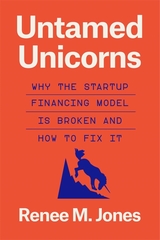
The term “unicorn” for a private startup company worth $1 billion or more was coined to emphasize the rarity of such ventures. But today there are more than 1,500 of them, with a combined valuation of over $4 trillion. By remaining private, these corporate behemoths shield themselves from disclosure requirements, investor oversight, and market discipline—mechanisms designed to protect investors and the public from corporate wrongdoing. It’s no coincidence that in recent years, a number of prominent startups have been the sites of founder misconduct and fraud. This wave of startup scandals exposes significant problems with the venture capital financing model and the deregulation that helped fuel the industry’s explosive growth.
Untamed Unicorns connects the most dramatic startup scandals, including FTX, Theranos, WeWork, and Uber, to structural flaws in the startup financing model. Detailing the deregulatory reforms
implemented by Congress and the Securities and Exchange Commission over the past 40 years, it shows how these have eroded core safeguards of securities law that were first established during the New Deal era.
As Renée M. Jones makes clear, allowing unicorn companies to run wild doesn’t threaten only the sophisticated venture capitalists who finance Silicon Valley. When the largest startups go awry, the consequences are often severe for ordinary investors, employees, and the public at large. Revealing the risks inherent in the current system, Untamed Unicorns presents a roadmap for reform to restore proper boundaries between public and private securities markets.
“An incisive history of the venture-capital industry.”
—New Yorker
“An excellent and original economic history of venture capital.”
—Tyler Cowen, Marginal Revolution
“A detailed, fact-filled account of America’s most celebrated moneymen.”
—New Republic
“Extremely interesting, readable, and informative…Tom Nicholas tells you most everything you ever wanted to know about the history of venture capital, from the financing of the whaling industry to the present multibillion-dollar venture funds.”
—Arthur Rock
“In principle, venture capital is where the ordinarily conservative, cynical domain of big money touches dreamy, long-shot enterprise. In practice, it has become the distinguishing big-business engine of our time…[A] first-rate history.”
—New Yorker
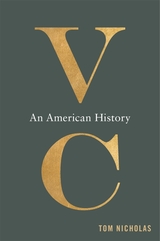
VC tells the riveting story of how the venture capital industry arose from America’s longstanding identification with entrepreneurship and risk-taking. Whether the venture is a whaling voyage setting sail from New Bedford or the latest Silicon Valley startup, VC is a state of mind as much as a way of doing business, exemplified by an appetite for seeking extreme financial rewards, a tolerance for failure and experimentation, and a faith in the promise of innovation to generate new wealth.
Tom Nicholas’s authoritative history takes us on a roller coaster of entrepreneurial successes and setbacks. It describes how iconic firms like Kleiner Perkins and Sequoia invested in Genentech and Apple even as it tells the larger story of VC’s birth and evolution, revealing along the way why venture capital is such a quintessentially American institution—one that has proven difficult to recreate elsewhere.
READERS
Browse our collection.
PUBLISHERS
See BiblioVault's publisher services.
STUDENT SERVICES
Files for college accessibility offices.
RECENTLY PUBLISHED






UChicago Accessibility Resources
home | accessibility | search | about | contact us
BiblioVault ® 2001 - 2025
The University of Chicago Press