

front cover of Avala Is Falling
Avala Is Falling
Biljana Jovanovic
Central European University Press, 2020

In Avala Is Falling, Jovanović’s breakout success in 1978, a young woman challenges the expectations that teachers, parents, bus drivers, and doctors have for her. The “Avala” of the title refers to a mountain south of Belgrade which is home to some of Serbia’s most important nationalist monuments and shrines; it is also the site of the main mental hospital for the region, and its “falling” is the unexpected fulfillment of a prophecy from a traditional Serbian folk song. Jovanović’s use of stream of consciousness in her characters’ thinking and speaking, as well as of intertextuality in description and plot advancement heralded the arrival of an innovative new writer who was determined to break with the of traditional concerns of earlier women writers.

This book is now recognized as much more than “jeans prose,” although the fame the book achieved under that characterization eventually pushed it to cult status. Jovanović is now considered a major avant-garde writer, whose stylistic innovations were as challenging as her women-centered themes.
[more]

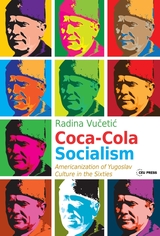
front cover of Coca-Cola Socialism
Coca-Cola Socialism
Americanization of Yugoslav Culture in the Sixties
Radina Vucetic
Central European University Press, 2018

This book is about the Americanization of Yugoslav culture and everyday life during the nineteen-sixties. After falling out with the Eastern bloc, Tito turned to the United States for support and inspiration. In the political sphere the distance between the two countries was carefully maintained, yet in the realms of culture and consumption the Yugoslav regime was definitely much more receptive to the American model. For Titoist Yugoslavia this tactic turned out to be beneficial, stabilising the regime internally and providing an image of openness in foreign policy.


Coca-Cola Socialism addresses the link between cultural diplomacy, culture, consumer society and politics. Its main argument is that both culture and everyday life modelled on the American way were a major source of legitimacy for the Yugoslav Communist Party, and a powerful weapon for both USA and Yugoslavia in the Cold War battle for hearts and minds.


Radina Vučetić explores how the Party used American culture in order to promote its own values and what life in this socialist and capitalist hybrid system looked like for ordinary people who lived in a country with communist ideology in a capitalist wrapping. Her book offers a careful reevaluation of the limits of appropriating the American dream and questions both an uncritical celebration of Yugoslavia’s openness and an exaggerated depiction of its authoritarianism.

[more]

front cover of Martin Kacur
Martin Kacur
The Biography of an Idealist
Ivan Cankar
Central European University Press, 2009
The novel Martin Kacur, which dates from 1907, tells the engrossing story of a young schoolteacher who moves from one provincial Slovene town to the next, trying to enlighten his countrymen and countrywomen but instead receiving only the mistrust and scorn of the traditional-minded and petty population. The novel is ruthless in its analysis and self-analysis of the failure of this abstract idealist. Brilliant descriptions of Slovenia’s natural beauty alternate with the haze of alcoholic despair, rural violence, marital alienation, and the death of a young and beloved child. The Slovene prose writer, poet, and dramatist Cankar’s characterizations of duplicitous political and religious leaders (the village priest, the mayor, other teachers, doctors, etc.) and the treacherous social scene are remarkable in their engaging clarity. No doubt the raw emotional impact of Martin Kacur derives partly from Cankar’s portrayal of the way society isolates people, denying them sympathy and solidarity. Cankar's style here owes a debt both to naturalism and to symbolism and contains, in its sometimes frantic pace and associative interior monologues, hints of early expressionism.
[more]

front cover of A Tale of Two Worlds
A Tale of Two Worlds
Vjenceslav Novak
Central European University Press, 2014
In this novel, written by the esteemed novelist in 1901, a provincial composer and organist from Croatia struggles to find his way along the perilous frontier between the worlds of artistic vocation and humdrum family life. The local kapellmeister—-a Czech, in good Habsburg tradition, and a confidant of Gaj and Palacky, influential politicians of the time—-recognizes young Amadej Zlatanic as a prodigy and persuades the stingy mayor and stubborn parish priest to pack the teenager off to the conservatory in Prague. After several years of sordid student purgatory, Amadej returns to Croatia—-ready for love and ready to make great art.The world of Central Europe in the 1860s flows past, and Amadej tries to keep abreast of political change. At the same time he ducks and dodges predatory relatives and townspeople in his native district, to which he has returned for the sake of employment. Despite his marriage to the impressionable and vulnerable local beauty, Adelka, and his devotion to their daughter Veruska, Amadej is sorely troubled by the political corruption and isolation of Croatia. His wife takes ill and his family is poor. Yet ultimately it is the vulgar, populist notion of Croatian "identity"—-symbolized by the worship of the tamburica, a local musical instrument—-that crushes Amadej's career. As it does so, he contemplates the two worlds of national greatness, amidst the Croatian national awakening, and international fame. Finally, frustrated beyond relief by unsuccessful affairs both amorous and professional, and tortured by the philistinism surrounding him, Amadej leaves the world of sanity for a mind-blowing descent into the maniacal and inescapable world of hallucination, paganism, and paranoia.
[more]


Send via email Share on Facebook Share on Twitter