
 A SCHOLARLY BOOK REPOSITORY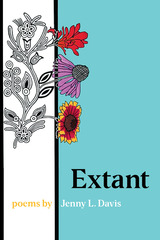
The second poetry collection by award-winning author Jenny L. Davis (Chickasaw), Extant confronts the many ways in which Native Americans continue to be associated with the distant past and imagined, even today, as more animal than human. For more than a century, anthropologists, museum guides, and high school teachers have described Native American bodies, cultures, and languages as “endangered” or “almost extinct.” Through a combination of blackout poems, occasional poems, and free verse, Davis rewrites the narrative of what it means to exist, to live in a present shaped by colonial violence that emphasizes the power of survival. Drawing on online question forums, scientific studies, kitschy decor, and the day-to-day musings of an Indigiqueer Native woman, Extant stages encounters of Native survival within a world full of stars, cicadas, earthworms, and moss.
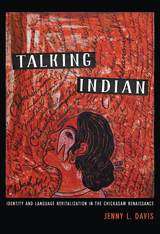
In south-central Oklahoma and much of “Indian Country,” using an Indigenous language is colloquially referred to as “talking Indian.” Among older Chickasaw community members, the phrase is used more often than the name of the specific language, Chikashshanompa’ or Chickasaw. As author Jenny L. Davis explains, this colloquialism reflects the strong connections between languages and both individual and communal identities when talking as an Indian is intimately tied up with the heritage language(s) of the community, even as the number of speakers declines.
Today a tribe of more than sixty thousand members, the Chickasaw Nation was one of the Native nations removed from their homelands to Oklahoma between 1837 and 1838. According to Davis, the Chickasaw’s dispersion from their lands contributed to their disconnection from their language over time: by 2010 the number of Chickasaw speakers had radically declined to fewer than seventy-five speakers.
In Talking Indian, Davis—a member of the Chickasaw Nation—offers the first book-length ethnography of language revitalization in a U.S. tribe removed from its homelands. She shows how in the case of the Chickasaw Nation, language programs are intertwined with economic growth that dramatically reshape the social realities within the tribe. She explains how this economic expansion allows the tribe to fund various language-learning forums, with the additional benefit of creating well-paid and socially significant roles for Chickasaw speakers. Davis also illustrates how language revitalization efforts are impacted by the growing trend of tribal citizens relocating back to the Nation.
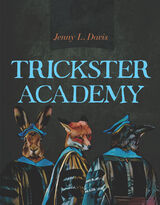
Trickster Academy is a collection of poems that explore being Native in Academia—from land acknowledgement statements, to mascots, to the histories of using Native American remains in anthropology. Jenny L. Davis’ collection brings humor and uncomfortable realities together in order to challenge the academy and discuss the experience of being Indigenous in university classrooms and campuses. Organized around the premise of the Trickster Academy— a university space run by, and meant for training, Tricksters— this collection moves between the personal dynamics of a Two-Spirit/queer Indigenous woman in spaces where there are few, if any, others and a Trickster’s critique of those same spaces.
Trickster Academy is playful at times, yet more complicated and salient issues are at the heart of these poems. Davis’ Trickster Academy deeply challenges the institutions that still hold Indigenous remains in their archives and storage rooms, and the insincerities of the academy when it comes to acknowledging Indigenous peoples. The realities that the poems in Trickster Academy address are not only relevant to people in academic positions. From leaving home, to being the only Indian in the room, to having to deal with the constant pressures to being a ‘real Indian’, these poems illuminate the shared experiences of Indians across many regions, and all of us who live amongst Tricksters.READERS
Browse our collection.
PUBLISHERS
See BiblioVault's publisher services.
STUDENT SERVICES
Files for college accessibility offices.
RECENTLY PUBLISHED


UChicago Accessibility Resources
home | accessibility | search | about | contact us
BiblioVault ® 2001 - 2026
The University of Chicago Press