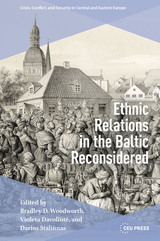
front cover of Ethnic Relations in the Baltic Reconsidered
Ethnic Relations in the Baltic Reconsidered
Bradley D. Woodworth
Central European University Press, 2026
This collected volume offers an original perspective on the Baltic region by examining the intricate relationships between its diverse ethnic groups from the mid-nineteenth century to the present. Rather than focusing solely on national narratives or comparisons of historical development, the book analyzes ethnic relations through the lenses of identity, governance, empire, and violence. The nearly constant redrawing of geographic borders and boundaries among communities during this period destabilized fixed identities, generating novel, hybrid ways of self-identification along with a hardening of oppositions. Innovative forms of coexistence came with violent, sometimes genocidal conflicts. The contributors explore topics such as evolving senses of belonging, the impact of imperial and Soviet rule, instances of cooperation and conflict, and the legacies of historical trauma. By incorporating new sources and interdisciplinary approaches, they update traditional understandings of nations and nationalism in the Baltic region and provide insights relevant to similar regions.
[more]

front cover of Narratives of Exile and Identity
Narratives of Exile and Identity
Soviet Deportation Memoirs from the Baltic States
Tomas Balkelis
Central European University Press, 2018
In an innovative effort to situate Baltic testimonies to the Gulag in the broader international context of research on displacement and memory, scholars from the Baltic States, Western Europe, Canada, and the United States seek answers to the following questions: Do different groups of deportees experience deportation differently? How do the accounts of women, children and men differ in their representation? Do various ethnic groups remember the past differently: how do they use historical and cultural paradigms to structure their experience in unique ways? The scholars researched the archives, read testimonies, interviewed former deportees, and examined artifacts of memory produced since the late 1980s, applying crossdisciplinary approaches used at the study of the Holocaust testimonies; the testimonies of women have received a particular emphasis. The essays in the book also examine the issues of transmittance, commemoration and public uses of the memory of deportations in contemporary social, cultural and political contexts of Baltic societies, including the reflection of Gulag legacy in literature, the cinema and museums.
[more]


Send via email Share on Facebook Share on Twitter