
 A SCHOLARLY BOOK REPOSITORY
Young children and even infants work hard at mastering various kills and show spontaneous pleasure at their own accomplishment. John Nicholls explores the conditions that cause students to lose their unselfconscious involvement in a game or task and become concerned with how they are stacking up against others. Charting the development of children’s concepts of luck, effort, and ability, he argues that with age they are increasingly prone to take superiority over others as the definition of success. An emphasis on interpersonal competition, which permeates Western society, exacerbates this egotistical tendency and results in diminished accomplishment and alienation from school.
To overcome these problems, Nicholls argues, we must “become as little children” for whom absorption in exploration and accomplishment come naturally, even when those around them are more competent. This ideal is unlikely to be promoted through technical approaches to education, or by the current emphasis on the role of education in economic development. Instead, Nicholls calls for a progressive approach to education. Difficult though it is to implement, this approach is most likely to increase equality of motivation for intellectual development, substantial accomplishment, satisfaction in work, and more productive relations with others. These are important ideas for anyone interested in achievement motivation, for those professionally involved in education, and for nonspecialists interested in, or worried about, how we educate our children.
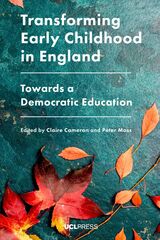
Transforming Early Childhood in England offers a critical analysis of the current system and proposes change based on a universal right to education. The book calls for revisions built on democratic principles, where all learning by all children is visible and recognized, educators are trusted and respected, and outcomes-driven targets are replaced. Combining criticism and hope, and drawing on inspiring research, the book is essential reading for students, educators, practitioners, parents, academics, and policymakers.
READERS
Browse our collection.
PUBLISHERS
See BiblioVault's publisher services.
STUDENT SERVICES
Files for college accessibility offices.
RECENTLY PUBLISHED



UChicago Accessibility Resources
home | accessibility | search | about | contact us
BiblioVault ® 2001 - 2025
The University of Chicago Press