
 A SCHOLARLY BOOK REPOSITORY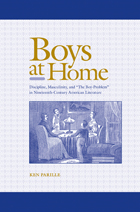
In this groundbreaking book, Ken Parille seeks to do for nineteenth-century boys what the past three decades of scholarship have done for girls: show how the complexities of the fiction and educational materials written about them reflect the lives they lived. While most studies of nineteenth-century boyhood have focused on post-Civil War male novelists, Parille explores a broader archive of writings by male and female authors, extending from 1830-1885.
Boys at Home offers a series of arguments about five pedagogical modes: play-adventure, corporal punishment, sympathy, shame, and reading. The first chapter demonstrates that, rather than encouraging boys to escape the bonds of domesticity, scenes of play in boys’ novels reproduce values associated with the home. Chapter 2 argues that debates about corporal punishment are crucial sources for the culture’s ideas about gender difference and pedagogical practice. In chapter 3, “The Medicine of Sympathy,” Parille examines the affective nature of mother-daughter and mother-son bonds, emphasizing the special difficulties that “boy-nature” posed for women. The fourth chapter uses boys’ conduct literature and Louisa May Alcott’s Little Women – the preeminent chronicle of girlhood in the century – to investigate not only Alcott’s fictional representations of shame-centered discipline but also pervasive cultural narratives about what it means to “be a man.” Focusing on works by Lydia Sigourney and Francis Forrester, the final chapter considers arguments about the effects that fictional, historical, and biographical narratives had on a boy’s sense of himself and his masculinity.
Boys at Home is an important contribution to the emerging field of masculinity studies. In addition, this provocative volume brings new insight to the study of childhood, women’s writing, and American culture.
Ken Parille is assistant professor of English at East Carolina University. His articles have appeared in Children’s Literature, Tulsa Studies in Women’s Literature, Papers on Language and Literature, and Children’s Literature Association Quarterly.
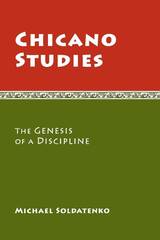
Chicano Studies is a comparatively new academic discipline. Unlike well-established fields of study that long ago codified their canons and curricula, the departments of Chicano Studies that exist today on U.S. college and university campuses are less than four decades old. In this edifying and frequently eye-opening book, a career member of the discipline examines its foundations and early years. Based on an extraordinary range of sources and cognizant of infighting and the importance of personalities, Chicano Studies is the first history of the discipline.
What are the assumptions, models, theories, and practices of the academic discipline now known as Chicano Studies? Like most scholars working in the field, Michael Soldatenko didn't know the answers to these questions even though he had been teaching for many years. Intensely curious, he set out to find the answers, and this book is the result of his labors. Here readers will discover how the discipline came into existence in the late 1960s and how it matured during the next fifteen years-from an often confrontational protest of dissatisfied Chicana/o college students into a univocal scholarly voice (or so it appears to outsiders).
Part intellectual history, part social criticism, and part personal meditation, Chicano Studies attempts to make sense of the collision (and occasional wreckage) of politics, culture, scholarship, ideology, and philosophy that created a new academic discipline. Along the way, it identifies a remarkable cast of scholars and administrators who added considerable zest to the drama.

The story of sexual abuse of children by Catholic priests has sent shock waves around the nation and will not fade from consciousness or the news. We ask, "How could this happen?" And then we ask, "How could the Catholic Church let this continue for so long—in seeming silence and duplicity?" Paul R. Dokecki, a community psychologist at Vanderbilt University, an active Catholic, and a former board member of the National Catholic Education Association, investigates the crisis not only with the eye of an investigative reporter, but with the analytical skills and training of a psychologist as well. Moreover, he lays the foundation for reasonable and practical reform measures.
Through the scandal in the Archdiocese of Boston as well as the earlier, if less well known but momentous, case in the Diocese of Nashville, Dokecki reports on and analyzes what is ultimately an abuse of power—not only by the clergy but by church officials. As distasteful as these instances may be, they are compelling reading, enlightened by the author's abilities to contextualize these events through the lenses of professional ethics, the human sciences, and ecclesiology. According to Dokecki, these and other instances of clergy sexual abuse reveal a systemic deficiency in the structure and the nature of the church itself, one that has prevented the church from adequately dealing with its own worst sins.
Dokecki may shine a spotlight into the church's dark corners—but he does so in the service of enlightenment, calling the church back toward the vision of Vatican II and the spirit of Pope John XXIII—toward a greater transparency, a more open and participatory governance in the church, and for a greatly expanded role for the people of God who make up the church. It is in this way, Dokecki believes, the church will be better able to keep the innocent children of the church safe from harm.
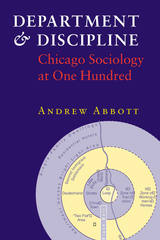
Abbott analyzes the shifts in social scientific inquiry and discloses the intellectual rivalry and faculty politics that characterized different stages of the Chicago School. Along the way, he traces the rich history of the discipline's main journal, the American Journal of Sociology.
Embedded in this analysis of the school and its practices is a broader theoretical argument, which Abbott uses to redefine social objects as a sequence of interconnected events rather than as fixed entities. Abbott's theories grow directly out of the Chicago School's insistence that social life be located in time and place, a tradition that has been at the heart of the school since its founding one hundred years ago.
How does art mirror and shape our lives? Can it transcend the boundaries of time, wealth, and circumstance? Debra Spark—whose previous work the Washington Post described as "richly imaginative" and "real world magic"—explores these themes in her new novel Discipline. With a trio of important paintings missing, the book weaves together three narratives that span almost a century. From an inhumane boarding school in Maine in the late 1970s to a contemporary Boston art appraiser struggling with raising a teen to the long-lost love letters between a painter and his wife, Discipline is a propulsive literary mystery about family strife and devotion, ambition and authorship, and the abiding and mysterious power of art.
Inspired by the life and family of Walt Kuhn (the painter responsible for the 1913 Armory Show that introduced Americans to modernism) and the scandal-ridden Elan boarding school that was forced to shut down in 2011, this richly drawn, suspenseful novel shows Spark at her most masterful.
While the subject of surveillance continues to provoke fascination and debate in mainstream media and academia, opportunities to critically reflect upon and, more importantly, to imagine alternative, creative responses to living in a rapidly expanding surveillance society have been harder to find. Author Elise Morrison argues that such opportunities are being created through the growing genre of “surveillance art and performance,” defined as works that centrally employ technologies and techniques of surveillance to create theater, installation, and performance art. Introducing readers to a broad range of surveillance art works, including the work of artists and activists such as Surveillance Camera Players, Jill Magid, Steve Mann, Hasan Elahi, Wafaa Bilal, Blast Theory, Electronic Disturbance Theater, George Brant, Janet Cardiff, Mona Hatoum, and Zach Blas, Discipline and Desire provides a practical and analytical framework that can aid the diverse pursuits of new media-arts practitioners, performance scholars, activists, and hobbyists interested in critical and creative uses of surveillance technologies.
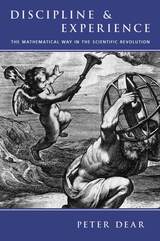
Peter Dear investigates the nature of the change that occurred during this period, focusing particular attention on evolving notions of experience and how these developed into the experimental work that is at the center of modern science. He examines seventeenth-century mathematical sciences—astronomy, optics, and mechanics—not as abstract ideas, but as vital enterprises that involved practices related to both experience and experiment. Dear illuminates how mathematicians and natural philosophers of the period—Mersenne, Descartes, Pascal, Barrow, Newton, Boyle, and the Jesuits—used experience in their argumentation, and how and why these approaches changed over the course of a century. Drawing on mathematical texts and works of natural philosophy from all over Europe, he describes a process of change that was gradual, halting, sometimes contradictory—far from the sharp break with intellectual tradition implied by the term "revolution."
James Farr and Raymond Seidelman bring new historical reflection to the "state of the discipline" debate in political science. This anthology offers a panorama of views about the state of the discipline that have been sketched by leading political scientists and disciplinary historians from the late nineteenth century to the past.
The essays in this volume explore four distinct periods in the development of the discipline, with special emphasis on the subfields of American politics and political theory, revealing that the identity of the discipline is constituted not so much by agreements over fundamental principles as by the history of debates about the meaning of politics, the methods of science, the theories of behavioralism and the state, and the responsibilities of public professionals and civic educators.
Contributors are Terence Ball, Charles A. Beard, John W. Burgess, Robert A. Dahl, David Easton, John G. Gunnell, Norman Jacobson, Harold D. Lasswell, Francis Lieber, Charles E. Merriam, David M. Ricci, William H. Riker, Dorothy Ross, Helene Silverberg, Leonard D. White, Woodrow Wilson, and W.W. Willoughby.
Its unprecedented treatment of the history of political science makes Discipline and History essential reading for political scientists and their students. Historians of the social sciences will also find much to consider.
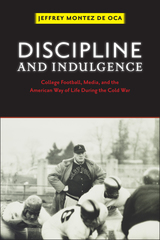
The early Cold War (1947–1964) was a time of optimism in America. Flushed with confidence by the Second World War, many heralded the American Century and saw postwar affluence as proof that capitalism would solve want and poverty. Yet this period also filled people with anxiety. Beyond the specter of nuclear annihilation, the consumerism and affluence of capitalism’s success were seen as turning the sons of pioneers into couch potatoes.
In Discipline and Indulgence, Jeffrey Montez de Oca demonstrates how popular culture, especially college football, addressed capitalism’s contradictions by integrating men into the economy of the Cold War as workers, warriors, and consumers. In the dawning television age, college football provided a ritual and spectacle of the American way of life that anyone could participate in from the comfort of his own home. College football formed an ethical space of patriotic pageantry where men could produce themselves as citizens of the Cold War state. Based on a theoretically sophisticated analysis of Cold War media, Discipline and Indulgence assesses the period’s institutional linkage of sport, higher education, media, and militarism and finds the connections of contemporary sport media to today’s War on Terror.
The contributors, who include both historians and anthropologists, address instances of colonial violence from the early modern period to the twentieth century and from Asia to Africa to North America. They consider diverse topics, from the interactions of race, law, and violence in colonial Louisiana to British attempts to regulate sex and marriage in the Indian army in the early nineteenth century. They examine the political dilemmas raised by the extensive use of torture in colonial India and the ways that British colonizers flogged Nigerians based on beliefs that different ethnic and religious affiliations corresponded to different degrees of social evolution and levels of susceptibility to physical pain. An essay on how contemporary Sufi healers deploy bodily violence to maintain sexual and religious hierarchies in postcolonial northern Nigeria makes it clear that the state is not the only enforcer of disciplinary regimes based on ideas of difference.
Contributors. Laura Bear, Yvette Christiansë, Shannon Lee Dawdy, Dorothy Ko, Isaac Land, Susan O’Brien, Douglas M. Peers, Steven Pierce, Anupama Rao, Kerry Ward
In the vast literature on architectural theory and practice, the ways in which architectural knowledge is actually taught, debated, and understood are too often ignored. The essays collected in this groundbreaking volume address the current state of architecture as an academic and professional discipline. The issues considered range from the form and content of architectural education to the architect’s social and environmental obligations and the emergence of a new generation of architects. Often critical of the current paradigm, these essays offer a provocative challenge to accepted assumptions about the production, dissemination, and reception of architectural knowledge.
Contributors: Sherry Ahrentzen, U of Wisconsin-Milwaukee; Stanford Anderson, MIT; Carol Burns, Harvard U; Russell Ellis, UC Berkeley; Thomas Fisher, U of Minnesota; Linda Groat, U of Michigan; Kay Bea Jones, Ohio State U; David Leatherbarrow, U of Pennsylvania; A. G. Krishna Menon, TVB School of Habitat Studies, India; Garth Rockcastle, U of Minnesota; Michael Stanton, American U, Beirut; Sharon E. Sutton, U of Washington; David J. T. Vanderburgh, Université Catholique de Louvain, Belgium; and Donald Watson, Rensselaer Polytechnic Institute.

This is a book devoted to the reflective analysis of the enterprise in which many of us, like Hawthorne, find ourselves engaged: the cultivation of our taste. Charles Wegener writes for and from the standpoint of thoughtful amateurs, those who, loving the beautiful and the sublime, wish to become more fully the sort of person to whom these goods reliably disclose themselves. Here traditional aesthetic analysis is redirected to a search for the norms that tell us how we use our intelligence, our imagination, and our senses in becoming "more fastidious, yet more sensible," exploring such concepts as disinterestedness, catholicity, communicability, austerity, objectivity, and authority.
Finally, Wegener discusses questions about the relation of our aesthetic lives to other activities, norms, and human goods, arguing that taste, far from being a mere grace or luxury, is a necessary expression of that freedom which is at once the fruit and the condition of all culture.
"This book should be required reading for anyone concerned with aesthetic education, for this is exactly what it is about, and I have come across no more searching investigation of the topic."—Hugo Meynell, Journal of Aesthetic Education
"Using the analysis of aesthetic experience found in Kant's Critique of Judgment as a point of departure, Wegener has written a remarkably intelligent book which presents meaningful encounter with art as the "discipline of taste and feeling. The book reads not simply as an exposition but as a conversation in which the author thoughtfully and meticulously explores with the reader those norms that structure and define aesthetic experience. . . . The book occupies an important place in contemporary aesthetic discussion."—M. Feder-Marcus, Choice
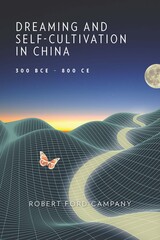
Practitioners of any of the paths of self-cultivation available in ancient and medieval China engaged daily in practices meant to bring their bodies and minds under firm control. They took on regimens to discipline their comportment, speech, breathing, diet, senses, desires, sexuality, even their dreams. Yet, compared with waking life, dreams are incongruous, unpredictable—in a word, strange. How, then, did these regimes of self-fashioning grapple with dreaming, a lawless yet ubiquitous domain of individual experience?
In Dreaming and Self-Cultivation in China, 300 BCE–800 CE, Robert Ford Campany examines how dreaming was addressed in texts produced and circulated by practitioners of Daoist, Buddhist, Confucian, and other self-cultivational disciplines. Working through a wide range of scriptures, essays, treatises, biographies, commentaries, fictive dialogues, diary records, interpretive keys, and ritual instructions, Campany uncovers a set of discrete paradigms by which dreams were viewed and responded to by practitioners. He shows how these paradigms underlay texts of diverse religious and ideological persuasions that are usually treated in mutual isolation. The result is a provocative meditation on the relationship between individuals’ nocturnal experiences and one culture’s persistent attempts to discipline, interpret, and incorporate them into waking practice.
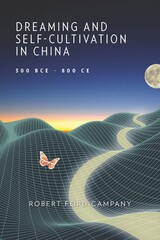
Practitioners of any of the paths of self-cultivation available in ancient and medieval China engaged daily in practices meant to bring their bodies and minds under firm control. They took on regimens to discipline their comportment, speech, breathing, diet, senses, desires, sexuality, even their dreams. Yet, compared with waking life, dreams are incongruous, unpredictable—in a word, strange. How, then, did these regimes of self-fashioning grapple with dreaming, a lawless yet ubiquitous domain of individual experience?
In Dreaming and Self-Cultivation in China, 300 BCE–800 CE, Robert Ford Campany examines how dreaming was addressed in texts produced and circulated by practitioners of Daoist, Buddhist, Confucian, and other self-cultivational disciplines. Working through a wide range of scriptures, essays, treatises, biographies, commentaries, fictive dialogues, diary records, interpretive keys, and ritual instructions, Campany uncovers a set of discrete paradigms by which dreams were viewed and responded to by practitioners. He shows how these paradigms underlay texts of diverse religious and ideological persuasions that are usually treated in mutual isolation. The result is a provocative meditation on the relationship between individuals’ nocturnal experiences and one culture’s persistent attempts to discipline, interpret, and incorporate them into waking practice.
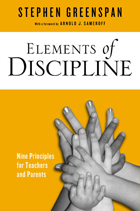
Elements of Discipline is a timely and helpful book for teachers, parents, and day-care professionals that provides a simple set of rules for managing—successfully and humanely—a wide range of discipline situations and challenges. A well-respected child development specialist, Stephen Greenspan outlines his “ABC Theory of Discipline.” He combines an Affective approach, a Behavioral approach, and a Cognitive approach that, when used in a coordinated fashion, will contribute to greater child compliance and family/classroom harmony.
Greenspan suggests that, using his matrix, caregivers can provide the warmth, tolerance, and influence that will help children become competent in three socio-emotional domains—happiness, boldness, and niceness. He recommends caregivers pick and choose from the discipline literature in a manner that best suits their individual style and values.
Elements of Discipline is a lively guide to effective classroom or family management.

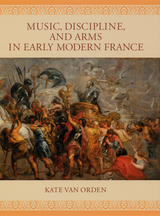
The great pressure on French noblemen to take up the life of the warrior gave rise to bellicose art forms such as sword dances and equestrian ballets. Far from being construed as effeminizing, such combinations of music and the martial arts were at once refined and masculine-a perfect way to display military prowess. The incursion of music into riding schools and infantry drills contributed materially to disciplinary order, enabling the larger and more effective armies of the seventeenth century. This book is a history of the development of these musical spheres and how they brought forth new cultural priorities of civility, military discipline, and political harmony. Music, Discipline, and Arms in Early Modern France effectively illustrates the seminal role music played in mediating between the cultural spheres of letters and arms.
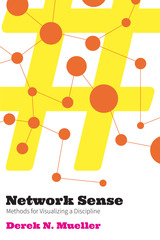

Because undergraduate degrees in writing studies are relatively new, claiming the discipline has required reinvention and revision at personal and professional levels far different than any other discipline. Suspicions about the viability of the discipline linger in many departments and universities, as well as outside the academy, leading writing studies scholars to develop innovative strategies to deal with covertly hostile attitudes. Within the collection, contributors name explicit claiming strategies from the discipline’s beginnings to the contemporary moment, locating opportune spaces, negotiating identities and fostering resilience, and developing allegiances by foregrounding their embodiment as underrepresented members of academia through a commitment to social justice and equity.
Responding to current conversations on the worth of education with honest stories about the burdens and joys of becoming and being an academic, Pivotal Strategies features a spectrum of voices across racial, gender, class, and age categories. This collection not only makes the discipline more visible but also helps map the contemporary state of writing studies.

As zero-tolerance discipline policies have been instituted at high schools across the country, police officers are employed with increasing frequency to enforce behavior codes and maintain order, primarily at poorly performing, racially segregated urban schools. Actions that may once have sent students to the detention hall or resulted in their suspension may now introduce them to the criminal justice system. In Police in the Hallways, Kathleen Nolan explores the impact of policing and punitive disciplinary policies on the students and their educational experience.
Through in-depth interviews with and observations of students, teachers, administrators, and police officers, Nolan offers a rich and nuanced account of daily life at a Bronx high school where police patrol the hallways and security and discipline fall under the jurisdiction of the NYPD. She documents how, as law enforcement officials initiate confrontations with students, small infractions often escalate into “police matters” that can lead to summonses to criminal court, arrest, and confinement in juvenile detention centers.
Nolan follows students from the classroom and the cafeteria to the detention hall, the dean’s office, and the criminal court system, clarifying the increasingly intimate relations between the school and the criminal justice system. Placing this trend within the context of recent social and economic changes, as well as developments within criminal justice and urban school reform, she shows how this police presence has created a culture of control in which penal management overshadows educational innovation.
Police in the Hallways also examines the prevalent forms of oppositional behavior through which students express their frustrations and their deep sense of exclusion. With compassion and clear-eyed analysis, Nolan sounds a warning about this alarming convergence of prison and school cultures and the negative impact that it has on the real lives of low-income students of color—and, in turn, on us all.
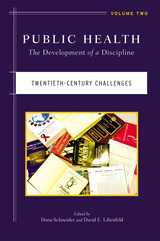
The editors provide annotated readings and biographical details to punctuate the historical timeline and to provide students with insights into the progression of ideas, initiatives, and reforms in the field. From Hippocrates and John Graunt in the early period, to John Snow and Florence Nightingale during the nineteenth-century sanitary reform movement, to Upton Sinclair and Margaret Sanger in the Progressive Era, readers follow the identification, evolution, and implementation of public health concepts as they came together under one discipline.
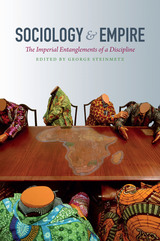
The collection has a threefold agenda: to trace an intellectual history of sociology as it pertains to empire; to offer empirical studies based around colonies and empires, both past and present; and to provide a theoretical basis for future sociological analyses that may take empire more fully into account. In the 1940s, the British Colonial Office began employing sociologists in its African colonies. In Nazi Germany, sociologists played a leading role in organizing the occupation of Eastern Europe. In the United States, sociology contributed to modernization theory, which served as an informal blueprint for the postwar American empire. This comprehensive anthology critiques sociology's disciplinary engagement with colonialism in varied settings while also highlighting the lasting contributions that sociologists have made to the theory and history of imperialism.
Contributors. Albert Bergesen, Ou-Byung Chae, Andy Clarno, Raewyn Connell, Ilya Gerasimov, Julian Go, Daniel Goh, Chandan Gowda, Krishan Kumar, Fuyuki Kurasawa, Michael Mann, Marina Mogilner, Besnik Pula, Anne Raffin, Emmanuelle Saada, Marco Santoro, Kim Scheppele, George Steinmetz, Alexander Semyonov, Andrew Zimmerman
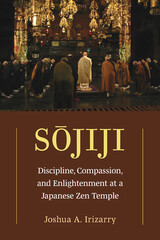
Based on more than fifteen years of fieldwork, interviews, and archival research, Sōjiji: Discipline, Compassion, and Enlightenment at a Japanese Zen Temple immerses the reader in the lives and experiences of the different groups that comprise Sōjiji's contemporary religious community. Through clear and accessible prose, ethnographically-grounded analysis, and emotionally compelling stories, the reader will explore the rich pastiche of daily life and ritual activity at a major Japanese Zen temple in institutional, historical, and social context through the lived practices of its community of clergy, practitioners, parishioners, and visitors.
In October 1656 James Nayler, a prominent Quaker leader--second only to George Fox in the nascent movement--rode into Bristol surrounded by followers singing hosannas in deliberate imitation of Jesus' entry into Jerusalem. In Leo Damrosch's trenchant reading this incident and the extraordinary outrage it ignited shed new light on Cromwell's England and on religious thought and spirituality in a turbulent period.
Damrosch gives a clear picture of the origins and early development of the Quaker movement, elucidating the intellectual foundations of Quaker theology. A number of central issues come into sharp relief, including gender symbolism and the role of women, belief in miraculous cures, and--particularly in relation to the meaning of the entry into Bristol--"signs of the in-dwelling spirit." Damrosch's account of the trial and savage punishment of Nayler for blasphemy exposes the politics of the Puritan response, the limits to Cromwellian religious liberalism.
The Sorrows of the Quaker Jesus is at once a study of antinomian religious thought, of an exemplary individualist movement that suddenly found itself obliged to impose order, and of the ways in which religious and political ideas become intertwined in a period of crisis. It is also a vivid portrait of a fascinating man.

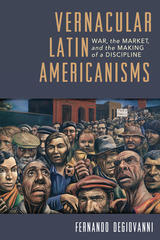
In Vernacular Latin Americanisms, Fernando Degiovanni offers a long-view perspective on the intense debates that shaped Latin American studies and still inform their function in the globalized and neoliberal university of today. By doing so he provides a reevaluation of a field whose epistemological and political status has obsessed its participants up until the present. The book focuses on the emergence of Latin Americanism as a field of critical debate and scholarly inquiry between the 1890s and the 1960s. Drawing on contemporary theory, intellectual history, and extensive archival research, Degiovanni explores in particular how the discourse and realities of war and capitalism have left an indelible mark on the formation of disciplinary perspectives on Latin American cultures in both the United States and Latin America. Questioning the premise that Latin Americanism as a discipline comes out of the tradition of continental identity developed by prominent intellectuals such as José Martí, José E. Rodó or José Vasconcelos, Degiovanni proposes that the scholars who established the discipline did not set out to defend Latin America as a place of uncontaminated spiritual values opposed to a utilitarian and materialist United States. Their mission was entirely different, even the opposite: giving a place to culture in the consolidation of alternative models of regional economic cooperation at moments of international armed conflict. For scholars theorizing Latin Americanism in market terms, this meant questioning nativist and cosmopolitan narratives about identity; it also meant abandoning any Bolivarian project of continental unity or of socialist internationalism.
READERS
Browse our collection.
PUBLISHERS
See BiblioVault's publisher services.
STUDENT SERVICES
Files for college accessibility offices.
RECENTLY PUBLISHED



UChicago Accessibility Resources
home | accessibility | search | about | contact us
BiblioVault ® 2001 - 2024
The University of Chicago Press