
 A SCHOLARLY BOOK REPOSITORY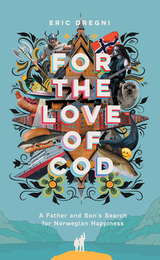
A journey to find Norway’s supposed bliss makes for a comic travelogue that asks, seriously, what makes Norwegians so damn happy—and does it translate?
Norway is usually near or at the top of the World Happiness Report. But is it really one of the happiest countries on Earth? Eric Dregni had his doubts. Years ago he and his wife had lived in this country his great-great-grandfather once fled. When their son Eilif was born there, the Norwegian government paid for the birth, gave them $5,000, and deposited $150 into their bank account every month, but surely happiness was more than a generous health care system. What about all those grim months without sun? When Eilif turned fifteen, father and son decided to go back together and investigate. For the Love of Cod is their droll report on the state of purported Norwegian bliss.
Arriving in May, a month of festivals and eternal sun, the Dregnis are thrust into Norway at its merriest—and into the reality of the astronomical cost of living, which forces them to find lodging with friends and relatives. But this gives them an inside look at the secrets to a better life. It’s not the massive amounts of money flowing from the North Sea oil fields but how these funds are distributed that fuels the Norwegian version of democratic socialism—resulting in miniscule differences between rich and poor. Locals introduce them to the principles underlying their avowed contentment, from an active environmentalism that translates into flyskam (flight shame), which keeps Norwegians in the family cabin for the long vacations prescribed by law and charges a 150 percent tax on gas guzzlers (which, Eilif observes, means more Teslas seen in one hour than in a year in Minnesota!).
From a passion for dugnad or community volunteerism and sakte or “slow,” a rejection of the mad pace of modernity, to the commodification of Viking history and the dark side of Black Metal music that turns the idea of quaint, traditional Norway upside down, this idiosyncratic father and son tour lets readers, free of flyskam, see how, or whether, Norwegian happiness translates.
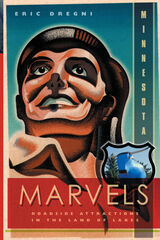
Only in Minnesota can you snap a Polaroid of a fifty-five-foot-tall grinning green man with a size seventy-eight shoe or marvel at the spunk of a Swede who dedicated his life to spinning a gigantic ball of twine. The world’s largest hockey stick, as well as the biggest pelican, prairie chicken, turkey, fish, otter, fox, and loon also make Minnesota their home. Where else can you ponder the mysterious "miracle meat" of Spam in a museum dedicated to pork products or have your head examined by the phrenology machines at the Museum of Questionable Medical Devices?
Minnesota Marvels is a tour of the inspired, bizarre, brilliant, scandalous, and funny sites around the state. Look up in wonder at the several Paul Bunyan statues, including the original (Bemidji), the tallest (Akeley), and the largest talking version (Brainerd). Ease on down the road to visit the first home of the heel-tapping native of Grand Rapids, Judy Garland, or walk the "main street" of Sauk Centre immortalized by native son Sinclair Lewis. See the birthplaces of Charles Lindbergh, the Mayo brothers, the Greyhound bus, the snowmobile, and the ice-cream sandwich.
Minnesota is also the home of such attractions as the Minneapolis Sculpture Garden and the world’s largest aerial lift bridge in Duluth, and architectural wonders such as Frank Lloyd Wright’s modernist gas station in Cloquet and Frank Gehry’s arresting Weisman Art Museum. Stunning mansions with histories of ghost sightings, the hangouts and lairs of infamous gangsters, and old-fashioned breweries dot the state.
Conveniently organized by town name and illustrated throughout, Minnesota Marvels is the perfect light-hearted guide for entertaining road trips all over the state.
The food-obsessed chronicle of an American’s three years in Italy—now available in paperback
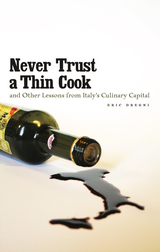
I simply want to live in the place with the best food in the world. This dream led Eric Dregni to Italy, first to Milan and eventually to a small, fog-covered town to the north: Modena, the birthplace of balsamic vinegar, Ferrari, and Luciano Pavarotti. Never Trust a Thin Cook is a classic American abroad tale, brimming with adventures both expected and unexpected, awkward social moments, and most important, very good food.
Parmesan thieves. Tortellini based on the shape of Venus’s navel. Infiltrating the secret world of the balsamic vinegar elite. Life in Modena is a long way from the Leaning Tower of Pizza (the south Minneapolis pizzeria where Eric and his girlfriend and fellow traveler Katy first met), and while some Italians are impressed that “Minnesota” sounds like “minestrone,” they are soon learning what it means to live in a country where the word “safe” doesn’t actually exist—only “less dangerous.” Thankfully, another meal is always waiting, and Dregni revels in uncorking the secrets of Italian cuisine, such as how to guzzle espresso “corrected” with grappa and learning that mold really does make a good salami great.
What begins as a gastronomical quest soon becomes a revealing, authentic portrait of how Italians live and a hilarious demonstration of how American and Italian cultures differ. In Never Trust a Thin Cook, Eric Dregni dishes up the sometimes wild experiences of living abroad alongside the simple pleasures of Italian culture in perfect, complementary portions.
A father’s memoir of creating a dual-language household to prepare for a stint living abroad—and all of the ensuing challenges and rewards
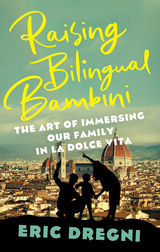
After living in Modena, Italy, for three years, Eric Dregni and his wife, Katy, had a dream of returning one day—future children in tow—to give their kids the experience of living abroad. When their children finally arrive, they decide to raise them with a global perspective in a bilingual household: Katy speaking only English to them and Eric speaking only Italian.
Despite their extended family’s confusion about their experiment, they persist through their three kids’ childhoods, sending them to an immersion language camp and working to prepare them for life abroad. Eventually, the family packs up and moves to Florence, where the bambini can stop to see Michelangelo’s David on the way back from school, indulge in fresh pasta and gelato, and learn how to argue like real Italians. Sooner than anyone would like, three months of la dolce vita comes to an end, and they head back to Minnesota, trying to bring a taste of Italian culture home with them.
A fast-paced memoir/travelogue, Raising Bilingual Bambini is Dregni’s passionate testament to the value of an international perspective, loving tribute to the family’s time together in Italy, and bittersweet reflection on what it meant to return to Minnesota (that is, until their trip to Sicily several years later). Writing with his signature humor and sincerity, he offers a heartfelt story about family and finding a home together in a new place.
Retail e-book files for this title are screen-reader friendly with images accompanied by short alt text and/or extended descriptions.
READERS
Browse our collection.
PUBLISHERS
See BiblioVault's publisher services.
STUDENT SERVICES
Files for college accessibility offices.
RECENTLY PUBLISHED





UChicago Accessibility Resources
home | accessibility | search | about | contact us
BiblioVault ® 2001 - 2026
The University of Chicago Press