
 A SCHOLARLY BOOK REPOSITORY
Cervantine Futures places the writings of Miguel de Cervantes into conversation with some of the most pressing issues in cultural studies, critical theory, and sociopolitical discourse of the last decade. Assembling a diverse range of prominent and emerging scholars in the field, this volume stakes a claim for Hispanism’s place in the growing scholarly movement to vindicate pre- and early modernity for its incisive and often singular perspective on race, gender, ability, the body, affect, materialism, and other axes of timely debate.
To date, the writings of Miguel de Cervantes have been oddly sidelined from larger, ongoing scholarly projects to link premodern literature with the most recent analytics of critical theory and cultural studies. Cervantine Futures addresses this conspicuous gap by highlighting creative, forward-looking, and rigorous approaches that situate Cervantes in recent theoretical developments in critical cultural studies. Conceived under the rubric of “futures”—collective and capacious, yet also subjunctive and transtemporal—this book tasks the fields of early modern Iberian and Cervantine studies with adopting a more global approach to the early modern period that surveys the current and historical landscapes while charting new horizons. Crucially, Cervantine Futures reflects upon how early modern texts, cultural modes of expression, and visual ideations from Cervantes’s life and legacy resonate with contemporary debates on gender, race, ability, and other issues. The volume thus includes scholarly provocations that deploy feminist, queer, critical race, disability studies, and new materialist approaches to Cervantes’s oeuvre—tendentiously positioned as “canonical”—with the purpose not only of scrutinizing its sociopolitical meanings, but also of creating new archives that productively reframe and rethink early modernity.
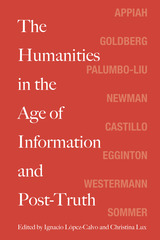
While the reader may suspect that these types of lucubration are a desperate reaction to decreased public funding for the humanities worldwide, a decreased enrollment of students, or anxiety over the future of our profession, there is in this volume a coherent argument for the continued need, perhaps more now than ever, to invest in humanities education if we are to have informed and socially conscious citizens rather than just willing consumers and obedient workers. Furthermore, the essays prove that the humanities and the arts are, after all, not a luxury but an integral part of a complete scholarly education.
READERS
Browse our collection.
PUBLISHERS
See BiblioVault's publisher services.
STUDENT SERVICES
Files for college accessibility offices.
RECENTLY PUBLISHED


UChicago Accessibility Resources
home | accessibility | search | about | contact us
BiblioVault ® 2001 - 2026
The University of Chicago Press