
 A SCHOLARLY BOOK REPOSITORY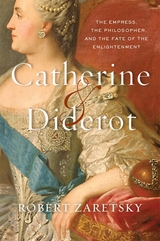
A dual biography crafted around the famous encounter between the French philosopher who wrote about power and the Russian empress who wielded it with great aplomb.
In October 1773, after a grueling trek from Paris, the aged and ailing Denis Diderot stumbled from a carriage in wintery St. Petersburg. The century’s most subversive thinker, Diderot arrived as the guest of its most ambitious and admired ruler, Empress Catherine of Russia. What followed was unprecedented: more than forty private meetings, stretching over nearly four months, between these two extraordinary figures. Diderot had come from Paris in order to guide—or so he thought—the woman who had become the continent’s last great hope for an enlightened ruler. But as it soon became clear, Catherine had a very different understanding not just of her role but of his as well. Philosophers, she claimed, had the luxury of writing on unfeeling paper. Rulers had the task of writing on human skin, sensitive to the slightest touch.
Diderot and Catherine’s series of meetings, held in her private chambers at the Hermitage, captured the imagination of their contemporaries. While heads of state like Frederick of Prussia feared the consequences of these conversations, intellectuals like Voltaire hoped they would further the goals of the Enlightenment.
In Catherine & Diderot, Robert Zaretsky traces the lives of these two remarkable figures, inviting us to reflect on the fraught relationship between politics and philosophy, and between a man of thought and a woman of action.
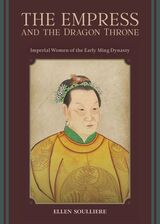
The rulers of the Ming dynasty enacted paradigms of hierarchical order. Like imperial families, households, and courts in earlier Chinese dynasties, they articulated patriarchal, patrilineal, and patrilocal organizational principles as exemplars for families and institutions throughout the empire. Women made indispensable contributions to the development of these paradigms and principles and to the social, cultural, and political fabric of the family and the state. And yet, in the existing literature in Chinese and English women are often burdened with stereotypes, positioned as peripheral, or rendered almost invisible.
Reading available texts “against the grain,” and drawing on a trove of evidence from material culture, Soulliere shows how women defined a place for themselves in the multigenerational Ming imperial family, imperial household, and court. The Empress and the Dragon Throne spans the first Ming century from just before the founding of the dynasty in 1368 to the end of the Tianshun reign in 1465. This richly illustrated volume is a must-read for scholars, students, and anyone interested in learning about women’s lives during the Ming dynasty.
READERS
Browse our collection.
PUBLISHERS
See BiblioVault's publisher services.
STUDENT SERVICES
Files for college accessibility offices.
RECENTLY PUBLISHED




UChicago Accessibility Resources
home | accessibility | search | about | contact us
BiblioVault ® 2001 - 2025
The University of Chicago Press