
 A SCHOLARLY BOOK REPOSITORY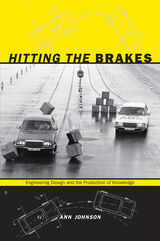
The development of antilock braking systems (ABS) provides an ideal case study for examining the process of engineering design because it presented an array of common difficulties faced by engineers in research and development. ABS did not develop predictably. Research and development took place in both the public and private sectors and involved individuals working in different disciplines, languages, institutions, and corporations. Johnson traces ABS development from its first patents in the 1930s to the successful 1978 market introduction of integrated ABS by Daimler and Bosch. She examines how a knowledge community first formed around understanding the phenomenon of skidding, before it turned its attention to building instruments to measure, model, and prevent cars’ wheels from locking up. While corporations’ accounts of ABS development often present a simple linear story, Hitting the Brakes describes the full social and cognitive complexity and context of engineering design.
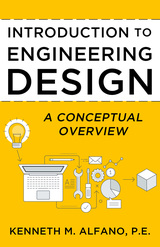
Engineering design courses are often project-oriented, and rightly so, given that the process is best understood through some amount of experience. But a conceptual foundation is likewise critical for this subject. It helps enable experiential learning to relate the broad context of design process elements to the specific context of a given project. Further, engineering students tend to start out more acquainted with thinking about math and science subjects, where there is often one way – or at least a clear best way – to a “right” answer. The design process, by marked contrast, is largely qualitative and open-ended. Relatedly, it can (perhaps ironically) aid early learners to point out how varied and inconsistent the usage can be for some terminology – so the book does so at times, to help preempt confusion down the road.
In addition to being a text for an introductory college course, the book can also serve as a supplemental or reference text for later courses or on the job, or simply a general overview for those curious about the subject.
READERS
Browse our collection.
PUBLISHERS
See BiblioVault's publisher services.
STUDENT SERVICES
Files for college accessibility offices.
RECENTLY PUBLISHED




UChicago Accessibility Resources
home | accessibility | search | about | contact us
BiblioVault ® 2001 - 2026
The University of Chicago Press