
 A SCHOLARLY BOOK REPOSITORY
13 start with A start with A
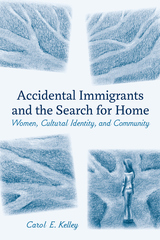
The intimate stories of these "accidental" immigrants broaden conventional notions of home. From a Maori woman who moves to Norway to the daughter of an Iranian diplomat now living in France, Kelley weaves together these stories of the personal and emotional effects of immigration with interdisciplinary discussions drawn from anthropology and psychology. Ultimately, she reveals how the lifelong process of immigration affects each woman's sense of identity and belonging and contributes to better understanding today's globalized society.
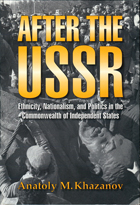
A world-renowned anthropologist, Anatoly M. Khazanov offers a witty, insightful, and cautionary analysis of ethnic nationalism and its pivotal role in the collapse of the Soviet empire.
“Khazanov’s encyclopedic knowledge of the history and culture of post-Soviet societies, combined with field research there since the 1960s, informs the case studies with a singular authoritative voice. This volume is destined to be an absolutely necessary reference for the understanding of ethnic relations and the politics of minorities in the ex-USSR into the next century.”—Leonard Plotnicov, editor of Ethnology
First Paperback Edition
Mauss describes a complex process of the broadening of these self-defined lineages during the last part of the twentieth century as the modern Mormon church continued its world-wide expansion through massive missionary work.
Mauss contends that Mormon constructions of racial identity have not necessarily affected actual behavior negatively and that in some cases Mormons have shown greater tolerance than other groups in the American mainstream.
Employing a broad intellectual historical analysis to identify shifts in LDS behavior over time, All Abraham’s Children is an important commentary on current models of Mormon historiography.

Chapters explore a range of topics, including how different ethnic groups arrived in the United States—whether through violence and coercion or willing immigration; the peculiar identification of Native Americans as “ethnic,” despite the fact that they are indigenous to the land; whether the American public’s attitudes toward and treatment of difference has been consistent with the nation’s professed egalitarian ideals; and how factors such as language, religion, class, gender, and intermarriage play in either strengthening or weakening ethnic identity and group solidarity.
An engaging and critical look at a term that remains stubbornly ambiguous in both scholarly discussion and the vernacular, this book makes an important contribution to the ongoing debates about “difference” in American society.
These nine essays selected by Lawrence Baldassaro and Richard A. Johnson present for the first time in a single volume an ethnic and racial profile of American baseball. These essayists show how the gradual involvement by various ethnic and racial groups reflects the changing nature of baseball—and of American society as a whole—over the course of the twentieth century.
Although the sport could not truly be called representative of America until after Jackie Robinson broke the color line in 1947, fascination with the ethnic backgrounds of the players began more than a century ago when athletes of German and Irish descent entered the major leagues in large numbers. In the 1920s, commentators noted the influx of ballplayers of Italian and Slavic origins and wondered why there were not more Jewish players in the big leagues. The era following World War II, however, saw the most dramatic ethnographic shift with the belated entry of African American ballplayers. The pattern of ethnic succession continues as players of Hispanic and Asian origin infuse fresh excitement and renewal into the major leagues.
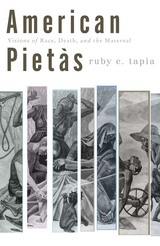
Tapia explores the implications of this argument for racialized productions of death and the maternal in the context of specific cultural moments: the commemoration of Princess Diana in U.S. magazines; the intertext of Toni Morrison’s and Hollywood’s Beloved; the social and cultural death in teen pregnancy, imaged and regulated in California’s Partnership for Responsible Parenting campaigns; and popular constructions of the “Widows of 9/11” in print and televisual journalism.
Taken together, these various visual media texts function in American Pietàs as cultural artifacts and as visual nodes in a larger network of racialized productions of maternal bodies in contexts of national death and remembering. To engage this network is to ask how and toward what end the racial project of the nation imbues some maternal bodies with resurrecting power and leaves others for dead. In the spaces between these different maternities, says Tapia, U.S. citizen-subjects are born—and reborn.

From the 1920s—a decade marked by racism and nativism—through World War II, hundreds of thousands of Americans took part in a vibrant campaign to overcome racial, ethnic, and religious prejudices. They celebrated the “cultural gifts” that immigrant and minority groups brought to society, learning that ethnic identity could be compatible with American ideals.
Diana Selig tells the neglected story of the cultural gifts movement, which flourished between the world wars. Progressive activists encouraged pluralism in homes, schools, and churches across the country. Countering racist trends and the melting-pot theory of Americanization, they championed the idea of diversity. They incorporated new thinking about child development, race, and culture into grassroots programs—yet they were unable to address the entrenched forms of discrimination and disfranchisement faced by African Americans in particular. This failure to grasp the deep social and economic roots of prejudice ultimately limited the movement’s power.
In depicting a vision for an inclusive American identity from a diverse citizenry, Americans All is a timely reminder of the debates over difference and unity that remain at the heart of American society.
This book is a study of the variable perceptions of Greek collective identity, discussing ancient categories such as blood- and mythically-related primordiality, language, religion, and culture. With less emphasis on dichotomies between Greeks and others, the book considers complex middle grounds of intra-Hellenic perceptions, oppositional identities, and outsiders’ views. Although the authors do not seek to provide a litmus test of Greek identity, they do pay close attention to modern theories of ethnicity, its construction, function, and representation, and assess their applicability to views of Greekness in antiquity.
From the Archaic period through the Roman Empire, archaeological, anthropological, historical, historiographical, rhetorical, artistic, and literary aspects are studied. Regardless of the invented aspects of ethnicity, the book illustrates its force and validity in history.
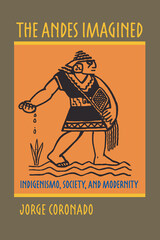
In The Andes Imagined, Jorge Coronado not only examines but also recasts the indigenismo movement of the early 1900s. Coronado departs from the common critical conception of indigenismo as rooted in novels and short stories, and instead analyzes an expansive range of work in poetry, essays, letters, newspaper writing, and photography. He uses this evidence to show how the movement's artists and intellectuals mobilize the figure of the Indian to address larger questions about becoming modern, and he focuses on the contradictions at the heart of indigenismo as a cultural, social, and political movement.
By breaking down these different perspectives, Coronado reveals an underlying current in which intellectuals and artists frequently deployed their indigenous subject in order to imagine new forms of political inclusion. He suggests that these deployments rendered particular variants of modernity and make indigenismo representational practices a privileged site for the examination of the region's cultural negotiation of modernization. His analysis reveals a paradox whereby the un-modern indio becomes the symbol for the modern itself.
The Andes Imagined offers an original and broadly based engagement with indigenismo and its intellectual contributions, both in relation to early twentieth-century Andean thought and to larger questions of theorizing modernity.
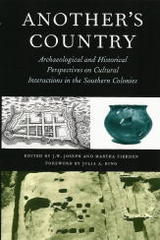
The 18th-century South was a true melting pot, bringing together colonists from England, France, Germany, Ireland, Switzerland, and other locations, in addition to African slaves—all of whom shared in the experiences of adapting to a new environment and interacting with American Indians. The shared process of immigration, adaptation, and creolization resulted in a rich and diverse historic mosaic of cultures.
The cultural encounters of these groups of settlers would ultimately define the meaning of life in the nineteenth-century South. The much-studied plantation society of that era and the Confederacy that sprang from it have become the enduring identities of the South. A full understanding of southern history is not possible, however, without first understanding the intermingling and interactions of the region’s eighteenth-century settlers. In the essays collected here, some of the South’s leading historical archaeologists examine various aspects of the colonial experience, attempting to understand how cultural identity was expressed, why cultural diversity was eventually replaced by a common identity, and how the various cultures intermeshed.
Written in accessible language, this book will be valuable to archaeologists and non-archaeologists alike. Cultural, architectural, and military historians, cultural anthropologists, geographers, genealogists, and others interested in the cultural legacy of the South will find much of value in this book.
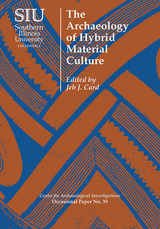
In recent years, archaeologists have used the terms hybrid and hybridity with increasing frequency to describe and interpret forms of material culture. Hybridity is a way of viewing culture and human action that addresses the issue of power differentials between peoples and cultures. This approach suggests that cultures are not discrete pure entities but rather are continuously transforming and recombining. The Archaeology of Hybrid Material Culture discusses this concept and its relationship to archaeological classification and the emergence of new ethnic group identities. This collection of essays provides readers with theoretical and concrete tools for investigating objects and architecture with discernible multiple influences.
The twenty-one essays are organized into four parts: ceramic change in colonial Latin America and the Caribbean; ethnicity and material culture in pre-Hispanic and colonial Latin America; culture contact and transformation in technological style; and materiality and identity. The media examined include ceramics, stone and glass implements, textiles, bone, architecture, and mortuary and bioarchaeological artifacts from North, South, and Central America, Hawai‘i, the Caribbean, Europe, and Mesopotamia. Case studies include Bronze Age Britain, Iron Age and Roman Europe, Uruk-era Turkey, African diasporic communities in the Caribbean, pre-Spanish and Pueblo revolt era Southwest, Spanish colonial impacts in the American Southeast, Central America, and the Andes, ethnographic Amazonia, historic-era New England and the Plains, the Classic Maya, nineteenth-century Hawai‘i, and Upper Paleolithic Europe. The volume is carefully detailed with more than forty maps and figures and over twenty tables.
The work presented in The Archaeology of Hybrid Material Culture comes from researchers whose questions and investigations recognized the role of multiple influences on the people and material they study. Case studies include experiments in bone working in middle Missouri; images and social relationships in prehistoric and Roman Europe; technological and material hybridity in colonial Peruvian textiles; ceramic change in colonial Latin America and the Caribbean; and flaked glass tools from the leprosarium at Kalawao, Moloka‘i. The essays provide examples and approaches that may serve as a guide for other researchers dealing with similar issues.
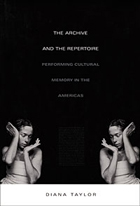
Examining various genres of performance including demonstrations by the children of the disappeared in Argentina, the Peruvian theatre group Yuyachkani, and televised astrological readings by Univision personality Walter Mercado, Taylor explores how the archive and the repertoire work together to make political claims, transmit traumatic memory, and forge a new sense of cultural identity. Through her consideration of performances such as Coco Fusco and Guillermo Gómez-Peña’s show Two Undiscovered Amerindians Visit . . . , Taylor illuminates how scenarios of discovery and conquest haunt the Americas, trapping even those who attempt to dismantle them. Meditating on events like those of September 11, 2001 and media representations of them, she examines both the crucial role of performance in contemporary culture and her own role as witness to and participant in hemispheric dramas. The Archive and the Repertoire is a compelling demonstration of the many ways that the study of performance enables a deeper understanding of the past and present, of ourselves and others.
READERS
Browse our collection.
PUBLISHERS
See BiblioVault's publisher services.
STUDENT SERVICES
Files for college accessibility offices.
RECENTLY PUBLISHED



UChicago Accessibility Resources
home | accessibility | search | about | contact us
BiblioVault ® 2001 - 2024
The University of Chicago Press