
 A SCHOLARLY BOOK REPOSITORY
3 start with O start with O
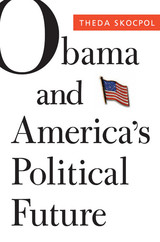
Barack Obama’s galvanizing victory in 2008, coming amid the greatest economic crisis since the 1930s, opened the door to major reforms. But the president quickly faced skepticism from supporters and fierce opposition from Republicans, who scored sweeping wins in the 2010 midterm election. Here, noted political scientist Theda Skocpol surveys the political landscape and explores its most consequential questions: What happened to Obama’s “new New Deal”? Why have his achievements enraged opponents more than they have satisfied supporters? How has the Tea Party’s ascendance reshaped American politics?
Skocpol’s compelling account rises above conventional wisdom and overwrought rhetoric. The Obama administration’s response to the recession produced bold initiatives—health care reform, changes in college loans, financial regulation—that promise security and opportunity. But these reforms are complex and will take years to implement. Potential beneficiaries do not readily understand them, yet the reforms alarm powerful interests and political enemies, creating the volatile mix of confusion and fear from which Tea Party forces erupted. Skocpol dissects the popular and elite components of the Tea Party reaction that has boosted the Republican Party while pushing it far to the right at a critical juncture for U.S. politics and governance.
Skocpol’s analysis is accompanied by contributions from two fellow scholars and a former congressman. At this moment of economic uncertainty and extreme polarization, as voters prepare to render another verdict on Obama’s historic presidency, Skocpol and her respondents help us to understand its triumphs and setbacks and see where we might be headed next.

This volume examines the array of challenges facing the Obama administration and the president himself. Topics range from how best to manage a ruptured economy to controlling the budget, the green agenda, foreign policy, and the recalibration of U.S. relations with Britain. It also includes sections on presidential leadership, elections, healthcare, and food poverty.
The common theme throughout is the issue of governing in a fractured, unruly political environment, and the accompanying difficulties. Contributing scholars, based at academic institutions in the United States and the UK, offer a range of informed perspectives throughout this engaging work. Packed with detail yet highly accessible, this volume will appeal to those interested in American politics, history, and the political process.

Bearing traces of Baruch Spinoza, John Dewey, and Saul Alinsky, Obama’s progressivism embraces the ideas of mutual reliance and collective responsibility, and adopts an interconnected view of the individual and the state. So, while Obama might emphasize difference, he rejects identity politics, which can create permanent minorities and diminish individual agency. Analyzing Obama’s major legislative victories—financial regulation, health care, and the stimulus package—O’Brien shows how they reflect a stakeholder society that neither regulates in the manner of the New Deal nor deregulates. Instead, Obama focuses on negotiated rule making and allows executive branch agencies to fill in the details when dealing with a deadlocked Congress. Similarly, his commitment to difference and his resistance to universal mandates underlies his reluctance to advocate for human rights as much as many on the Democratic left had hoped.
READERS
Browse our collection.
PUBLISHERS
See BiblioVault's publisher services.
STUDENT SERVICES
Files for college accessibility offices.
RECENTLY PUBLISHED







UChicago Accessibility Resources
home | accessibility | search | about | contact us
BiblioVault ® 2001 - 2024
The University of Chicago Press