
 A SCHOLARLY BOOK REPOSITORY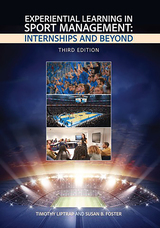
Experiential learning is the cornerstone for success for careers in sport management. Experiential Learning in Sport Management: Internships and Beyond, 3rd edition, guides students through specific segments of sport such as professional, college, recreation, and much more. The text assists students in developing a career plan and strategies for learning solid soft skills, as well as interviewing and resume writing strategies. Participating in experiential learning via a class, volunteering, planned apprenticeships, internships, graduate assistantships, and summer jobs helps students qualify for a strong career in sport.
Experiential Learning in Sport Management: Internships and Beyond, 3rd edition, builds upon the framework designed in the first two editions but includes additional content such as AI, eSport, international sport, and cooperative education. Introductory comments and fresh Time-Out Interviews from industry experts, many of whom have degrees in sport management/business, provide students with first-hand knowledge on possible paths into their field of choice. The book can be used as the main text for an introduction to sport management class and can be used throughout the academic career as a guiding text in any experiential learning class, and senior seminars that prepare students for a culminating internship. Graduate students without an undergraduate degree can benefit from this text as can doctoral students preparing for a teaching career in sport management.

In the multi-billion dollar sport industry that captures the interest of a global audience, opportunities abound on the front lines and behind the scenes for those who have the education, skill, and drive to succeed. Often the biggest hurdles for those who want to work in the sport industry is breaking through with an initial opportunity. Experiential Learning in Sport Management: Internships and Beyond, 2nd Edition, presents aspiring sport practitioners with a wealth of information about the industry and provides professors within sport management programs a framework for how to lead students through the experiential learning experience.
Authors Susan Brown Foster and John E. Dollar draw from more than 50 years of combined experience in teaching, research, and internship supervision in writing a comprehensive yet concise manual for students preparing for a career in sport. This new edition includes enhanced content on trending topics such as social media and eSports.
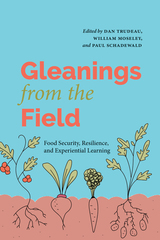
This timely essay collection frames our food security challenges as “wicked problems,” puzzles without clear solutions that are characterized by evolving complexities and divergent stakeholder priorities. In classroom settings, they argue for the usage of experiential learning to cultivate “wicked problem-solving skills” among students. Gleanings from the Field exemplifies this approach, offering pedagogical interventions to prepare students for tackling these wicked problems, while advocating for high-impact learning experiences that enable students to grapple with the interconnected systems influencing food security. Through hands-on experiences and reflective practice, students gain a deeper understanding of these systems and their societal implications. Importantly, the contributions outlined in this volume underscore the need for a multidimensional view of food security, thus examining the intersections of economic interests, government policies, and social movements. By contextualizing food security within broader political-economic arrangements, educators can empower students to enact meaningful change.
Gleanings from the Field argues for a holistic approach to food security education, one that acknowledges the fraught nature of wicked problems and equips students with the skills and knowledge needed for effective action. By integrating experiential learning, conceptual frameworks about food security and resilience, and real-world engagement, educators can cultivate a new generation of resilient problem-solvers committed to addressing food insecurity and other wicked problems.

Self-help groups have encountered fierce criticism as places where individuals join to share personal problems and to engage in therapeutic intervention without the aid of skilled professionals. These groups have flourished since the 1970s and continue to serve more people than professional therapy.
Yet these groups have been criticized as fostering a culture of whiners and victims, and not using professional help as needed. Thomasina Jo Borkman debunks this commonly held assessment, and also examines the reasons for these groups’ enduring popularity since the 1960s—more people attend these meetings (word?) than see professional therapists. What accounts for their success and popularity?
Understanding Self-Help / Mutual-Aid Groups is the first book to describe three stages of individual and group evolution that is part of this organization’s very structure; it also reconceptualizes participants’ interactions with professionals. The group as a whole, Borkman posits, draws on the life experiences of its membes to foster nurturing, support, and transformation through a “circle of sharing.” Groups create more positive and less stigmatizing “meaning perspectives” of the members’ problems than is available from professionals or lay folk culture.
READERS
Browse our collection.
PUBLISHERS
See BiblioVault's publisher services.
STUDENT SERVICES
Files for college accessibility offices.
RECENTLY PUBLISHED





UChicago Accessibility Resources
home | accessibility | search | about | contact us
BiblioVault ® 2001 - 2026
The University of Chicago Press