
 A SCHOLARLY BOOK REPOSITORY
"A must for anyone interested in adolescent behavior."—Edward Z. Dager, Contemporary Sociology
As fate would have it, his adoptive father, a German-Jewish refugee raised by a loveless and embittered stepmother after his own mother died in childbirth, has inflicted on his stepson a fate uncannily—and terrifyingly—similar to his own: Having first adopted Michael, in part, to help his dying wife, he then imposes on him the same sort of penurious and loveless stepmother whom he himself had had to survive. With these revelations, the "mysteries" that seem to have permeated Michael's childhood are laid bare, triggering a quest for belonging that will infiltrate the author's entire adult life.
In the past two decades, men have gone from being excluded from the delivery room to being admitted, then invited, and, finally, expected to participate actively in the birth of their children. No longer mere observers, fathers attend baby showers, go to birthing classes, and share in the intimate, everyday details of their partners' pregnancies.
In this unique study, Richard Reed draws on the feminist critique of professionalized medical birthing to argue that the clinical nature of medical intervention distances fathers from child delivery. He explores men's roles in childbirth and the ways in which birth transforms a man's identity and his relations with his partner, his new baby, and society. In other societies, birth is recognized as an important rite of passage for fathers. Yet, in American culture, despite the fact that fathers are admitted into delivery rooms, little attention is given to their transition to fatherhood.
The book concludes with an exploration of what men's roles in childbirth tell us about gender and American society. Reed suggests that it is no coincidence that men's participation in the birthing process developed in parallel to changing definitions of fatherhood more broadly. Over the past twenty years, it has become expected that fathers, in addition to being strong and dependable, will be empathetic and nurturing.
Well-researched, candidly written, and enriched with personal accounts of over fifty men from all parts of the world, this book is as much about the birth of fathers as it is about fathers in birth.
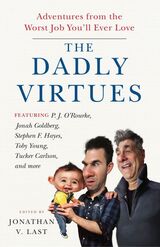
The Dadly Virtues is a tongue-in-cheek collection of encouragement and guidance for any stage of fatherhood, from pacifying babies to prepping for senior prom, from cutting the cord to getting the first, “Best Grandpa” t-shirt. P.J. O’Rourke sets the stage with the chapter, “What Do Men Get from Fatherhood? Besides What They Put In …” and then is followed by:
•Matthew Continetti’s, “Newborn Terror: The Moment You Realize that ‘Bundle of Joy’ Is a Euphemism for Something Very Different.”
•Stephen F. Hayes’ “Siblings: The Best Gift You’ll Ever Give Your Kids.”
•Jonah Goldberg’s “Get Your Kid a Dog: The Moral Case for Pets.”
•Tucker Carlson’s “In Praise of Adventure: How to Fill a Child’s Life with Excitement and Danger (without Getting Them Killed).”
•Michael Graham’s, “Dating: Enjoy the Movie and Please Keep the Impregnation to a Minimum.”
•Christopher Caldwell’s “College: It’s Not as Bad as You Think; It’s Worse.”
•Andrew Ferguson’s “Emerging Adults and Empty Nesters: Just When You Had Fatherhood All Figured Out.”
•Toby Young’s “The Dark Side: Bad Parenting and the Things We Think, but Do Not Say.”
•Joseph Epstein’s “Thanks, Grandpa: Grandfatherhood and the Spirit of the Age.”
•And more.
Father-to-be, two-time-dad, or granddad, each essay will make you laugh and, at the same time, reinforce your commitment to the virtuous—the dadly—life.
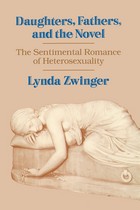
Daughters, Fathers, and the Novel is a provocative study of the father-daughter story—a neglected dimension of the family romance. It has important implications for the history of the novel, for our understanding of key texts in that history, and for theories concerning the representation of gender, family relations, and heterosexuality in Western culture.
In the English and American novel, argues Lynda Zwinger, “the good woman” . . . is a father’s daughter, . . . constructed to the very particular specifications of an omnipresent and unvoiced paternal desire.” Zwinger supports her case with an analysis of both “high-brow” and “low-brow” novels and with ingenious textual analyses of five novels: Clarissa Harlowe, Dombey and Son, Little Women, The Golden Bowl, and The Story of O.
In the dominant discourse of Anglo-American culture, the father’s daughter provides the cornerstone for the patriarchal edifice of domesticity and the alibi for patriarchal desire. Zwinger’s analysis of the sexual politics embodied in the figure of this sentimental daughter raises compelling critical and cultural issues. Zwinger shows how different readings of Clarissa’s story form a sentimental composite that makes her available in perpetuity to heterosexual desire. Dombey and Son illuminates the erotic dimension of the sentimental, the titillation always inherent in the spectacle of virtue in distress. Zwinger’s analysis of Little Women in the context of Louisa May Alcott’s own life-text focuses upon the problems of a daughter trying to write the filial romance. The Golden Bowl deploys the daughter of sentiment as a “cover story” for a feminine version of the Oedipal story, founded on the daughter who can’t say yes, but doesn’t say no. The Story of O reveals the pornographic dimension in romantic and sentimental love.
In her conclusion, Zwinger offers an overview of the nineteenth-century novel, asking what difference it makes when the writer is a daughter. She shows how the daughter’s family romance pictures the father as inadequate, ironically requiring the sentimental daughter as a patriarchal prop. She develops a useful concept of hysteria and argues that generic “disorder” and hysterical “intrusions” mark the family romance novels of Jane Austen, Emily and Charlotte Brontë, and George Eliot. And finally, she makes the case that the daughter’s choice to stay home is not necessarily an act of simple complicity, for by staying home she comes as close as she can to disrupting the father-daughter romance.

To discuss work and family is also to discuss gender. Ranging from California's Silicon Valley to a remote fishing village in the northeast, part one shows how new work arrangements have created new expectations for what it means to be a woman or a man, and how slow and uneven the pace of change can be. Nowhere are the tensions of work and family more potent than around childcare. Part two takes up these tensions, showing how various "solutions" to caring for children of all ages (whether infants or teenagers) create new problems. Parts three and four turn outward to show how the new relationships between families and work are changing the relationships between families and the communities in which they live and generating new social policy dilemmas.


It has been said that fathers are a biological necessity but a social accident. When Ross Parke first wrote about fathers for the Developing Child series, American culture seemed to adhere strongly to the stereotype of Dad the breadwinner, pacing outside the delivery room and peeking through the nursery window, and Mom the homemaker, warming bottles and changing diapers. Simple—in fact, a bit too simple. In the intervening years the conventional image of the uninvolved father has given way to a new stereotype: the father who takes an active part in rearing his children.
The dramatic technological, economic, and ideological changes in society over the past several decades have reconfigured the nuclear family and redefined the role of fathers. More women now work outside the home; fewer families can depend on an extended network of relatives for help with childcare; more divorced fathers assume or share custody of their children. Fathers have become partners in parenthood, wielding a more direct influence on their children’s development. But, Parke asks, is the new ideal of fathers—participating in childbirth and sharing in the care and feeding of their children—any more accurate than the earlier uninvolved father stereotype?
Social scientists have long ignored fathers, focusing on mothers as the significant figure in infant development. But research is showing that maternal caretaking is not biologically fixed, nor are fathers necessarily restricted to a secondary role in childcare. Turning away from well-worn theories in favor of direct observation, modern studies have revealed a substantial amount about how fathers behave with their children, how this behavior differs from maternal behavior, and how it affects children.
In this new book, Parke considers the father–child relationship within the “family system” and the wider society. Using the “life course” view of fathers that has emerged in recent years, he demonstrates that men enact their fatherhood in a variety of ways in response to their particular social and cultural circumstances. And while it is becoming clear that fathers play an important role in their children’s lives, it is also becoming clear that fathering is good for men.

Old Major Buchan of Pleasant Hill, Fairfax County, Virginia, lived by a gentlemen's agreement to ignore what was base or rude, to live a life which was gentle and comfortable because it was formal. Into this life George Posey came dashing, as Henry Steele Commager observed, “to defy Major Buchan, marry Susan, betray Charles and Semmes, dazzle young Lacy, challenge and destroy the old order of things.”
The Fathers was published in 1938. It sold respectably in both the United States and England, perhaps because people expected it to be another Gone With the Wind, wheras it is in fact the novel Gone With the Wind ought to have been. Since its publication it has received very little attention, considering that it is one of the most remarkable novels of our time. Its occasion is a public one, the achievement and the destruction of Virginia's antebellum civilization. Within that occasion it discovers a terrible conflict between two fundamental and irreconcilable modes of existence, a conflict that has haunted American experience, but exists in some form at all times. The Fathers moves between the public and the private aspects of this conflict with an ease very unusual in American novels, and this ease is the most obvious illustration of the novel's remarkable unity of idea and form, for it is itself a manifestation of the novel's central idea, that “the belief widely held today, that men may live apart from the political order, that indeed the only humane and honorable satisfactions must be gained in spite of the public order, “is a fantasy.”
— From the introduction of The Fathers

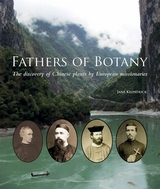
But as Jane Kilpatrick shows in Fathers of Botany, the first Westerners to come upon and document this bounty were in fact cut from a different cloth: the clergy. Following the Opium Wars, European missionaries were the first explorers to dig further into the Chinese interior and send home evidence of one of the richest and most varied floras ever seen, and it was their discoveries that caused a sensation among Western plantsmen. Both men of faith and talented botanists alike, these missionaries lent their names to many of the plants they discovered, but their own stories disappeared into the leaf litter of history. Drawing on their letters and contemporary accounts, Kilpatrick focuses on the lives of four great French missionary botanists—Pères Armand David (of Davidia involucrata—the dove tree—and discoverer of the giant panda), Jean Marie Delavay, Paul Guillaume Farges, and Jean André Soulié—as well as a group of other French priests, Franciscan missionaries, and a single German Protestant pastor who all amassed significant plant collections, as she unearths a lost chapter of botanical history. In so doing, she reminds today’s gardeners and botanists—and any of us who stop to smell the roses—of the enormous debt owed to these obscure fathers of botany.

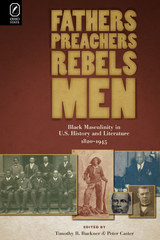
Fathers, Preachers, Rebels, Men: Black Masculinity in U.S. History and Literature, 1820–1945,edited by Timothy R. Buckner and Peter Caster, brings together scholars of history and literature focused on the lives and writing of black men during the nineteenth and twentieth centuries in the United States. The interdisciplinary study demonstrates the masculine character of cultural practices developed from slavery through segregation. Black masculinity embodies a set of contradictions, including an often mistaken threat of violence, the belief in its legitimacy, and the rhetorical union of truth and fiction surrounding slavery, segregation, resistance, and self-determination. The attention to history and literature is necessary because so many historical depictions of black men are rooted in fiction. The essays of this collection balance historical and literary accounts, and they join new descriptions of familiar figures such as Charles W. Chesnutt and W. E. B. Du Bois with the less familiar but critically important William Johnson and Nat Love.
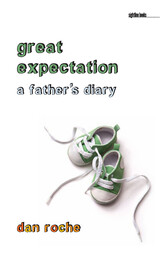
With five years of parenting his irrepressible daughter Maeve under his belt, Roche, already forty-five years old, and his wife, Maura, face the prospect of another arrival and the myriad of emotions that come with a second child. From revelling in the joys of pregnancy such as Maura's delight at "having cleavage" and being able to eat whatever she desires; to assuaging the parental anxieties of choosing the right obstetrician, correcting the mistakes one made with the first child, and sending children to college in the future; to navigating the unforeseen, experiencing the unexpected death of a parent, and feeling trepidation toward the thought of having a son, Roche records his emotions with unusual candidness and intimacy.
Reflecting on day-to-day events and their significance in his family’s life together, Roche wonders what he is getting himself into and how much deeper he can immerse himself into parenting. Together, he and his wife face the bittersweet intersections of death and new life, menace and hopefulness. With sincerity and a mature wit, Great Expectation stands as a wise recounting of nine months’ time, with all of its chaos and charms, and offers a fresh perspective for first-time and veteran parents alike.

Lovers of Shakespeare’s language take heart: Lisa Peterson’s translation of Hamlet into contemporary American English was guided by the principle of “First, do no harm.” Leaving the most famous parts of Hamlet untouched, Peterson untied the language knots that can make the rest of the play difficult to understand in a single theatrical viewing. Peterson’s translation makes Hamlet accessible to new audiences, drawing out its timeless themes while helping to contextualize "To be, or not to be: that is the question," and “Something is rotten in the state of Denmark,” so that contemporary audiences can feel their full weight.
This translation of Hamlet was written as part of the Oregon Shakespeare Festival’s Play On! project, which commissioned new translations of thirty-nine Shakespeare plays. These translations present work from "The Bard" in language accessible to modern audiences while never losing the beauty of Shakespeare’s verse. Enlisting the talents of a diverse group of contemporary playwrights, screenwriters, and dramaturges from diverse backgrounds, this project reenvisions Shakespeare for the twenty-first century. These volumes make these works available for the first time in print—a new First Folio for a new era.
Even in this age of working mothers, the role of fathering is often overlooked. This book illuminates the realities of fathering by presenting the results of a unique empirical study conducted over four decades and covering four generations of fathers and children. Through case studies and data analysis, John Snarey demonstrates that men's care for their families reaps immense and long-lasting benefits—for themselves, for their offspring, and for future generations.
In striking contrast to research that considers fathers to be obscure or peripheral figures, Snarey reveals their position as central caregivers and characterizes their most effective nurturing behaviors. He examines fathers' involvement in three vital realms of their children's development: social-emotional, intellectual-academic, and physical-athletic. Looking specifically at fathers' relationships with their oldest children during the first two decades of their lives, Snarey addresses issues of fathering in both childhood and adolescence. He presents portraits of individual father-son and father-daughter relationships, and measures and defines the ways in which “good” fathers are constructively engaged in and supportive of children's growth. Snarey also focuses on the fathers themselves. Moving back in time, he explores how men's boyhood experiences with their own fathers affect their subsequent parenting styles. Then, cycling forward, he observes how various fathering experiences affect men at mid-life, in their marriages, and throughout their careers. His study also considers how the threat of infertility impacts fathers' generativity—their ability to care for the next generation.
Within the current wave of scholarly interest in fathering, this is the first comprehensive longitudinal study of the topic. It is firmly grounded in Erik H. Erikson's model of psychosocial generativity, and adds a significant dimension to Erikson's theory by successfully applying it to empirical research. Snarey makes a major contribution to male, child, family, and developmental psychology, and addresses issues of ongoing concern in the fields of sociology and education. How Fathers Care for the Next Generation offers hope that men can, indeed, rework their past and provide better fathering than they themselves received.
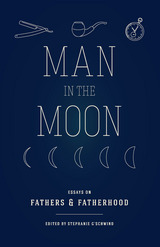
"Science claims it will one day be able to eliminate fathers from the equation by mating bone marrow with ovum. When that day comes, I imagine this book, along with a handful of other works (King Lear, Fun Home) will become even more necessary. Herein find the blueprints for the mystery, the maps for the uncharted, the keys to the archetype."
—Nick Flynn, author of The Reenactments and Another Bullshit Night in Suck City
"At this moment, I find myself at loose ends, lost in the various vacuums left by my father's dying and my sons' departures out into the voids. Yet this stunning constellation of essays centered me, became for me fine instruments of reckoning of where to stand in the ceaseless entropic dynamic of kin, of paternal keening. These waxing meditations demonstrate the inflationary universe, the heft and velocity of that big ol' nothing. They elegantly fill, with sober hope and the balm of joy, the terrifying, infinite spaces between those waning stars."
—Michael Martone, author of Michael Martone and Four for a Quarter
"What an unreachable mystery the father is, preoccupied, unknowable, pervasive. In these fascinating essays, a shared portrait emerges as writers articulate the perpetual puzzle of the father and, with grace and candor, explore what it means to not know him, to never know him. As one voice, these essays investigate the man—his inventories, his myths, his mere traces—who makes up our horizons, who forever shimmers there beyond our collective grasp."
—Susanna Sonnenberg, author of Her Last Death and She Matters: A Life in Friendships
Selected from the country's leading literary journals and publications—Crazyhorse, Colorado Review, The Nervous Breakdown, Creative Nonfiction, Georgia Review, Gulf Coast, The Missouri Review, The Normal School, and others—Man in the Moon brings together essays in which sons, daughters, and fathers explore the elusive nature of this intimate relationship and find unique ways to frame and understand it: through astronomy, arachnology, storytelling, map-reading, television, puzzles, DNA, and so on. In the collection's title essay, Bill Capossere considers the inextricable link between his love of astronomy and memories of his father: "The man in the moon is no stranger to me,” he writes. "I have seen his face before, and it is my father's, and his father's, and my own.” Other essays include Dinty Moore's "Son of Mr. Green Jeans: A Meditation on Missing Fathers,” in which Moore lays out an alphabetic investigation of fathers from popular culture—Ward Cleaver, Jim Anderson, Ozzie Nelson—while ruminating on his own absent father and hesitation to become a father himself. In "Plot Variations,” Robin Black attempts to understand, through the lens of teaching fiction to creative writing students, her inability to attend her father's funeral. Deborah Thompson tries to reconcile her pride in her father's pioneering research in plastics and her concerns about their toxic environmental consequences in "When the Future Was Plastic.” At turns painfully familiar, comic, and heartbreaking, the essays in this collection also deliver moments of seari
Published by Bucknell University Press. Distributed worldwide by Rutgers University Press.
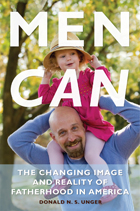
Fatherhood is evolving in America. Stay at home dads are becoming more commonplace; men are becoming more visible in domestic, caregiving activities. In Men Can, writer, teacher, and father Donald Unger uses his personal experiences, stories of real-life families, as well as representations of fathers in film, on television, and in advertising, to illuminate the role of men in the increasingly fluid domestic sphere.
In thoughtful interviews, Don Unger tells the stories of a half dozen families—of varied ethnicities, geographical locations, and philosophical orientations—in which fathers are either primary or equally sharing parents, personalizing what is changing in how Americans care for their children. These stories are complemented by a discussion of how the language of parenting has evolved and how media representations of fathers have shifted over several decades.
Men Can shows how real change can take place when families divide up domestic labor on a gender-neutral basis. The families whose stories he tells offer insights into the struggles of—and opportunities for—men caring for children. When it comes to taking up the responsibility of parenting, his argument, ultimately, is in favor of respecting personal choices and individual differences, crediting and supporting functional families, rather than trying to force every household into a one-size-fits-all mold.
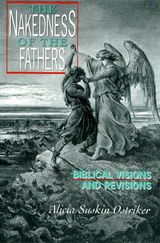
In her introduction, "Entering the Tents, " Ostriker defines the need to struggle against a tradition in which women have been silenced and disempowered - and to recover the female power buried beneath the surface of the biblical texts. In "The Garden, " she reinterprets the mythically complex stories of Creation. Then she considers the stories of "The Fathers, " from Abraham and Isaac to Moses, David, and Solomon - and their wives, mothers, and sisters. In "The Return of the Mothers, " she begins with a radical new interpretation of the book of Esther, includes a meditation on the silenced wife of Job and the idea of justice, and concludes with a fable on the death of God and a prayer to the Shekhinah, the feminine aspect of God. Ostriker refuses to dismiss the Bible as meaningless to women. Instead, in this angry, eloquent, visionary book, she attempts to recover what is genuinely sacred in these sacred texts.
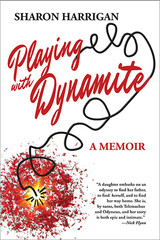
Playing with Dynamite is about the family secrets that can distance us from each other and the honesty that can bring us closer. It’s about a daughter who goes looking for her father but finds her mother instead. It’s about memory and truth, grieving and growing, and what it means to go home again.
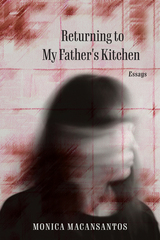
Feeling untethered after her beloved poet father passes away while she is living abroad, Monica Macansantos decides to return to the Philippines to regain her bearings. But with her father gone and her adult life rooted in the United States and New Zealand, can the land of her birth still serve as a place of healing?
In fifteen richly felt essays, Macansantos considers her family’s history in the Philippines, her own experiences as an exile, and the parent who was the heart of her family’s kitchen, whether standing at the stove to prepare dinner or sitting at the table to scribble in his notebook. Macansantos finds herself remaking her father’s chicken adobo, but also closely rereading his poems. As she reckons with his identity as an artist, she also comes into her own as a writer, and she invites us to consider whether it is possible to carry our homes with us wherever we go.
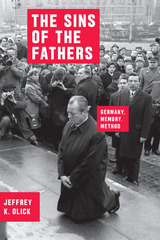
Nowhere has this precarious balance been more potent, or important, than in the Federal Republic of Germany, where the devastation and atrocities of two world wars have weighed heavily in virtually every moment and aspect of political life. The Sins of the Fathers confronts that difficulty head-on, exploring the variety of ways that Germany’s leaders since 1949 have attempted to meet this challenge, with a particular focus on how those approaches have changed over time. Jeffrey K. Olick asserts that other nations are looking to Germany as an example of how a society can confront a dark past—casting Germany as our model of difficult collective memory.
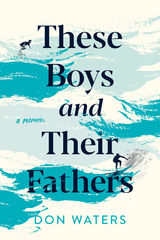
These Boys and Their Fathers touches on Waters’s early life with his single mother—and her string of dysfunctional men—and his later search for and encounters with his father, but it quickly expands into a gripping account of the life of a 1930s pulp writer, also named Don Waters, with whom Waters becomes obsessed. This wildly original book blends memoir, investigative reporting, and fiction to sort out difficult aspects of family, masculinity, and what it means to be a father.
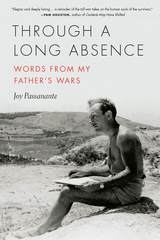
Against the backdrop of World War II, Joy Passanante’s touching new book, Through a Long Absence: Words from My Father’s Wars, is the saga of a wartime medical unit, a passionate long-distance love, the making of a surgeon, and two first-generation American families. Told through her father’s eyes—drawing on hundreds of his letters to his beloved wife, his four-volume wartime diary, and his paintings—Passanante masterfully recreates his wartime journey and physically retraces his steps more than sixty years later in an attempt to understand a time in her parents’ lives that they’d spoken about very little.
More than just a World War II story, Through a Long Absence delves into one man’s past to explore his personal wars: a stint as a child bootlegger, a marriage between newlyweds separated by continents and strained by years apart, and his struggle late in life with his own mind. The narrative propels readers to surprising places—from a freight train through North Africa to an underground St. Louis distillery during Prohibition, from a young couple’s forbidden courtship to the chaos of surgical tents under fire in Normandy, from an underground trove of priceless artwork hidden by the Nazis to Jewish New Year services in Paris a week after its liberation. Through a Long Absence is a love story, an honest look into one man’s life, and a daughter’s moving quest to rediscover her father years later through his own words.
Which is truly the weaker sex? Which has a harder time with its sexual and aggressive drives? The complicated business of being male is finally given its due in this book by John Munder Ross, a premier researcher and writer on the subject of masculinity. Distilling twenty years of study, he explores the male condition from infancy to manhood, exposing its complexity and fragility in the face of conflicting familial, social, and sexual impulses.
The author's psychoanalytic focus is anchored in clinical experience. But his interdisciplinary background leads him to draw on mythology, anthropology, sociology, history, and literature in formulating and illustrating his ideas about male identity and development. A boy's early identification with his mother, the evolution of his fatherly ambitions, the aggression and generational rivalry in father-son relationships, the developmental role of romantic, erotic passion: as Ross pursues these themes, he documents the ongoing changes in views of male psychology.
His book, then, is both a general intellectual history of the psychoanalytic study of male development and a lucid account of what that study has to tell us. Throughout, Ross emphasizes the feminine underside of a man's nature and the destructive potential inherent in asserting his virility, internal tensions that result in the complicated and often shaky sense of manhood so clearly described in this book. Compelling and insightful, What Men Want illuminates the concepts that figure most prominently in our understanding of the modern male condition: fatherhood, aggression, and heterosexual love. More than any other work to date, it solves the mystery of what it means to be male.

Here is a lively study of marriage and the family during the Reformation, primarily in Gemany and Switzerland, that dispels the commonly held notion of fathers as tyrannical and families as loveless.
Did husbands and wives love one another in Reformation Europe? Did the home and family life matter to most people? In this wide-ranging work, Steven Ozment has gathered the answers of contemporaries to these questions. His subject is the patriarchal family in Germany and Switzerland, primarily among Protestants. But unlike modern scholars from Philippe Ariès to Lawrence Stone, Ozment finds the fathers of early modern Europe sympathetic and even admirable. They were not domineering or loveless men, nor were their homes the training ground for passive citizenry in an age of political absolutism. From prenatal care to graveside grief, they expressed deep love for their wives and children. Rather than a place where women and children were bullied by male chauvinists, the Protestant home was the center of a domestic reform movement against Renaissance antifeminism and was an attempt to resolve the crises of family life. Demanding proper marriages for all women, Martin Luther and his followers suppressed convents and cloisters as the chief institutions of womankind’s sexual repression, cultural deprivation, and male clerical domination. Consent, companionship, and mutual respect became the watchwords of marriage. And because they did, genuine divorce and remarriage became possible among Christians for the first time.
This graceful book restores humanity to the Reformation family and to family history.
READERS
Browse our collection.
PUBLISHERS
See BiblioVault's publisher services.
STUDENT SERVICES
Files for college accessibility offices.
RECENTLY PUBLISHED




UChicago Accessibility Resources
home | accessibility | search | about | contact us
BiblioVault ® 2001 - 2025
The University of Chicago Press