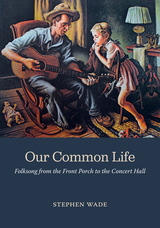
“I can’t teach you, but I can show you.” With these words, Kentucky balladeer Doc Hopkins shared his musical knowledge with a willing student, summoning an independent streak deeply embedded in the American character. His words capture the informal creativity and colloquial practice that marks folk tradition as it extends from the countryside to the city and back again.
Stephen Wade recounts creators and conservators like Doc Hopkins, many of them born in the closing years of the nineteenth century and the first decades of the twentieth. The figures include Sid Harkreader, Kirk McGee, Ola Belle Reed, Jewel Fagan Haynes, Cordell and Olean Kemp, Bill Monroe, Helen Marie Rowe, Virgil and Mabel Anderson, Joe and Odell Thompson, John Jackson, Huddie Ledbetter, Uncle Dave Macon, Dorris Macon, Raeburn Flerlage, David “Honeyboy” Edwards, Jim Schwall, Archie Green, Lloyd Lewis, Thaddeus Willingham, Jack Conroy, and Fleming Brown. As Will Keys, another of the musicians featured here, once told the author about his way of playing, it’s “AWYC, Any Way You Can.” These individuals and their stories demonstrate how folklore offers a way of understanding the world.
Thoughtfully written, filled with original research, and abundantly illustrated with both color and black and white photography, Our Common Life illuminates the truth that creative freedom within informal tradition, fundamental to the artists and their processes, speaks to a resourcefulness inscribed in the nation’s founding charter and expressed in its common life.