
 A SCHOLARLY BOOK REPOSITORY
The book explains the value of particular plants for birds and other wildlife, not only as food sources but as nesting sites and cover. Each plant is described in depth, with details on color, height, blooming time, light requirements, and soil preferences, along with planting tips and suggested companion plants. Nowak offers closer looks at the intriguing features of these diverse plant species and their intertwined relationships with birds, complemented by more than 150 color photos that showcase the beauty of the plants and birds together. Novice gardeners will also find essential information on birdscaping basics, site preparation, management guidelines, and safeguarding songbirds.
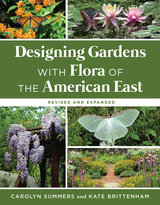
In this fully revised second edition of the classic guide Designing Gardens with Flora of the American East, gardening expert Carolyn Summers draws on the most recent research on sustainable landscaping. She is joined in this edition by her daughter, landscape designer Kate Brittenham, offering an intergenerational dialogue about the importance of using indigenous plants that preserve insect and bird habitats. The practical information they provide is equally useful for home gardeners and professionals, including detailed descriptions of keystone trees, shrubs, perennials, vines, and grasses that are native to the eastern United States. Accompanied by entirely new illustrations and updated plant lists, they offer chic yet eco-friendly landscape designs fully customized for different settings, from suburban yards to corporate office parks.
The states covered in this book are CT, DE, IA, IL, IN, KY, MA, MD, ME, MI, MN, MO, NC, NH, NJ, NY, OH, PA, RI, TN, VA, VT, WI, and WV, as well as southern Quebec and Ontario.
Early American Gardens, published in 1970, was the first of three authoritative volumes of garden history by Ann Leighton. The 464-page masterwork of garden history was reissued in this paperback edition by University of Massachusetts Press in 1986. Concentrating on the gardens of the early settlers of New England, this volume deals with gardeners as well as the plants they depended upon for household aids, flavorings, drinks, and medicines. The well-illustrated, thorough, and scholarly volume is a book for history buffs as well as avid and inquisitive gardeners.
Companion volumes by Ann Leighton
American Gardens in the Eighteenth Century “For Use or for Delight”
American Gardens of the Nineteenth Century “For Comfort and Affluence”

Who owned Ming gardens? Who visited them? How were they represented in words, in paintings, and in visual culture generally, and what meanings did these representations hold at different levels of Chinese society? How did the discourse of gardens intersect with other discourses such as those of aesthetics, agronomy, geomancy, and botany? By examining the gardens of the city of Suzhou from a number of different angles, Craig Clunas provides a rich picture of a complex cultural phenomenon—one that was of crucial importance to the self-fashioning of the Ming elite.
Drawing on a wide range of recent work in cultural theory, the author provides for the first time a historical and materialist account of Chinese garden culture, and replaces broad generalizations and orientalist fantasy with a convincing picture of the garden’s role in social life. Fruitful Sites will appeal to all students of China’s cultural history, to students of garden history from any part of the world, to art historians, and to readers engaged in Asian and cultural studies.
Who owned gardens? Who visited them? How were they represented in words, in paintings and in visual culture generally, and what meanings did these representations hold at different levels of Chinese society? Drawing on a wide range of recent work in cultural theory, Craig Clunas provides for the first time a historical and materialist account of Chinese garden culture, and replaces broad generalizations and orientalist fantasy with a convincing picture of the garden's role in social life.
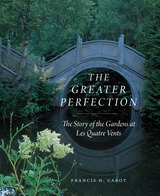
Featured in the 2018 film The Gardener, Les Quatre Vents in Charlevoix County, Quebec, has been acclaimed as the most aesthetically satisfying and horticulturally exciting landscape experience in North America. This twenty-acre garden seamlessly combines traditional and novel elements into a splendid composition, adorned with unexpected touches and perfectly compatible with its natural surroundings.
The Greater Perfection, first published in 2001, illustrates the delights, diversions, and surprises that await the garden’s visitors. Francis H. Cabot’s account of the challenges he faced in developing Les Quatre Vents reveals the fascinating process behind the creation of a world-class garden that has become a mecca for horticultural enthusiasts around the globe. Winner of the 2003 Annual Literature Award of the Council on Botanical and Horticultural Libraries and featuring stunning full-color images by five leading garden photographers, The Greater Perfection is one of the most beautiful books on gardens to appear in years. This new printing includes a foreword by Marianne Cabot Welch, Cabot’s daughter, that further contextualizes the gardens and explores how a place rooted in the past can confront the future.
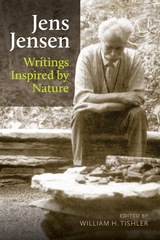
Today, Jensen is perhaps best remembered for establishing The Clearing on Wisconsin's Door County Peninsula. But the outspoken views in his writings - many of which were included in ephemeral planning reports, early newspapers, and now out-of-print journals - are virtually forgotten, with the exception of his two small books. "Jens Jensen: Writings Inspired by Nature" is an anthology of Jensen's most significant yet lesser-known articles, including a "Saturday Evening Post" piece that enabled him to reach the largest audience of his publishing career. The scope of Jensen's thoughts represented in this collection will further solidify his legacy and rightful place alongside conservation leaders such as John Muir and Aldo Leopold.
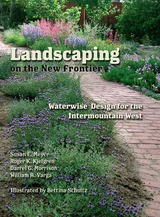
In this book you will learn how to use natural landscapes to inspire your own designed landscape around your business or home and yard. Included are design principles, practical ideas, and strong examples of what some homeowners have already done to convert traditional "bluegrass" landscapes into ones that are more expressive of theWest. Landscaping on the new Frontier also offers an approach to irrigation that minimizes the use of supplemental water yet ensures the survival of plants during unusually dry periods. You will learn how to combine ecological principles with design principles to create beautiful home landscapes that require only minimal resources to maintain.
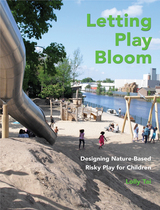
Children love to play in risky—often misunderstood to mean unsafe—ways. It is often how they learn. Research shows that activities like climbing on trees and boulders, hiking in nature, and playing in a creek are excellent ways for kids to develop their creativity and their senses, because playing outdoors evokes different sights, sounds, smells, and textures.
Letting Play Bloom analyzes five outstanding case studies of children’s nature-based risky play spaces—the Slide Hill at Governors Island in New York, the Berkeley (CA) Adventure Playground, and Wildwoods at Fernbank Museum in Atlanta, as well as sites in the Netherlands and Australia. Author Lolly Tai provides detailed explanations of their background and design, and what visitors can experience at each site.
She also outlines the six categories of risky—not hazardous—play, which involve great heights, rapid speeds, dangerous tools, dangerous elements, rough-and-tumble play, and wandering or getting lost. These activities allow children to explore and challenge themselves (testing their limits) to foster greater self-worth while also learning valuable risk-management skills such as dealing with fear-inducing situations.
Filled with more than 200 photographs, Letting Play Bloom advocates for a thoughtful landscape design process that incorporates the specific considerations children need to fully experience the thrill that comes from playing in nature.
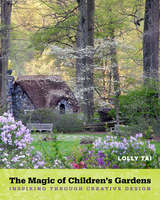
Children’s gardens are magical places where kids can interact with plants, see where food and fibers grow, and experience the role of birds, butterflies, and bees in nature. These gardens do more than just expose youngsters to outdoor environments, they also provide marvelous teaching opportunities for them to visit a small plot, care for vegetables and flowers, and interact in creative spaces designed to stimulate all five senses.
In The Magic of Children’s Gardens, landscape architect Lolly Tai provides the primary goals, concepts and key considerations for designing outdoor spaces that are attractive to and suitable for children especially in urban environments. Tai presents inspiring ideas for creating children’s green spaces by examining nearly twentycase studies, including the Chicago Botanic Gardens and Longwood Gardens in Kennett Square, PA.
The Magic of Children’s Gardens features hundreds of comprehensive drawings and gorgeous photographs of successful children’s outdoor environments, detailed explanations of the design process, and the criteria needed to create attractive and pleasing gardens for children to augment their physical, mental, and emotional development.
Exposing youth to well-planned outdoor environments promotes our next generation of environmental stewards. The Magic of Children's Gardens offers practitioners a guide to designing these valued spaces.
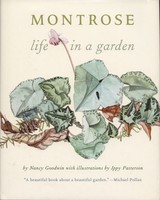
Beautifully written and illustrated, Montrose: Life in a Garden is Goodwin’s affectionate biography of her gardens, recounting how and why each section was developed over the years, including the Dianthus Walk, Nandinaland, Hellebore Slope, Mother-in-Law Walk, Snowdrop Woods, and Jo’s Bed. It is also a meticulous month-by-month chronicle of a specific year in these gardens—a year that saw a punishing drought that threatened Goodwin’s no-irrigation policy, a damaging December ice storm, and the beginnings of a plan to preserve Montrose in the future.
Working on her knees for long days throughout the year, Nancy Goodwin always has a vision of how her gardens will appear in twelve months or in twelve years. She will spend weeks, for instance, planting hundreds of snow drops along a woodsy path in order to enjoy a fleeting week of exquisite beauty in coming years. She never puts anything into the ground without imagining what form, color, and texture it will add to a bed. With tireless patience and unflagging optimism, Goodwin will wait years to see a single plant bloom.
Following Goodwin’s activities throughout the year, readers will learn the fundamentals of maintaining a four-season garden in Zone 7 in the South. Award-winning garden illustrator Ippy Patterson has provided more than 160 lavish illustrations of the gardens at Montrose and these meticulously detailed drawings appear throughout the book.
Using narrative, figures, photographs, and a groundbreaking set of layout charts that can aid even the most experienced horticulturist in the process of flower garden planning, Northern Garden Symphony gives gardeners the tools they need to be a successful northern perennial gardener.
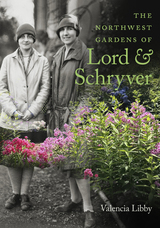
Published in Cooperation with the Lord & Schryver Conservancy
Lord & Schryver, the first landscape architecture firm founded and operated by women in the Pacific Northwest, designed more than two hundred gardens in Oregon and Washington, including residential, civic, and institutional landscapes. Elizabeth Lord and Edith Schryver met as young women and in 1929 established their highly successful firm in Salem; their work is acknowledged as one of the milestones in the history of garden design in the Northwest and beyond. Theirs is the only Oregon firm recognized in Pioneers of Landscape Architecture, compiled by the National Park Service. The Cultural Landscape Foundation describes them as “consummate professionals in the broadest sense, as they worked to raise the profile of landscape architects by involving an audience beyond their clients. Their work represented a transition from a formal symmetrical style of garden design to one which responded in a distinctive way to the unique features of Northwest climate, soil, topography, and plant material.”
Gaiety Hollow, their purpose-built Salem home, garden, and studio, is now owned by the Lord & Schryver Conservancy and is open to the public. The conservancy has lovingly restored the gardens at Gaiety Hollow according to Lord & Schryver’s original plans. They have also restored and now maintain the gardens at Deepwood, a former residence that is now a public park.
Students of landscape architecture, garden design, Pacific Northwest history, ornamental horticulture, and general readers who are interested in the contributions of women to once male-dominated professions will find inspiration in these pages.
Learn more about Elizabeth Lord and Edith Schryver at www.lordschryver.org

This richly illustrated volume tells the story of thehome that has served as Ohio’s executive residence since 1957, and of the nine governors and their families who have lived in the house. Our First Family’s Home offers the first complete history of the residence and garden that represent Ohio to visiting dignitaries and the citizens of the state alike. Once in a state of decline, the house has been lovingly restored and improved by itsresidents. Development of the Ohio Heritage Garden has increased the educational potential of the house and has sparked an interest in the preservation of native plant species. Looking toward the future, the Residence is also taking the lead in promoting environmental issues such as solar powerand green energy.
Photographs by award-winning environmental photographer Ian Adams and botanical art by Dianne McElwain showcase the beauty of the home’s architecture and the myriad of native plants that grace the three acres on which the Residence stands. Dianne McElwain is a member of the American Society of Botanical Artists in New York. Her botanical paintings have won numerous awards and are found in prestigious collections throughout the United States.
Essays highlight the Jacobethan Revival architecture and the history of the home. The remaining pieces cover the garden and include an intimate tour of the Heritage Garden, which was inspired by Ohio’s diverse landscape. Finally, former Governor Ted Strickland and First Lady Frances Strickland discuss the increasing focus on green energy at the Governor’s Residence and First Lady Emerita Hope Taft explains how native plants can help sustain the environment.
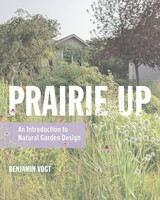
Landscaping with native plants has encouraged gardeners from the Midwest and beyond to embark on a profound scientific, ecological, and emotional partnership with nature. Benjamin Vogt shares his expertise with prairie plants in a richly photographed guide aimed at gardeners and homeowners, making big ideas about design approachable and actionable. Step-by-step blueprints point readers to plant communities that not only support wildlife and please the eye but that rethink traditional planting and maintenance. Additionally, Vogt provides insider information on plant sourcing, garden tools, and working with city ordinances. This book will be an invaluable reference in sustainable garden design for those wanting both beautiful and functional landscapes.
Easy to use and illustrated with over 150 color photos, Prairie Up is a practical guide to artfully reviving diversity and wildness in our communities.
Received Honorable Mention from the AHS Book Awards (American Horticultural Society)

Berthier's guided tour of the famous garden of Ryoanji (Temple) in Kyoto leads him into an exposition of the genre, focusing on its Chinese antecedents and affiliations with Taoist ideas and Chinese landscape painting. He traces the roles of Shinto and Zen Buddhism in the evolution of the garden and also considers how manual laborers from the lowest classes in Japan had a hand in creating some of its highest examples. Parkes contributes an equally original and substantive essay which delves into the philosophical importance of rocks and their "language of stone," delineating the difference between Chinese and Japanese rock gardens and their relationship to Buddhism. Together, the two essays compose one of the most comprehensive and elegantly written studies of this haunting garden form.
Reading Zen in the Rocks is fully illustrated with photographs of all the major gardens discussed, making it a handsome addition to the library of anyone interested in gardening, Eastern philosophy, and the combination of the two that the karesansui so superbly represents.
Praise for the French edition:
"A small book of rare depth, remarkably illustrated, on one of the most celebrated and beautiful rock gardens of the monasteries of Kyoto."—L'Humanité
"Through Le Jardin de Ryoanji, Berthier teaches us to read the zen in the rocks, to discover the language offered by the garden at Ryoanji. Enigmatic, poetic, and disconcerting, an enriching journey through a work of art of surprising modernity, Le Jardin de Ryoanji is a work that will interest all the amateurs of Japanese art and Eastern philosophy."—Lien Horticole

With the post-World War II housing boom, the nascent WGC became involved in landscaping projects aimed at beautifying Kansas City. These efforts continued when the WGC led re-landscaping efforts after the Great Flood of 1951. Early in their club’s history, the women of the WGC learned that collaboration with other organizations allowed them to have a greater impact on the causes about which they cared. They soon began working with city governments and park departments on both sides of the Missouri-Kansas state line, including with the Linda Hall Library and Arboretum, the Nelson-Atkins Museum of Art, and the Loose Park Garden Center.
In addition to being a thorough history of The Westport Garden Club—and the considerable influence that a small number of dedicated, educated women have had on it—Sharing the Love of Gardening is a book of stunning photography, showcasing previously unpublished images from the clubs’ archives and the original work of club member and professional photographer Marianne Kilroy.
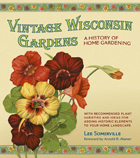
The Wisconsin State Horticultural Society, established during the mid-nineteenth century, was the primary source of advice for home gardeners. Through carefully selected excerpts from WSHS articles, Somerville shares the excitement of these gardeners as they traded cultivation and design knowledge and explored the possibilities of their avocation. Women were frequent presenters at the WSHS annual meetings, and their voices resonate. Their writings, and those of their male colleagues, are a remarkable legacy we can draw on today—learning how Wisconsinites past created and enjoyed their gardens helps us appreciate our own. Filled with period and contemporary images, recommended plant lists, and garden layouts, Vintage Wisconsin Gardens will interest those curious about the history of the state’s cultural landscape and inspire readers to restore or reconstruct period gardens.
In What Gardens Mean, Stephanie Ross draws on philosophy as well as the histories of art, gardens, culture, and ideas to explore the magical lure of gardens. Paying special attention to the amazing landscape gardens of eighteenth-century England, she situates gardening among the other fine arts, documenting the complex messages gardens can convey and tracing various connections between gardens and the art of painting.
What Gardens Mean offers a distinctive blend of historical and contemporary material, ranging from extensive accounts of famous eighteenth-century gardens to incisive connections with present-day philosophical debates. And while Ross examines aesthetic writings from the seventeenth and eighteenth centuries, including Joseph Addison's Spectator essays on the pleasures of imagination, the book's opening chapter surveys more recent theories about the nature and boundaries of art. She also considers gardens on their own terms, following changes in garden style, analyzing the phenomenal experience of viewing or strolling through a garden, and challenging the claim that the art of gardening is now a dead one.
Showing that an artistic lineage can be traced from gardens in the Age of Satire to current environmental installations, this book is a sophisticated account of the myriad pleasures that gardens offer and a testimony to their enduring sensory and cognitive appeal. Beautifully illustrated and elegantly written, What Gardens Mean will delight all those interested in the history of gardens and the aesthetic and philosophical issues that they invite.
"Replete with provocative musings, Ross delineates links that should prove interesting to readers engaged in pondering our capacity to relate to the natural world through the gardens we create."—Booklist
"[A]n innovative and absorbing study of the garden as an object of aesthetic interest."—Allen Carlson, Journal of Aesthetics and Art Criticism
"[P]leasantly readable. . . . A thought-provoking book for all who reflect as they dig."—Noel Kingsbury, Country Life
"[A] refreshing view of the subject. . . . Ross's book is continually illuminating in unexpected ways."—Gillian Darley, Architects' Journal
"What Gardens Mean is a wonderful intellectual combination of discussions on the interdisciplinary histories of art, gardening, and philosophy."—Choice
READERS
Browse our collection.
PUBLISHERS
See BiblioVault's publisher services.
STUDENT SERVICES
Files for college accessibility offices.
RECENTLY PUBLISHED




UChicago Accessibility Resources
home | accessibility | search | about | contact us
BiblioVault ® 2001 - 2026
The University of Chicago Press