
 A SCHOLARLY BOOK REPOSITORY
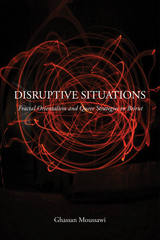
Disruptive Situations challenges representations of contemporary Beirut as an exceptional space for LGBTQ people by highlighting everyday life in a city where violence is the norm. Ghassan Moussawi, a Beirut native, seeks to uncover the underlying processes of what he calls “fractal orientalism,” a relational understanding of modernity and cosmopolitanism that illustrates how transnational discourses of national and sexual exceptionalism operate on multiple scales in the Arab world.
Moussawi’s intrepid ethnography features the voices of women, gay men and genderqueers in Beirut to examine how queer individuals negotiate life in this uncertain region. He examines “al-wad’,” or “the situation,” to understand the practices that form these strategies and to raise questions about queer-friendly spaces in and beyond Beirut.
Disruptive Situations alsoshows how LGBTQ Beirutis resist reconciliation narratives and position their identities and visibility at different times as ways of simultaneously managing their multiple positionalities and al-wad’. Moussawi argues that the daily survival strategies in Beirut are queer—and not only enacted by LGBTQ people—since Beirutis are living amidst an already queer situation of ongoing precarity.
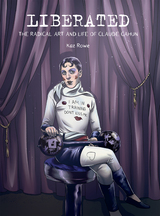
At the turn of the twentieth century in Nantes, France, Lucy Schwob met Suzanne Malherbe, and lightning struck. The two became partners both artistically and romantically and transformed themselves into the creative personas Claude Cahun and Marcel Moore. Together, the couple embarked on a radical journey of Surrealist collaboration that would take them from conservative provincial France to the vibrancy of 1920s Paris to the oppression of Nazi-occupied Jersey during World War II, where they used art to undermine the Nazi regime.
Cahun and Moore challenged gender roles and championed freedom at a time when strict societal norms meant that the truth of their relationship had to remain secret. Featuring ten photographs by Cahun and Moore, this graphic biography by cartoonist Kaz Rowe brings Cahun’s inspiring story to life.
Ages thirteen to eighteen
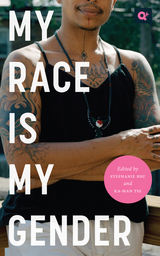
Genderqueer and nonbinary people of color often experience increased marginalization, belonging to an ethnic group that seldom recognizes their gender identity and a queer community that subscribes to white norms. Yet for this very reason, they have a lot to teach about how racial, sexual, and gender identities intersect. Their experiences of challenging social boundaries demonstrate how queer communities can become more inclusive and how the recognition of nonbinary genders can be an anti-racist practice.
My Race is My Gender is the first anthology by nonbinary writers of color to include photography and visual portraits, centering their everyday experiences of negotiating intersectional identities. While informed by queer theory and critical race theory, the authors share their personal stories in accessible language. Bringing together Black, Indigenous, Latine, and Asian perspectives, its six contributors present an intergenerational look at what it means to belong to marginalized queer communities in the U.S. and feel solidarity with a global majority at the same time. They also provide useful insights into how genderqueer and nonbinary activism can both energize and be fueled by such racial justice movements as Black Lives Matter.

READERS
Browse our collection.
PUBLISHERS
See BiblioVault's publisher services.
STUDENT SERVICES
Files for college accessibility offices.
RECENTLY PUBLISHED


UChicago Accessibility Resources
home | accessibility | search | about | contact us
BiblioVault ® 2001 - 2024
The University of Chicago Press