Results by title
3 books match the query 'Genetic'
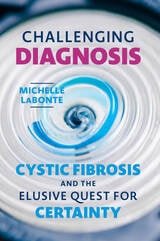
Challenging Diagnosis
Cystic Fibrosis and the Elusive Quest for CertaintyMichelle LaBonte
University of Chicago Press, 2026
Highlights the experiences of patients to examine how diagnostic uncertainty in cystic fibrosis has persisted despite the introduction of new technologies.
Using the critical case of cystic fibrosis (CF), Challenging Diagnosis probes the sociocultural and scientific factors that have contributed to diagnostic uncertainty in medicine while foregrounding its impact on patients and families. Though often described in medical and biology texts as a model genetic disease, making it straightforward to identify, diagnosing CF has long been fraught with challenges. As Michelle LaBonte shows, looking at CF illustrates how diagnostic uncertainty has persisted despite—and even because of—new technologies.
Drawing on her own experiences as a patient with pancreatic insufficiency, a condition often seen in people with CF, LaBonte examines shifts in CF’s screening and diagnosis, from the first comprehensive descriptions of the disease in the 1930s to contemporary genetic testing for carrier status. Today, the diagnosis of CF is no more straightforward than it was in the mid-twentieth century. Since many diagnostic technologies for CF (or their analogs) have been used throughout medicine, as LaBonte explains, these findings are broadly applicable beyond CF and demonstrate the significant harms associated with relying on test results that prioritize disease specificity over patient narratives.
In her historical analysis and her personal story, LaBonte highlights the shortcomings of a reductionist biomedical model that’s overly reliant on diagnostic technologies, a concern that’s more relevant than ever now that direct-to-consumer genetic testing and use of whole genome sequencing in newborns are increasing.
Social Aspects of Applied Human Genetics
James R. Sorenson
Russell Sage Foundation, 1971
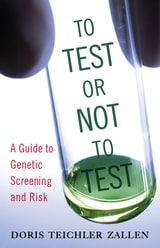
To Test or Not To Test
A Guide to Genetic Screening and RiskZallen, Dorris Teichler
Rutgers University Press, 2008
To Test or Not to Test arms readers with questions that should be considered before they pursue genetic screening.
- Am I at higher risk for a disorder?
- Can genetic testing give me useful information?
- Is the timing right for testing?
- Do the benefits of having the genetic information outweigh the problems that testing can bring?
Determining the answers to these questions is no easy task. In this highly readable book, Doris Teichler Zallen provides a template that can guide individuals and families through the decision-making process and offers additional resources where they can gain more information. She shares interviews with genetic specialists, doctors, and researchers, as well as the personal stories of nearly 100 people who have faced genetic-testing decisions. Her examples focus on genetic testing for four types of illnesses: breast/ovarian cancer (different disorders but closely connected), colon cancer, late-onset Alzheimer's disease, and hereditary hemochromatosis. From the more common diseases to the rare hereditary conditions, we learn what genetic screening is all about and what it can tell us about our risks.
Given that we are now bombarded with ads in magazines and on television hawking the importance of pursuing genetic-testing, it is critical that we approach this tough issue with an arsenal of good information. To Test or Not to Test is an essential consumer tool-kit for the genetic decision-making process.