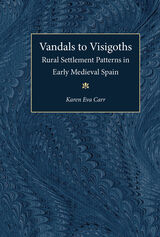
Though many argue that the fall of Rome around 400 C.E. had little effect on the rural poor of the western Mediterranean, Karen Eva Carr argues persuasively to the contrary. Vandals to Visigoths shows how the empire's collapse significantly transformed the lives of rural people. Even after the dust settled from the Germanic invasions, landscape archaeology shows the surviving rural population defending themselves in isolated hill-forts and cut off from the larger Mediterranean world.
Vandals to Visigoths uses archaeological survey data as a springboard to a theoretical discussion of rural survival strategies in the non-industrial world and the ways in which these strategies are affected by government actions. Carr draws on historical, archaeological, and ethnographic comparanda to conclude that the larger, more powerful Roman government was more advantageous for the rural poor than the weaker Vandal and Visigothic regimes. Though Carr agrees that the lives of the rural people and the free slaves were miserable, she shows through her data and theory that they became even more wretched after the decline of the empire.
Vandals to Visigoths will appeal to historians of Rome, as well as of Early Medieval Europe and Spain. Anthropologists, economists, and political scientists who study Late Antiquity and the medieval period will also be interested, as it discusses the broader implications of the role of government in the lives of early medieval Spain's subjects.
Karen Eva Carr is Associate Professor of History, Portland State University.