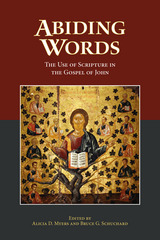
front cover of Abiding Words
Abiding Words
The Use of Scripture in the Gospel of John
Alicia D. Myers
SBL Press, 2015

A collection of essays by experts from around the world

Like the other New Testament Gospels, the Gospel of John repeatedly appeals to Scripture (Old Testament). Preferring allusions and “echoes” alongside more explicit quotations, however, the Gospel of John weaves Scripture as an authoritative source concerning its story of Jesus. Yet, this is the same Gospel that is often regarded as antagonistic toward “the Jews,” especially the Jewish religious leaders, depicted within it.

Features:

  • Introduces and updates readers on the question of John’s employment of Scripture
  • Showcases useful approaches to more general studies on the New Testament’s use of Scripture, sociological and rhetorical analyses, and memory theory
  • Explores the possible implications surrounding Scripture usage for the Gospel audiences both ancient and contemporary
[more]

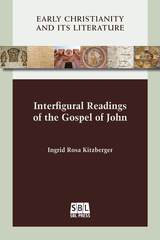
front cover of Interfigural Readings of the Gospel of John
Interfigural Readings of the Gospel of John
Ingrid Rosa Kitzberger
SBL Press, 2019

New and challenging readings of biblical characters

This volume of collected essays introduces the concept of interfigurality, the interrelations and interdependence between characters in the Gospel of John and in the Synoptic Gospels and the Hebrew Bible.The essays are informed by a narrative-critical reader-response, (post)feminist hermeneutics and an autobiographical approach to biblical texts. This volume encourages transformative encounters between present-day readers and the ancient biblical texts.

Features:

  • Previously unpublished conference papers and published essays
  • A new perspective on the relation between New Testament and Hebrew Bible
  • Foreword by Fernando F. Segovia

Ingrid Rosa Kitzberger is an independent scholar and the author of Transformative Encounters: Jesus and Women Re-viewed (1999) and the editor of The Personal Voice in Biblical Interpretation (1998) and Autobiographical Biblical Criticism: Between Text and Self (2002).
[more]

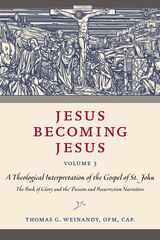
front cover of Jesus Becoming Jesus, Volume 3
Jesus Becoming Jesus, Volume 3
A Theological Interpretation of the Gospel of John: The Book of Glory and the Passion and Resurrection
Thomas G. Weinandy
Catholic University of America Press, 2022
Jesus Becoming Jesus, Volume 3 follows upon the previous two volumes of this series entitled Jesus Becoming Jesus. Volume 1 was a theological interpretation of the Gospels of Matthew, Mark and Luke, and volume 2 was a theological interpretation of the Prologue and Book of Signs of John’s Gospel (chapters 1-12). Unlike many conventional biblical commentaries, Weinandy concentrates on the theological content contained within John’s Gospel. This is accomplished through a close reading of John’s Gospel, theologically interpreting each chapter of the Gospel sequentially. In so doing he also takes into account the Johannine corpus as a whole. He also relates John’s Gospel to relevant material found within the Synoptic Gospels, the Pauline Corpus and other New Testament writings. In this present volume, Weinandy’s original theological interpretation focuses first on the Evangelist’s narrative of the Last Supper, which includes Jesus’ washing of his disciples’ feet, followed upon his lengthy farewell address and his ensuing High Priestly Prayer (chapter 13-17). Although Jesus speaks of his leaving his disciples, yet their hearts should not be troubled, for he is going to prepare a place for them in his Father’s house, and he will also send them another Counselor, the Holy Spirit. The Holy Spirit will not only convict the world sin, but he will also empower the disciples to profess their faith in Jesus as the Father’s Son, even in the midst of persecution. All that Jesus tells his disciple in his final discourse, he then prays that his Father will accomplish through his forthcoming death and resurrection – above all that his disciples will share in the same oneness of love that he and his Father possess. Weinandy masterfully treats John’s Passion and Resurrection Narratives. He not only theologically interprets the uniqueness of the Evangelist’s narratives, but also how his narratives insect with the Synoptic accounts. Moreover, Weinandy’s theological reading of Jesus’ crucifixion and resurrection weaves together John’s soteriology, ecclesiology, and sacramentality – all of which are founded upon the Incarnation, that Jesus is the Father’s Spirit-filled incarnate Son. As the title suggests, Jesus, being named Jesus, in his death and resurrection, definitively enacts his name and so becoming who he is – YHWH-Saves.
[more]


Send via email Share on Facebook Share on Twitter