front cover of And They Lived Happily Ever After
And They Lived Happily Ever After
Norms and Everyday Practices of Family and Parenthood in Russia and Eastern Europe
Helene Carlback
Central European University Press, 2012
Takes a comparative perspective on family life and childhood in the past half century in Russia and Eastern Europe, highlighting similarities and differences. Focuses on the problematic domains of the institutions and laws devised to cope with family difficulties, and discusses the social strains created by the transition from communist to post-communist national systems. In addition to the substantial historic analysis, actual challenges are also discussed. The essays examine the changing gender roles, alterations in legal systems, the burdens faced by married and unmarried women who are mothers, the contrasts between government rhteoric and the implementation of policies toward marriage, children and parenthood. By addressing the specifics of welfare politics under the Communist rule and the directions of their transformation in 1990–2000s, this book contributes to the understanding of social institutions and family policies in these countries and the problems of dealing with the socialist past that this region face.
[more]

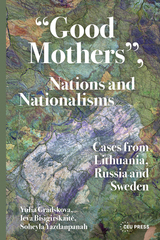
front cover of “Good Mothers”, Nations and Nationalisms
“Good Mothers”, Nations and Nationalisms
Cases from Lithuania, Russia and Sweden
Yulia Gradskova
Central European University Press, 2026
This book explores constructions of the “good mother” within diverse nations and nationalisms, focusing on three contexts grappling with distinct forms of “demographic anxiety.” Inspired by Sara Farris’ inquiry into femonationalism and utilizing “maternalism” and “politics of care” as critical theoretical instruments, the book analyses the evolving political and social expectations imposed upon mothers in Lithuania, migrant mothers, including postsocialist migrant mothers from Central Asia and Caucasus in Sweden, and women in the militarizing authoritarian Russian state’s construction of maternity within its “traditional values” agenda. It also probes both how “good motherhood” is enacted and contested by individual mothers, as well as how it is mobilized in resisting conservative, ethnonationalist tendencies and militarism (in the case of Russia). The book’s chapters illuminate the roles of political and social actors engaged with renegotiating materialist politics—such as grassroots birth activist movements and maternalist social policy campaigns—as well as those defying militarism.
[more]


Send via email Share on Facebook Share on Twitter