
 A SCHOLARLY BOOK REPOSITORY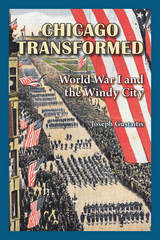
It’s been called the “war that changed everything,” and it is difficult to think of a historical event that had a greater impact on the world than the First World War. Events during the war profoundly changed our nation, and Chicago, especially, was transformed during this period. Between 1913 and 1919, Chicago transitioned from a nineteenth-century city to the metropolis it is today. Despite the importance of the war years, this period has not been documented adequately in histories of the city. In Chicago in World War I: How the Great War Transformed a Great City, Joseph Gustaitis fills this gap in the historical record, covering the important wartime events, developments, movements, and people that helped shape Chicago.
Gustaitis attributes many of Chicago’s changes to the labor shortage caused by the war. African Americans from the South flocked to Chicago during the Great Migration, and Mexican immigration increased as well. This influx of new populations along with a wave of anti-German hysteria—which nearly extinguished German culture in Chicago—changed the city’s ethnic composition. As the ethnic landscape changed, so too did the culture. Jazz and blues accompanied African Americans to the city, and Chicago soon became America’s jazz and blues capital. Gustaitis also demonstrates how the nation’s first sexual revolution occurred not during the 1960s but during the World War I years, when the labor shortage opened up unprecedented employment opportunities for women. These opportunities gave women assertiveness and freedom that endured beyond the war years. In addition, the shortage of workers invigorated organized labor, and determined attempts were made to organize in Chicago’s two leading industrial workplaces—the stockyards and the steel mills—which helped launch the union movement of the twentieth century. Gustaitis explores other topics as well: Prohibition, which practically defined the city in the 1920s; the exploits of Chicago’s soldiers, both white and black; life on the home front; the War Exposition in Grant Park; and some of the city’s contributions to the war effort. The book also contains sketches of the wartime activities of prominent Chicagoans, including Jane Addams, Ernest Hemingway, Clarence Darrow, Rabbi Emil Hirsch, John T. McCutcheon, “Big Bill” Thompson, and Eunice Tietjens.
Although its focus is Chicago, this book provides insight into change nationwide, as many of the effects that the First World War had on the city also affected the United States as a whole. Drawing on a variety of sources and written in an accessible style that combines economic, cultural, and political history, Chicago in World War I: How the Great War Transformed a Great City portrays Chicago before the war, traces the changes initiated during the war years, and shows how these changes still endure in the cultural, ethnic, and political landscape of this great city and the nation.
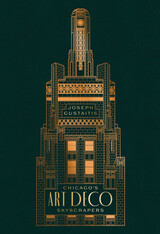
With stunning photography and abundant historical details, this book is a treasure trove that will delight any fan of architecture, Chicago, or the Art Deco era.
Chicago is America’s premier showcase for both historic and modern architecture. Even so, many of its finest buildings remain little known to visitors, and even to Chicagoans. In Chicago’s Art Deco Skyscrapers, Joseph Gustaitis showcases nearly two dozen Art Deco towers that were built during the exhilarating years of the Jazz Age, from 1927 to 1933. These skyscrapers exemplify a state of mind from the time—an optimistic, forward-looking aesthetic that has been called the “last of the total styles,” as well as the first American style that spread across the globe. In the time between the Great War and the Great Depression, cities and their architects embraced industrial modernity and the exciting new possibilities of scale. Exploring places like the Board of Trade Building, the Merchandise Mart, and the Carbide & Carbon tower, Gustaitis tells the stories of their creation, the architects and developers, construction and financing, zoning and engineering, and so much more.
With stunning aerial photography by Ian McClellan, this book also includes color photos of the buildings’ features, vintage images, a travel map, and in-depth historical information. Chicago’s Art Deco Skyscrapers is both a guidebook to these remarkable structures and a history of the upbeat era that created them.
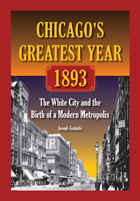
In 1893, the 27.5 million visitors to the Chicago World’s Fair feasted their eyes on the impressive architecture of the White City, lit at night by thousands of electric lights. In addition to marveling at the revolutionary exhibits, most visitors discovered something else: beyond the fair’s 633 acres lay a modern metropolis that rivaled the world’s greatest cities. The Columbian Exposition marked Chicago’s arrival on the world stage, but even without the splendor of the fair, 1893 would still have been Chicago’s greatest year.
An almost endless list of achievements took place in Chicago in 1893. Chicago’s most important skyscraper was completed in 1893, and Frank Lloyd Wright opened his office in the same year. African American physician and Chicagoan Daniel Hale Williams performed one of the first known open-heart surgeries in 1893. Sears and Roebuck was incorporated, and William Wrigley invented Juicy Fruit gum that year. The Field Museum, the Art Institute of Chicago, and the Museum of Science and Industry all started in 1893. The Cubs’ new ballpark opened in this year, and an Austro-Hungarian immigrant began selling hot dogs outside the World’s Fair grounds. His wares became the famous “Chicago hot dog.”
“Cities are not buildings; cities are people,” writes author Joseph Gustaitis. Throughout the book, he brings forgotten pioneers back to the forefront of Chicago’s history, connecting these important people of 1893 with their effects on the city and its institutions today. The facts in this history of a year range from funny to astounding, showcasing innovators, civic leaders, VIPs, and power brokers who made 1893 Chicago about so much more than the fair.
READERS
Browse our collection.
PUBLISHERS
See BiblioVault's publisher services.
STUDENT SERVICES
Files for college accessibility offices.
RECENTLY PUBLISHED



UChicago Accessibility Resources
home | accessibility | search | about | contact us
BiblioVault ® 2001 - 2026
The University of Chicago Press